Introduction: Petrol Prices in Pakistan Reach Record High
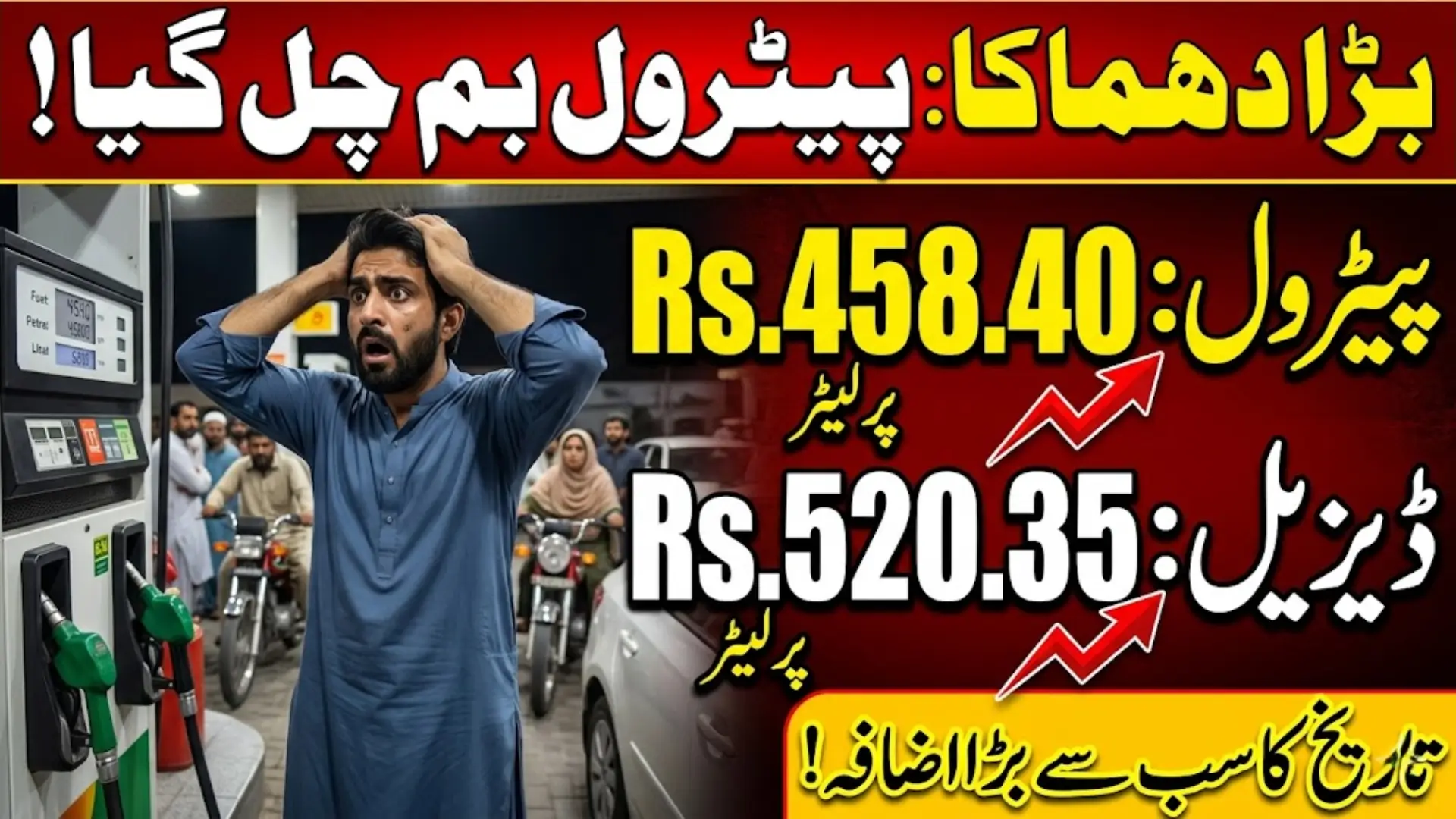
Petrol prices in Pakistan have reached an unprecedented level after a massive overnight increase shocked consumers across the country. The government raised fuel prices sharply, pushing petrol to Rs. 458.40 per litre and high-speed diesel above Rs. 520, marking one of the most dramatic changes in recent history. This sudden jump has created widespread concern among citizens already dealing with rising inflation.
The increase comes at a time when global energy markets are under extreme pressure due to escalating geopolitical tensions. The ongoing conflict involving Iran has disrupted oil supply chains, forcing countries like Pakistan to adjust prices in line with international trends. As a result, petrol prices in Pakistan have become a major topic of economic and political debate.
- Petrol reached Rs. 458.40 per litre
- Diesel crossed Rs. 520 per litre
- One of the largest fuel price hikes in history
Petrol Prices in Pakistan Increase by Historic Margins
The latest revision in petrol prices in Pakistan shows a steep increase of Rs. 137.23 per litre, while diesel prices surged by Rs. 184.49 per litre. This sharp rise has broken previous records, making it the biggest single fuel price adjustment the country has ever seen. Before the hike, petrol was priced at Rs. 321.17 per litre, highlighting the magnitude of the change.
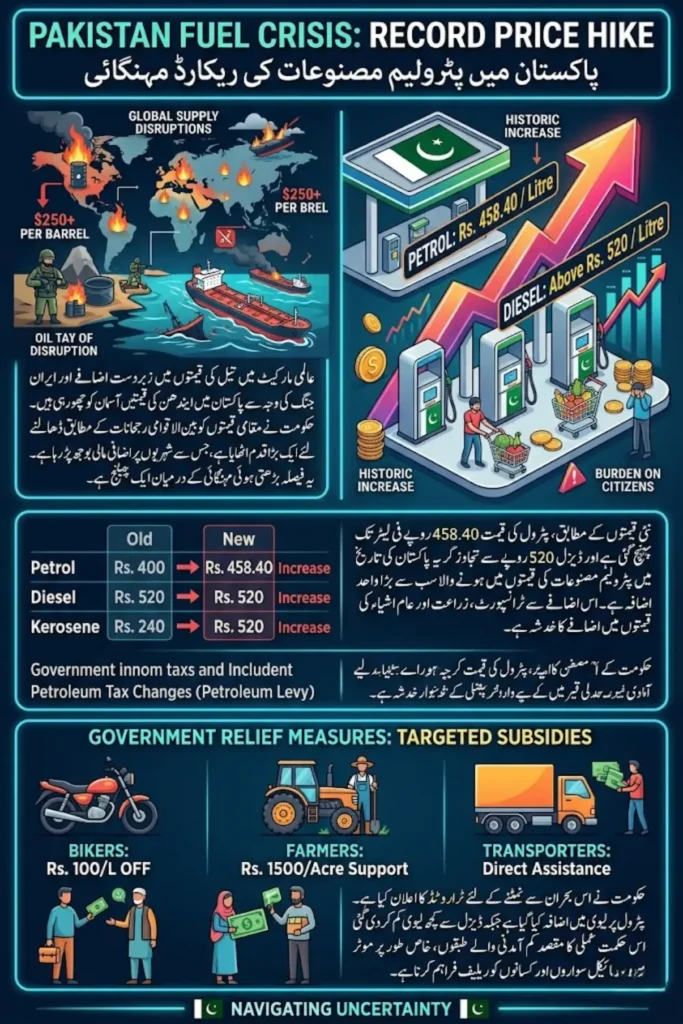
This increase reflects the growing pressure on the government to align local fuel prices with international market conditions. With crude oil prices soaring globally, maintaining lower domestic prices has become unsustainable. The sudden jump has placed an immediate financial burden on households, transporters, and businesses alike.
- Petrol increased by Rs. 137.23 per litre
- Diesel increased by Rs. 184.49 per litre
- Largest single increase recorded in Pakistan
Breakdown of New Petrol Prices in Pakistan
The government has officially notified the revised fuel prices, providing a clear breakdown of different petroleum products. Petrol now stands at Rs. 458.40 per litre, while high-speed diesel has reached Rs. 520.35 per litre. Kerosene oil has also seen an increase, now priced at Rs. 457.80 per litre.
These new rates came into effect immediately after the announcement, impacting daily life and transportation costs across the country. The pricing structure reflects both international oil trends and domestic fiscal adjustments, making fuel one of the most expensive commodities in the country.
| Fuel Type | Old Price (Rs.) | New Price (Rs.) | Increase (Rs.) |
|---|---|---|---|
| Petrol | 321.17 | 458.40 | 137.23 |
| High-Speed Diesel | 335.86 | 520.35 | 184.49 |
| Kerosene Oil | 423.72 | 457.80 | 34.08 |
- New prices effective immediately
- All major fuels witnessed significant increases
- Kerosene also impacted with noticeable rise
Petroleum Levy Changes and Government Tax Policy
Along with the increase in petrol prices in Pakistan, the government has revised its tax policy on fuel. The petroleum levy on petrol has been raised from Rs. 106 to Rs. 161 per litre, significantly contributing to the final retail price. However, the levy on diesel has been largely removed, except for a small carbon tax of Rs. 2.5 per litre.
This shift indicates a change in fiscal strategy, where the government is relying more on petrol taxation while easing the burden on diesel. The decision may aim to balance economic activity, especially in sectors heavily dependent on diesel, such as transport and agriculture.
- Petrol levy increased to Rs. 161 per litre
- Diesel levy mostly removed
- Carbon tax of Rs. 2.5 remains on diesel
Iran War and Global Crisis Driving Petrol Prices in Pakistan
The sharp rise in petrol prices in Pakistan is closely linked to the ongoing conflict involving Iran. The war has disrupted global oil supply chains, particularly affecting routes such as the Strait of Hormuz, through which a large portion of the world’s oil passes. As supply uncertainties grow, international oil prices have surged beyond $250 per barrel.
Pakistan, which imports a significant portion of its energy needs, is directly affected by these global developments. The rising cost of crude oil in international markets has forced the government to pass on the burden to consumers. This situation highlights the country’s vulnerability to external shocks in the energy sector.
- Oil prices crossed $250 per barrel
- Supply disruptions in key global routes
- Pakistan heavily dependent on imported fuel
Government’s Response to Petrol Prices in Pakistan Crisis
The government has stated that it tried to delay the increase in petrol prices in Pakistan through multiple interventions. Prime Minister Shehbaz Sharif reportedly rejected several proposals for fuel price hikes earlier, attempting to shield the public from immediate impact. However, the ongoing global crisis eventually made the increase unavoidable.
In addition to price control efforts, the government introduced austerity measures and reduced development spending to manage the situation. Officials have emphasized that these decisions were necessary to maintain economic stability and ensure uninterrupted fuel supply across the country.
- Multiple price hike proposals were initially rejected
- Austerity measures introduced
- Focus on maintaining economic stability
Targeted Subsidy Programs Announced
To reduce the burden of rising petrol prices in Pakistan, the government has announced targeted subsidy programs. These subsidies aim to support vulnerable groups, including motorcyclists, farmers, and transport operators. The relief measures are designed to provide limited but focused financial assistance.
The subsidy plan includes Rs. 100 per litre relief for two-wheelers with a monthly cap, as well as financial support for farmers and transporters. These measures are expected to help control transportation costs and prevent a sharp rise in food prices.
| Sector | Subsidy Details |
|---|---|
| Two-Wheelers | Rs. 100 per litre (20L monthly cap) |
| Farmers | Rs. 1,500 per acre (one-time) |
| Goods Transport | Rs. 70,000 support for trucks |
| Public Transport | Up to Rs. 100,000 per month |
- Targeted relief instead of blanket subsidy
- Focus on low-income groups
- Transport sector given priority support
Impact of Petrol Prices in Pakistan on Economy and Public
The increase in petrol prices in Pakistan is expected to have a wide-ranging impact on the economy. Transportation costs will rise, leading to higher prices for essential goods and services. This will further increase inflation and reduce purchasing power for ordinary citizens.
The agricultural sector is also likely to be affected, as higher diesel prices increase the cost of farming operations. Overall, the price hike will create financial pressure across multiple sectors, especially for middle and low-income households.
- Increase in transport and goods prices
- Rising inflation expected
- Greater burden on low-income households
Shift from Blanket Subsidy to Targeted Relief
The government has shifted its strategy from providing blanket subsidies to offering targeted support. This approach aims to reduce fiscal pressure while ensuring that assistance reaches those who need it the most. Officials have highlighted financial constraints as a key reason behind this policy change.
By focusing on specific sectors, the government hopes to maintain economic balance without overspending. This targeted approach is also aligned with international financial commitments and long-term economic planning.
- Focus on vulnerable segments only
- Reduced burden on national budget
- Alignment with international commitments
Future Outlook for Petrol Prices in Pakistan
The future of petrol prices in Pakistan largely depends on global market conditions and geopolitical developments. If the conflict involving Iran continues, oil prices may remain high or increase further. This could lead to additional price adjustments in the coming weeks.
At the same time, the situation highlights the need for Pakistan to explore alternative energy sources. Reducing dependence on imported oil could help stabilize prices in the long term and protect the economy from external shocks.
- Prices may rise further if conflict continues
- Dependence on global oil markets remains high
- Need for alternative energy solutions
Conclusion: Petrol Prices in Pakistan Amid Uncertain Global Conditions
Petrol prices in Pakistan have reached historic highs due to a combination of global conflict and domestic economic challenges. The recent increase reflects the country’s dependence on international oil markets and the impact of geopolitical tensions. While the government has taken steps to manage the crisis, the burden on the public remains significant.
Moving forward, both short-term relief measures and long-term energy strategies will be crucial. Stabilizing petrol prices in Pakistan will require careful planning, global cooperation, and a shift toward sustainable energy alternatives.
- Historic increase driven by global crisis
- Government balancing relief and stability
- Long-term solutions needed for energy security
FAQs
What is the current petrol price in Pakistan?
Petrol is currently priced at Rs. 458.40 per litre after the latest increase. Prices may change based on global oil trends.
Why did petrol prices in Pakistan increase so much?
The increase is due to the global oil crisis caused by the Iran conflict and supply disruptions. Rising crude oil prices forced the government to adjust local rates.
What subsidies has the government announced?
The government introduced targeted subsidies for bikers, farmers, and transport sectors. These include per litre relief and financial assistance programs.
Will petrol prices in Pakistan reach Rs. 500?
If global tensions continue, petrol prices could increase further. Current trends suggest it may approach Rs. 500 per litre.