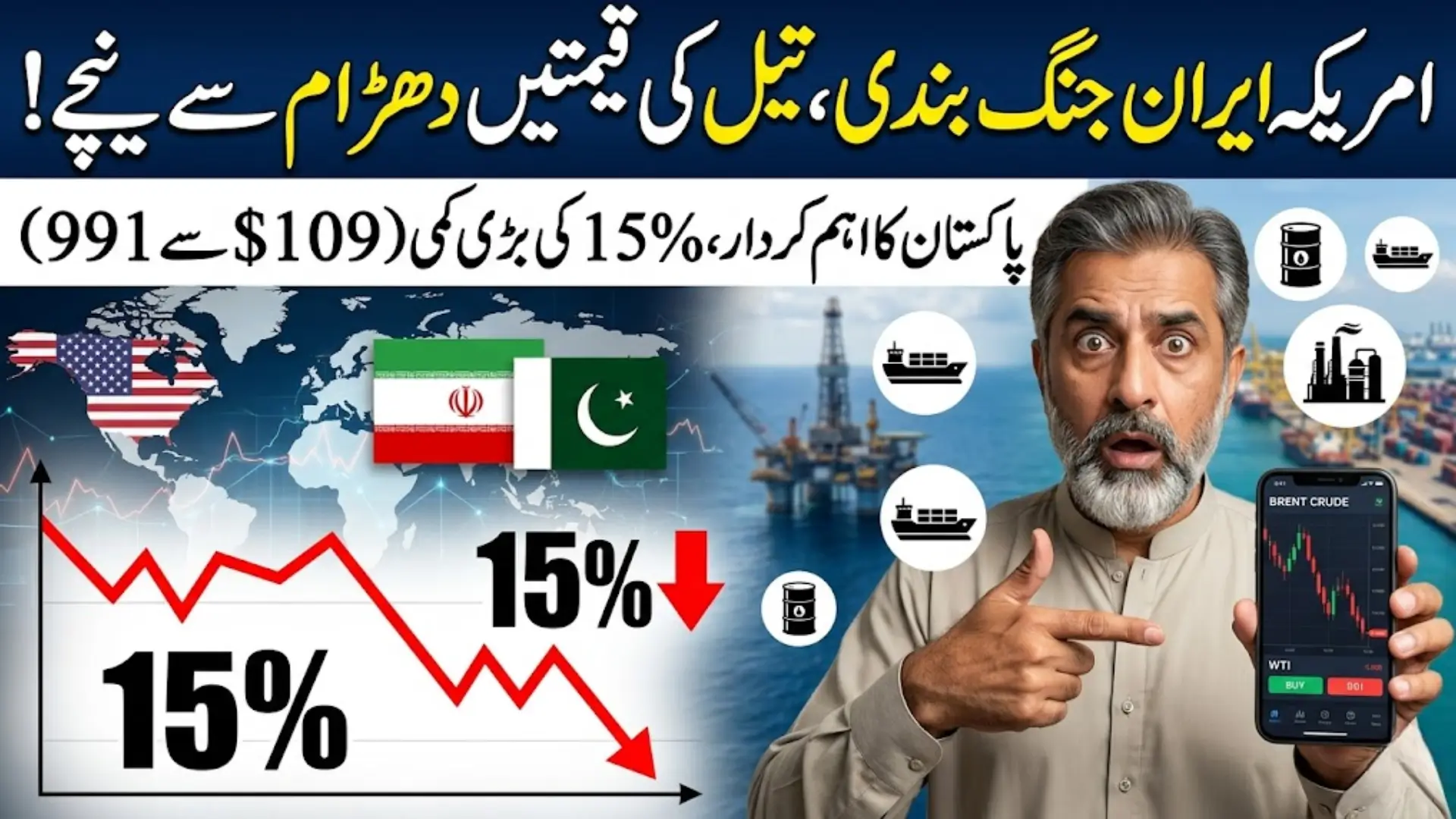
Introduction to Oil Prices Crash After US-Iran Ceasefire
Global oil markets experienced a sharp decline after a major geopolitical development between the United States and Iran. A temporary two-week ceasefire agreement, reportedly mediated by Pakistan, led to a sudden drop in oil prices. This unexpected move reduced tensions in the region and immediately influenced global energy markets.
The announcement created a strong reaction among investors and traders who closely monitor political events affecting oil supply. As uncertainty decreased, markets adjusted quickly, resulting in a significant price correction.
- Ceasefire agreement between the US and Iran
- Pakistan played a mediating role
- Oil markets reacted with a sharp decline
You Can Also Read: NADRA New B-Form System in Pakistan: Complete Guide Renewal Process
Oil Prices Crash After US-Iran Ceasefire: Market Reaction
The global oil market saw a sell-off of more than 15 percent following the ceasefire news. This decline reflects how sensitive oil prices are to geopolitical developments, especially in regions that play a key role in energy supply.

Investors responded quickly by adjusting their positions, leading to a rapid fall in prices. The reduction in conflict risk lowered fears of supply disruptions, which is a major factor influencing oil price spikes.
- Over 15 percent drop in oil prices
- Quick reaction from global investors
- Reduced risk of supply disruption
You Can Also Read: Big News: Oppo F33 Pro 5G Leak: Expected Launch Date, Specs, Price and Full Details
Brent Crude Performance After Ceasefire Announcement
Brent crude, a global benchmark for oil pricing, saw a major drop after the ceasefire announcement. Prices fell from $109.27 per barrel to nearly $91.72, showing the immediate impact of reduced geopolitical tension.
At the time of reporting, Brent crude slightly recovered but still remained significantly lower than previous levels. This fluctuation highlights the market’s attempt to stabilize after the sudden change.
- Drop from $109.27 to around $91.72
- Partial recovery to about $94.7
- Reflects global oil pricing trends
You Can Also Read: PM Fuel Package 2026: Rs 1.2 Billion Digital Payments Distributed via Easypaisa in First Phase
WTI Crude Oil Movement After Ceasefire
Western Texas Intermediate (WTI), another key oil benchmark, also followed a similar downward trend. Prices dropped by approximately 15 percent, reaching around $95 per barrel during trading.
The decline in WTI confirms that the impact of the ceasefire was not limited to one market but affected global oil pricing as a whole. Both major benchmarks reacted in parallel to the news.
- Around 15 percent price decline
- Trading near $95 per barrel
- Mirrors Brent crude movement
You Can Also Read: NADRA Mobile Registration Van Schedule 2026 – Dates, Locations, e-Sahulat Expansion and Services Guide
Role of Pakistan in US-Iran Ceasefire Talks
Pakistan played a significant diplomatic role in bringing both countries to the negotiation table. Its efforts helped ease tensions and contributed to reaching a temporary agreement between the United States and Iran.
This mediation highlights Pakistan’s importance in regional diplomacy. By facilitating dialogue, it helped prevent further escalation and contributed to stability in global markets.
- Mediated discussions between the US and Iran
- Helped achieve a temporary ceasefire
- Contributed to reducing regional tensions
Details of the US-Iran Ceasefire Agreement
The ceasefire agreement is set for a duration of two weeks, during which both sides will halt military actions. The United States has agreed to suspend bombing operations, while Iran has committed to maintaining stability in key areas.
This agreement is described as a step toward a broader long-term resolution. Both countries appear to be working toward addressing their major disputes through dialogue.
- Two-week temporary ceasefire
- Suspension of US military operations
- Efforts toward long-term agreement
You Can Also Read: Citizen Relationship Management Portal – Complete Guide to Registration, Login, Application Process, and Benefits
Strait of Hormuz and Its Impact on Oil Prices
The Strait of Hormuz is one of the most important routes for global oil transportation. Iran’s decision to allow safe maritime passage through this route played a major role in reducing concerns about supply disruptions.
With the assurance of uninterrupted oil flow, markets responded positively by lowering prices. This development shows how critical this region is for global energy stability.
- Key global oil shipping route
- Safe passage allowed for two weeks
- Reduced supply chain concerns
You Can Also Read: Citizen Relationship Management Petrol – Complete Guide to CRM Portal Fuel Subsidy Program 2026
Statements from Global Leaders
Leaders from both sides have shared their views on the ceasefire agreement. The United States confirmed the suspension of military actions, describing the arrangement as balanced and beneficial for both parties.
Iran also expressed its commitment to ensuring safe navigation in the region. These statements indicate a willingness to move toward a peaceful resolution.
- US confirmed suspension of attacks
- Described as a “double-sided ceasefire”
- Iran ensured maritime safety
Impact of Ceasefire on Global Energy Markets
The ceasefire has significantly influenced global energy markets by reducing uncertainty. When tensions decrease, markets tend to stabilize, leading to lower prices and improved confidence among investors.
This development may also affect future pricing trends if the agreement leads to a long-term solution. Stability in the region could result in consistent supply and predictable pricing.
- Lower geopolitical risk
- Improved market confidence
- Potential for price stability
Key Oil Market Data Overview
The following table highlights the major changes in oil prices after the ceasefire announcement:
| Indicator | Before Ceasefire | After Ceasefire |
|---|---|---|
| Brent Crude | $109.27 | ~$94.7 |
| WTI Crude | ~$109 | ~$95 |
| Market Change | — | -15% approx |
Future Outlook for Oil Prices
The future of oil prices will depend on whether the ceasefire leads to a long-term agreement. If both countries continue diplomatic efforts, prices may remain stable or decrease further.
However, any breakdown in talks could lead to renewed volatility. Markets will continue to monitor developments closely over the two-week period.
- Possibility of stable pricing
- Dependent on diplomatic progress
- Risk of volatility if tensions return
You Can Also Read: Citizen Relationship Management NADRA New B-Form System in Pakistan: Complete Guide Renewal Process
Conclusion
The sharp drop in oil prices after the US-Iran ceasefire highlights the strong connection between geopolitics and global markets. A single diplomatic development can significantly influence pricing and investor behavior.
This situation also shows the importance of peaceful negotiations in maintaining economic stability. If the current ceasefire leads to lasting peace, it could benefit both regional and global markets.
You Can Also Read: Big News: Oppo F33 Pro 5G Leak: Expected Launch Date, Specs, Price and Full Details
FAQs
What caused the drop in oil prices?
Oil prices fell due to a ceasefire between the US and Iran, which reduced fears of supply disruptions.
How much did oil prices decline?
Global oil prices dropped by more than 15 percent after the announcement of the ceasefire.
What role did Pakistan play in this situation?
Pakistan acted as a mediator, helping both countries reach a temporary agreement.
Why is the Strait of Hormuz important?
It is a key route for global oil supply, and safe passage reduces market uncertainty.
Will oil prices remain low?
Prices may stay stable if the ceasefire continues, but future changes depend on ongoing negotiations.
You Can Also Read: PM Fuel Package 2026: Rs 1.2 Billion Digital Payments Distributed via Easypaisa in First Phase