FBR Tax Monitoring Noor Hospital Karachi
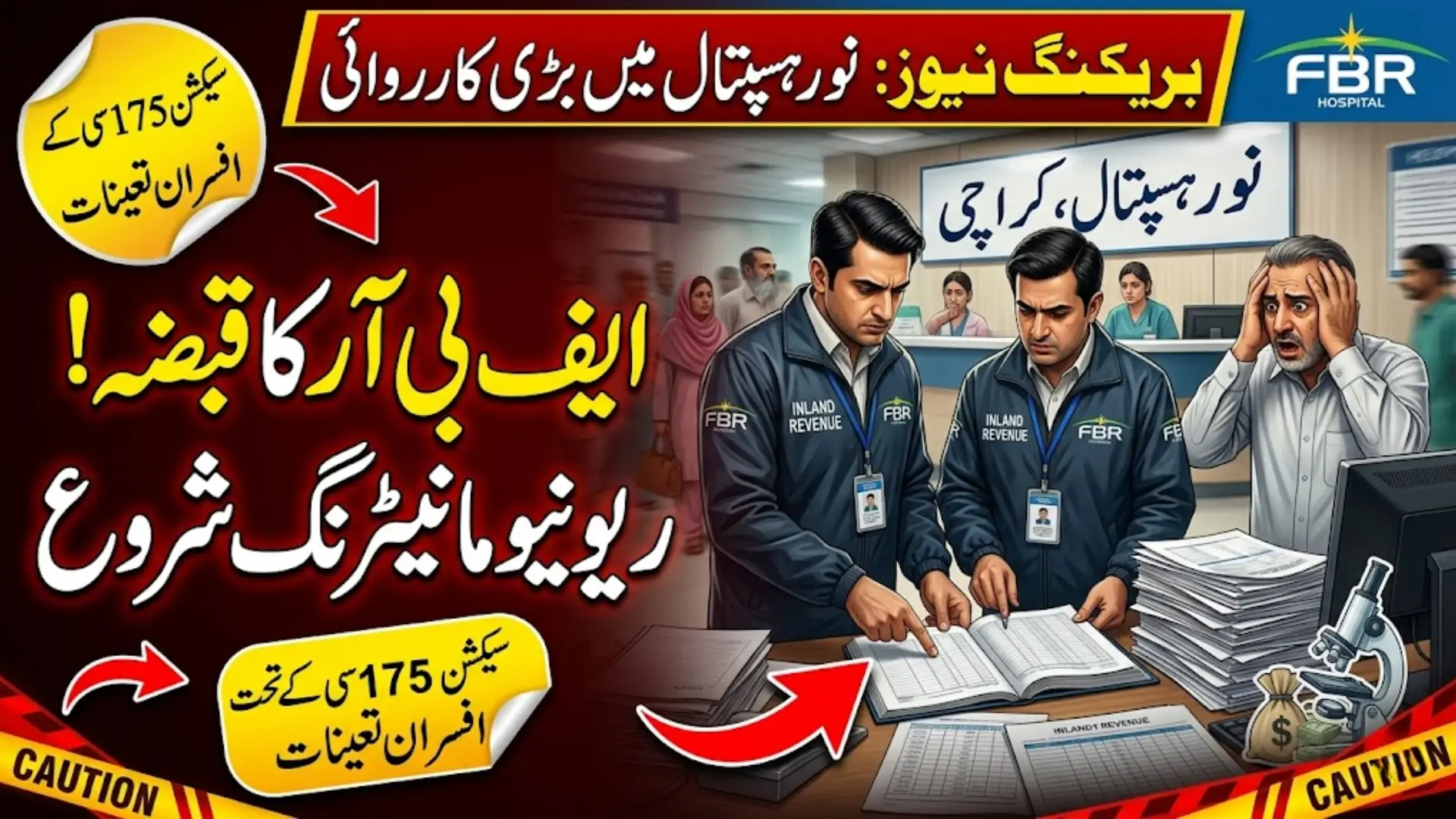
The Federal Board of Revenue has taken a significant step by deploying Inland Revenue officers at a private healthcare facility in Karachi. This move is part of its ongoing efforts to strengthen tax compliance and ensure transparency in business operations. The action specifically targets revenue monitoring at M/s Noor Hospital.
This development reflects the increasing focus of tax authorities on real-time monitoring of businesses. By placing officials directly at the premises, the FBR aims to closely observe financial activities and ensure that all revenue is properly documented under tax laws.
- Inland Revenue officers deployed at a private hospital
- Initiative led by Federal Board of Revenue
- Focus on monitoring business revenue
You Can Also Read: Himmat Card Program Punjab 2026 – Online Registration, Eligibility Criteria, Rs. 50,000 Financial Assistance & Status Check Guide
Legal Basis of FBR Tax Monitoring Under Section 175C
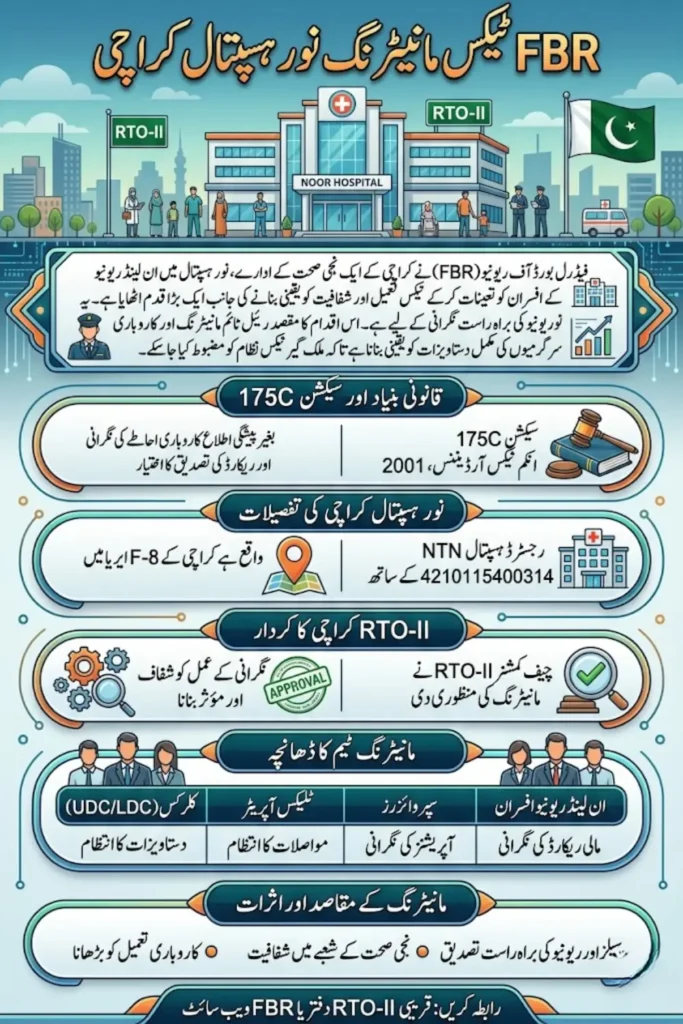
The monitoring action has been authorized under Section 175C of the Income Tax Ordinance, 2001. This section allows the FBR to monitor business premises and verify financial records when necessary. It provides a legal framework for such interventions.
This law empowers tax authorities to ensure compliance without relying solely on reported data. By using Section 175C, the FBR can directly verify whether businesses are accurately reporting their income and fulfilling their tax obligations.
- Monitoring authorized under Section 175C
- Legal framework for business inspection
- Ensures compliance with tax laws
You Can Also Read: FBR PTA Tax on Used Mobile Phones 2026 – Updated Customs Values, iPhone, Samsung, Pixel & Import Rules in Pakistan
Details of Noor Hospital Karachi Monitoring Case
The monitoring is being carried out at M/s Noor Hospital, a registered healthcare facility in Karachi. The hospital operates under NTN 4210115400314 and is located at Plot No. ST-11, Block-19, F-8 Area. These details were officially mentioned in the communication issued by tax authorities.
The decision to monitor this specific hospital follows a formal request for observing its revenue activities. The aim is to ensure that all financial transactions are recorded accurately and in line with tax regulations.
- Hospital registered with NTN 4210115400314
- Located in Karachi’s F-8 Area
- Selected for revenue monitoring
Role of Regional Tax Office-II Karachi
The approval for this monitoring activity was granted by the Chief Commissioner of Regional Tax Office-II Karachi. This office plays a key role in implementing tax policies and ensuring compliance within its jurisdiction.
RTO-II Karachi is responsible for coordinating enforcement actions such as this one. It ensures that all procedures are followed correctly and that the monitoring process remains transparent and effective.
- Approval issued by Chief Commissioner
- RTO-II oversees implementation
- Ensures proper enforcement of tax laws
You Can Also Read: Pak Suzuki GSX 125 Installment Plan 2026 – Zero Markup Bike Scheme in Pakistan
Structure of Inland Revenue Monitoring Team
A dedicated team of Inland Revenue officials has been assigned to carry out the monitoring process at Noor Hospital. This team includes officers from multiple designations to ensure a comprehensive approach.
The presence of different roles allows for better coordination and efficient handling of data. Each member contributes to verifying records and maintaining accurate observations of business activities.
| Role | Responsibility |
|---|---|
| Inland Revenue Officers | Monitor financial records |
| Supervisors | Oversee operations |
| Telex Operator | Handle communication |
| Clerks (UDC/LDC) | Manage documentation |
- Multi-level team deployed
- Includes officers, supervisors, and clerks
- Ensures efficient monitoring process
You Can Also Read: Pakistan Foreign Exchange Reserves Increase to $20.6 Billion – Weekly SBP Update April 2026
Objectives of FBR Tax Monitoring Noor Hospital Karachi
The main objective of this initiative is to observe and verify the hospital’s sales and revenue activities. By having officials on-site, the FBR can ensure that all transactions are properly recorded and reported.
This monitoring also helps detect any discrepancies in financial records. It strengthens accountability and promotes transparency in business operations, which is essential for a fair tax system.
- Monitor sales and revenue activities
- Verify financial records
- Ensure transparency in reporting
You Can Also Read: Punjab Scholarships for Balochistan Students 2025–26 – Eligibility, Benefits and Application Process
Monitoring Process at Noor Hospital
The monitoring process involves the physical presence of Inland Revenue officers at the hospital premises. These officials review records, observe transactions, and ensure compliance with tax procedures in real time.
This approach allows the FBR to gather accurate information directly from the source. It reduces the chances of underreporting and ensures that businesses follow proper documentation practices.
- On-site monitoring of business activities
- Real-time verification of records
- Compliance with tax procedures
Importance of Tax Monitoring in Private Healthcare Sector
Private hospitals play a significant role in the economy, making it important for them to comply with tax regulations. Monitoring ensures that these institutions contribute fairly to national revenue.
Such initiatives also promote transparency within the healthcare sector. When financial activities are properly documented, it builds trust and strengthens the overall system.
- Ensures fair tax contribution
- Promotes transparency in healthcare sector
- Strengthens economic accountability
You Can Also Read: iPhone 15 PTA Tax Pakistan Increased in 2026 – New FBR Custom Values and Updated Prices
Impact of FBR Monitoring on Businesses
The deployment of Inland Revenue officers can have a broader impact on businesses beyond the healthcare sector. It sends a clear message about the importance of compliance and accurate reporting.
Other businesses may also become more cautious and ensure proper documentation of their financial activities. This can lead to improved tax collection and a more organized economic environment.
- Encourages compliance among businesses
- Improves documentation practices
- Strengthens overall tax system
Conclusion
The FBR Tax Monitoring Noor Hospital Karachi initiative highlights the government’s commitment to ensuring transparency and compliance in business operations. By using legal provisions such as Section 175C, the FBR is taking proactive steps to monitor revenue activities.
This move not only improves accountability within the healthcare sector but also sets an example for other industries. Continued efforts like this can help build a stronger and more reliable tax system in Pakistan.
You Can Also Read: Himmat Card Program Punjab 2026 – Online Registration, Eligibility Criteria, Rs. 50,000 Financial Assistance & Status Check Guide
FAQs
What is FBR Tax Monitoring Noor Hospital Karachi?
It is the deployment of Inland Revenue officers at Noor Hospital. The goal is to monitor revenue and ensure tax compliance.
Under which law has this monitoring been carried out?
It has been done under Section 175C of the Income Tax Ordinance, 2001. This law allows business monitoring.
Why was Noor Hospital selected for monitoring?
The decision followed a request to observe its revenue activities. It aims to verify financial records.
Who is included in the monitoring team?
The team includes Inland Revenue officers, supervisors, clerks, and a telex operator. They manage and verify records together.
You Can Also Read: e-Learn She Earn Program 2026 – Online Registration, Eligibility, Free Digital Skills Training & Earning Opportunities for Women