
Pakistan Accelerates Digital Tax Reforms
The Government of Pakistan is moving forward with major digital tax reforms aimed at improving transparency, strengthening compliance, and modernizing the country’s taxation system. During a meeting with a delegation from the Institute of Chartered Accountants of Pakistan, Federal Minister for Finance and Revenue Muhammad Aurangzeb reaffirmed the government’s commitment to technology-driven reforms in tax administration.
Officials believe the use of digital systems and artificial intelligence can help reduce revenue leakages, improve documentation, and simplify procedures for taxpayers. The government is focusing on institutional modernization and automation to create a more efficient and transparent taxation environment that supports economic growth and better governance.
You Can Also Read: Multan District Administration Approves Five Official Cattle Markets for Eid ul Adha
Digital Tax Reforms in Pakistan Gain Momentum
Pakistan’s tax administration system is undergoing significant changes as authorities increase the use of digital technologies and automated systems. The government aims to improve efficiency by reducing manual processes and introducing technology-based monitoring systems in different sectors. Officials believe these reforms will help create a fairer and more organized tax structure.
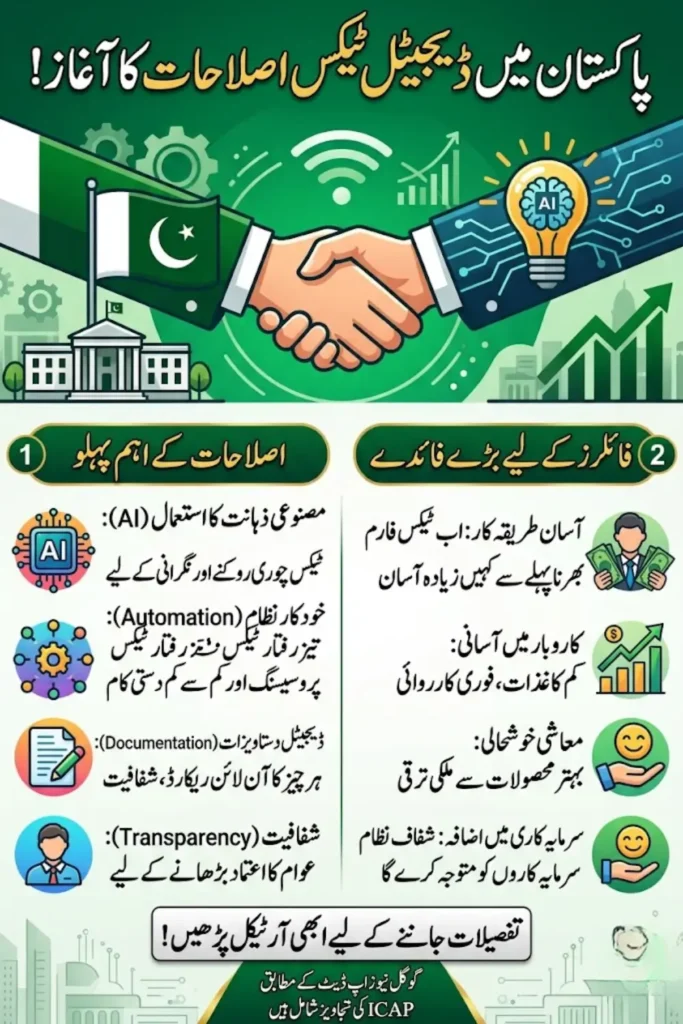
The finance minister emphasized that modernization efforts are focused on improving services for taxpayers while ensuring better compliance and transparency. Authorities are also trying to simplify taxation procedures to make the system easier for businesses and individuals. The reforms are expected to support long-term economic stability and increase public trust in the taxation system.
Main objectives of the reforms include:
- Improving tax transparency
- Increasing digital documentation
- Reducing human intervention
- Strengthening revenue collection
| Reform Area | Purpose |
|---|---|
| Digital Monitoring | Better compliance tracking |
| Automation Systems | Faster tax processing |
| AI-Based Oversight | Reduced revenue leakages |
| Simplified Procedures | Easier taxpayer facilitation |
AI-Based Monitoring Systems Introduced Across Sectors
The government has started introducing AI-based production monitoring and digital oversight mechanisms in multiple industries. Officials stated that artificial intelligence is helping authorities monitor production activities more effectively while identifying irregularities in documentation and taxation records. Technology-driven systems are also improving enforcement and compliance management.
Authorities believe artificial intelligence can reduce financial losses caused by undocumented economic activities. Digital monitoring systems allow faster data collection and analysis, making it easier for tax authorities to detect revenue leakages. The use of AI is expected to improve transparency while supporting more accurate tax administration practices across Pakistan.
Key benefits of AI-based systems include:
- Better production monitoring
- Improved tax documentation
- Faster identification of irregularities
- Reduced revenue leakages
You Can Also Read: Punjab Announces Summer Vacations in Punjab 2026 Amid Rising Heatwave Concerns
Government Focuses on Modern Tax Administration
The finance minister explained that Pakistan’s tax reforms are centered on improving people, processes, and technology within tax administration. Institutional modernization remains one of the government’s major priorities as authorities work to build a more efficient and responsive taxation system. Officials are trying to reduce unnecessary complications in tax-related procedures.
Authorities also aim to minimize direct human involvement in administrative processes through greater automation. Digital systems can help reduce delays, improve accuracy, and limit opportunities for corruption or mismanagement. The government believes modern tax administration is essential for strengthening economic governance and public confidence.
The modernization strategy focuses on:
- Institutional reforms
- Technology integration
- Improved governance systems
- Enhanced taxpayer services
You Can Also Read: Gold Prices in Pakistan Fall After 2-Day Winning Streak Amid Global Market Decline
Importance of Automation in Pakistan’s Tax System
Automation is becoming an important part of Pakistan’s efforts to modernize its tax infrastructure. Digital systems can process records more efficiently than manual methods while reducing the chances of administrative errors. Officials stated that automated systems also improve communication between taxpayers and authorities.
Experts believe automation will help businesses complete tax procedures more easily and quickly. Faster processing times and digital recordkeeping can improve the ease of doing business in Pakistan. Authorities expect these reforms to encourage more people and companies to participate in the formal economy.
Advantages of automation include:
- Faster tax processing
- Reduced paperwork requirements
- Improved record management
- Greater operational efficiency
| Automation Benefits | Impact |
|---|---|
| Faster Services | Reduced processing delays |
| Digital Records | Better documentation |
| Transparency | Improved public trust |
| Reduced Manual Work | Lower administrative errors |
Finance Minister Emphasizes Stakeholder Engagement
During the meeting, Finance Minister Muhammad Aurangzeb highlighted the importance of regular consultation with professional organizations and industry representatives. Authorities believe collaboration with experts can help create practical taxation policies that support businesses and economic growth.
The government is encouraging discussions with stakeholders to ensure reforms remain responsive to changing economic conditions. Officials stated that feedback from professional bodies can help improve tax policies and administrative systems. Such engagement may also strengthen cooperation between the government and private sector.
Key areas of stakeholder consultation include:
- Tax policy recommendations
- Business environment improvements
- Documentation measures
- Investment facilitation strategies
You Can Also Read: TECNO Spark 50 Launched in Pakistan with 7000mAh Battery, 120Hz Display, and Durable Design
Tax Policy Office Declared a Major Institutional Reform
The operationalization of the Tax Policy Office under the Finance Division was highlighted as an important institutional reform. Officials stated that the office will help improve policy coordination between tax administration and economic planning departments. Better coordination is expected to strengthen long-term taxation strategies.
Authorities believe the Tax Policy Office can improve the quality of policy formulation and support evidence-based decision-making. The office is also expected to play a role in monitoring tax reforms and evaluating their effectiveness over time. Institutional reforms remain central to the government’s modernization agenda.
The Tax Policy Office will focus on:
- Improving policy formulation
- Strengthening coordination mechanisms
- Supporting taxation reforms
- Enhancing administrative planning
ICAP Presents Recommendations for Tax Improvements
The delegation from the Institute of Chartered Accountants of Pakistan presented several recommendations during the meeting. Discussions included proposals related to documentation measures, group taxation structures, export-oriented services, and harmonization of taxation policies across sectors.
Officials also discussed ways to improve Pakistan’s competitiveness and encourage investment through simplified tax procedures. Experts believe consistent and business-friendly tax policies can help support economic growth and attract local and foreign investors.
Important proposals discussed during the meeting included:
- Improved documentation systems
- Group taxation reforms
- Tax support for export-oriented services
- Harmonized taxation structures
You Can Also Read: Pakistan to Launch 20,000 AI Training Programs Under National AI Advancement Initiative
Technology to Improve Compliance and Enforcement
The government is expanding the use of digital systems to improve tax compliance and enforcement across different sectors. Authorities stated that modern technology can help track transactions more accurately while reducing opportunities for tax evasion. Better monitoring systems may also improve accountability within the taxation process.
Officials believe stronger compliance mechanisms are necessary for broadening Pakistan’s tax base and increasing national revenue collection. Technology-driven reforms are expected to make tax administration more effective while supporting transparent governance practices.
Technology-based compliance measures include:
- Digital transaction monitoring
- Automated tax record analysis
- AI-supported enforcement systems
- Improved taxpayer tracking
Government Focuses on Ease of Doing Business
The finance ministry stated that tax reforms are also linked to improving the ease of doing business in Pakistan. Simplified procedures and faster digital services can help businesses save time and reduce administrative burdens. Authorities believe these changes may encourage investment and strengthen economic activity.
Officials are also trying to build a more business-friendly environment by reducing unnecessary complications in tax filing and compliance processes. Better taxation systems can support entrepreneurship and improve Pakistan’s competitiveness in international markets.
Government priorities for businesses include:
- Simplified tax procedures
- Faster administrative services
- Improved investment climate
- Reduced compliance difficulties
You Can Also Read: Lahore Waste Management Company Launches Rs23 Crore Eid ul Azha Cleanup Drive with 2,000 Machines Across Lahore
Revenue Mobilization and Broadening the Tax Base
One of the government’s main goals is to improve revenue mobilization while expanding the number of registered taxpayers in Pakistan. Authorities believe digital systems can help identify undocumented economic activities and increase tax collection efficiency. A broader tax base is considered important for economic stability and public development projects.
Officials stated that stronger compliance and better documentation can reduce dependency on a limited group of taxpayers. Modern taxation systems are expected to create a fairer distribution of tax responsibilities across different sectors of the economy.
Efforts to improve revenue collection include:
- Expanding taxpayer registration
- Strengthening compliance monitoring
- Improving documentation practices
- Reducing revenue leakages
Conclusion
Pakistan’s digital tax reforms represent an important step toward modernizing the country’s taxation system through technology and automation. The government’s focus on AI-based monitoring, institutional reforms, and digital administration reflects growing efforts to improve transparency, efficiency, and economic governance.
Authorities believe technology-driven reforms can strengthen revenue collection while simplifying procedures for taxpayers and businesses. As Pakistan continues implementing these changes, digital taxation systems are expected to play a major role in supporting economic growth and long-term financial stability.
You Can Also Read: Multan District Administration Approves Five Official Cattle Markets for Eid ul Adha
FAQs
What are digital tax reforms in Pakistan?
Digital tax reforms are government initiatives aimed at modernizing the taxation system through technology, automation, and AI-based monitoring.
Why is Pakistan introducing AI in tax administration?
AI helps improve compliance, reduce revenue leakages, and strengthen tax documentation systems.
What is the role of the Tax Policy Office?
The Tax Policy Office supports better tax policy formulation and coordination between administration and policymaking departments.
Which organization met the finance minister regarding tax reforms?
The Institute of Chartered Accountants of Pakistan met with the finance minister to discuss taxation reforms and proposals.
How can digital tax reforms benefit businesses in Pakistan?
Digital reforms can simplify procedures, improve transparency, reduce delays, and support ease of doing business.
You Can Also Read: Punjab Announces Summer Vacations in Punjab 2026 Amid Rising Heatwave Concerns