Pakistan Distributed Solar Financing Reaches $14 Billion as Self-Funded Solar Adoption Surges
Pakistan Distributed Solar Financing 2026 Latest Update
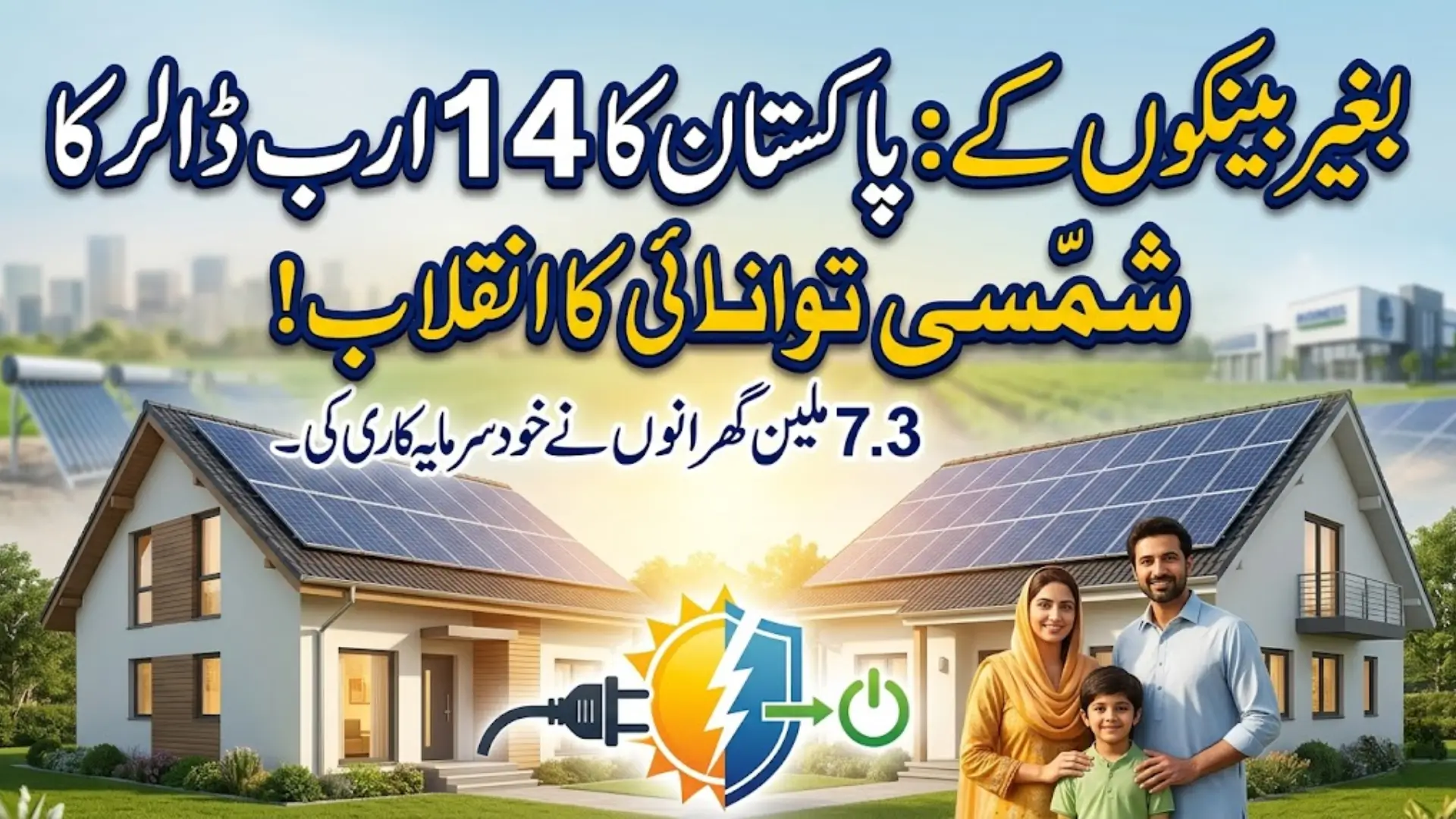
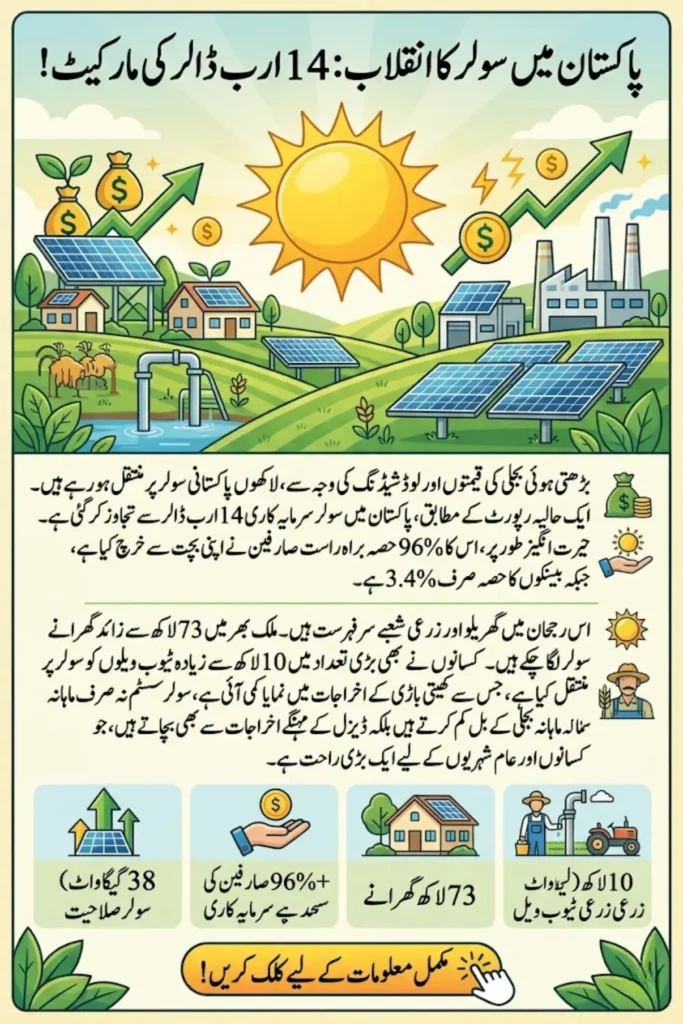
Pakistan Distributed Solar Financing 2026 Latest Update: Pakistan’s distributed solar market has reached an estimated $14 billion, with installed capacity growing to 38GW in FY25. Rising electricity tariffs, inflation, and frequent power outages have encouraged millions of households, farmers, and businesses to adopt solar energy. However, formal bank financing remains limited at just 3.4% of total investment, with most consumers funding solar systems through personal savings and retailer installment plans.
The report titled Customer Owned Renewable Electrification (CORE) Finance Mapping explains that Pakistan’s distributed solar market has reached an estimated value of $14 billion. Despite this massive growth, formal financing from banks contributes only 3.4 percent of the total investment. This trend shows that consumers are willing to invest in solar energy independently due to increasing power costs and unreliable electricity supply.
You Can Also Read: Saudi Arabia Umrah Visas Reopening From May 31, 2026 Brings Relief for Pilgrims
Pakistan Distributed Solar Financing Expands Rapidly
Pakistan distributed solar financing has witnessed extraordinary growth during the last few years. The study estimates that the country’s distributed solar capacity reached 38GW in FY25, making Pakistan one of the fastest-growing solar markets in the region. The demand for solar systems increased because people are searching for long-term solutions to expensive electricity bills and inflation.
The report states that distributed solar systems are now widely used across residential, agricultural, commercial, and industrial sectors. Consumers consider solar power a practical alternative because it reduces dependency on grid electricity and diesel-powered systems. The rapid expansion also reflects growing awareness about renewable energy and environmental sustainability.
Breakdown of Distributed Solar Capacity
| Solar Category | Installed Capacity |
|---|---|
| Behind-the-Meter Systems | 21.3 GW |
| Off-Grid Solar Systems | 9.7 GW |
| Net-Metered Systems | 7.3 GW |
Key Drivers of Solar Growth
- Rising electricity tariffs
- Increasing inflation
- Expensive diesel fuel costs
- Frequent power shortages
- Long-term energy savings
You Can Also Read: Eid ul Azha Holidays 2026 in Pakistan Confirmed After Zil Hajj Moon Sighting
Residential Sector Dominates Pakistan Distributed Solar Financing
The residential sector represents the largest share of Pakistan distributed solar financing. More than 7.3 million households across the country have installed solar systems to reduce electricity expenses. Many families now view solar panels as a necessary investment rather than a luxury because of rising utility costs.
Despite this large-scale adoption, financing support from banks remains extremely limited. The report shows that financing penetration in the residential segment is below 1 percent. Most families purchase solar systems using personal savings or informal installment plans provided by retailers and Buy Now Pay Later services.
Residential Solar Financing Challenges
- Low bank participation
- Limited loan products for households
- High collateral requirements
- Dependence on retailer financing
- Lack of flexible repayment systems
The study also explains that traditional banks often avoid small-ticket solar financing because operational costs are considered too high. As a result, alternative financing models have become more popular among middle-income households seeking affordable energy solutions.
You Can Also Read: HEC Opens HAT Registration 2026 for MS and M.Phil Admissions in Pakistan
Agriculture Sector Moves Toward Solar Energy
Pakistan’s agriculture sector has also experienced major transformation through solar adoption. Around 1 million tubewells have been converted to solar energy between 2022 and 2025. Farmers are increasingly shifting away from diesel-powered systems because fuel prices continue to increase every year.
Solar energy now accounts for nearly 61 percent of the tubewell energy mix in Pakistan. This transition has significantly reduced farming costs and improved operational efficiency in rural areas. Farmers are benefiting from lower irrigation expenses and greater energy independence through solar-powered systems.
Agricultural Solar Financing Sources
| Financing Source | Role in Agri-Solar Expansion |
|---|---|
| Microfinance Institutions | Small-scale farmer financing |
| Government Subsidy Programs | Reduced installation costs |
| State Bank Priority Lending | Support for renewable agriculture |
| Retail Installment Models | Flexible payment solutions |
Although agriculture has shown progress, formal financing penetration remains only 3.1 percent. This indicates that many farmers still face challenges in accessing affordable financial support for solar investments.
Commercial and Industrial Solar Financing Trends
The commercial and industrial sectors are also playing an important role in Pakistan distributed solar financing. Large industrial businesses have adopted solar systems to reduce production costs and protect themselves from increasing electricity tariffs. Industries with strong financial backgrounds are more likely to receive financing from banks and private lenders.
However, small and medium enterprises continue to face financial barriers. Many businesses rely on informal retailer credit because formal banking procedures are often difficult and time-consuming. The report states that industrial financing penetration stands at 9.3 percent, while the commercial sector records 4.8 percent penetration.
Challenges Faced by Businesses
- Strict loan approval conditions
- Lack of customized solar financing products
- High financing costs
- Limited access for SMEs
- Complex banking procedures
Experts believe that improving financial access for small businesses could significantly increase solar adoption in Pakistan’s commercial sector.
You Can Also Read: Vlektra Velocity 180 Electric Bike Introduces Zero Markup Installment Plans in Pakistan
Why Traditional Banking Models Are Failing
The CORE Finance Mapping report explains that distributed solar systems do not align well with traditional lending models. Banks generally prefer large loans with strong collateral, while solar financing often involves smaller investments with different repayment structures.
According to energy finance experts, banks usually ignore energy savings as a repayment source. This creates a major financing gap because many consumers can afford monthly solar repayments through reduced electricity bills. The report suggests that the next stage of Pakistan distributed solar financing depends entirely on introducing innovative financial products.
Key Financing Problems
- Small loan sizes
- High transaction costs
- Collateral-based lending systems
- Limited branch-level expertise
- Lack of energy-focused financial models
The report also highlights that most consumers capable of self-financing have already installed solar systems. Future market growth will require easier financing access for lower-income households and smaller businesses.
You Can Also Read: RedMagic 11S Pro Series Launched With Snapdragon 8 Elite Gen 5 and 144Hz OLED Display
Climate Benefits of Pakistan Distributed Solar Financing
The rapid growth of distributed solar energy is also creating major environmental benefits for Pakistan. The report estimates that distributed solar deployment helped avoid approximately 46 million tonnes of CO₂-equivalent emissions in FY25. This reduction supports Pakistan’s climate goals and decreases dependence on fossil fuels.
Solar systems are helping households, industries, and farmers lower their carbon footprint while improving energy reliability. Renewable energy expansion also contributes to cleaner air and reduced environmental pollution in urban and rural areas.
Environmental Advantages of Solar Energy
- Lower greenhouse gas emissions
- Reduced diesel consumption
- Cleaner air quality
- Sustainable energy production
- Reduced dependence on fossil fuels
Experts believe that expanding solar financing could further strengthen Pakistan’s climate resilience and renewable energy targets.
Future of Pakistan Distributed Solar Financing
The future of Pakistan distributed solar financing depends on policy reforms and innovative lending solutions. Financial institutions need to design products specifically for solar users, including flexible repayment plans and lower collateral requirements. Without structured financing systems, future solar growth could slow down despite strong consumer demand.
The report concludes that coordinated action between banks, regulators, and government institutions is necessary to support the next phase of Pakistan’s energy transition. Expanding access to affordable financing can help millions more households and businesses adopt clean and low-cost solar energy solutions.
Recommended Solutions for Future Growth
- Introduce solar-specific loan products
- Expand microfinance support
- Simplify financing procedures
- Encourage public-private partnerships
- Improve consumer awareness programs
You Can Also Read: National Savings 1500 Prize Bond Draw 2026 Complete Results and Schedule
FAQs
What is Pakistan distributed solar financing?
Pakistan distributed solar financing refers to the investment and funding of small-scale solar systems installed by households, farms, and businesses across the country.
How much has Pakistan invested in distributed solar systems?
The report estimates that Pakistan has invested around $14 billion in distributed solar energy systems so far.
Why are people switching to solar energy in Pakistan?
People are adopting solar energy due to rising electricity tariffs, inflation, expensive fuel prices, and the need for long-term energy savings.
How many households in Pakistan use solar systems?
More than 7.3 million households in Pakistan have installed solar systems for electricity generation and energy savings.
What is the biggest challenge in Pakistan distributed solar financing?
The biggest challenge is the lack of structured financing options and limited support from formal banking institutions.
You Can Also Read: Gold Price in Pakistan Today Falls Again After International Market Decline