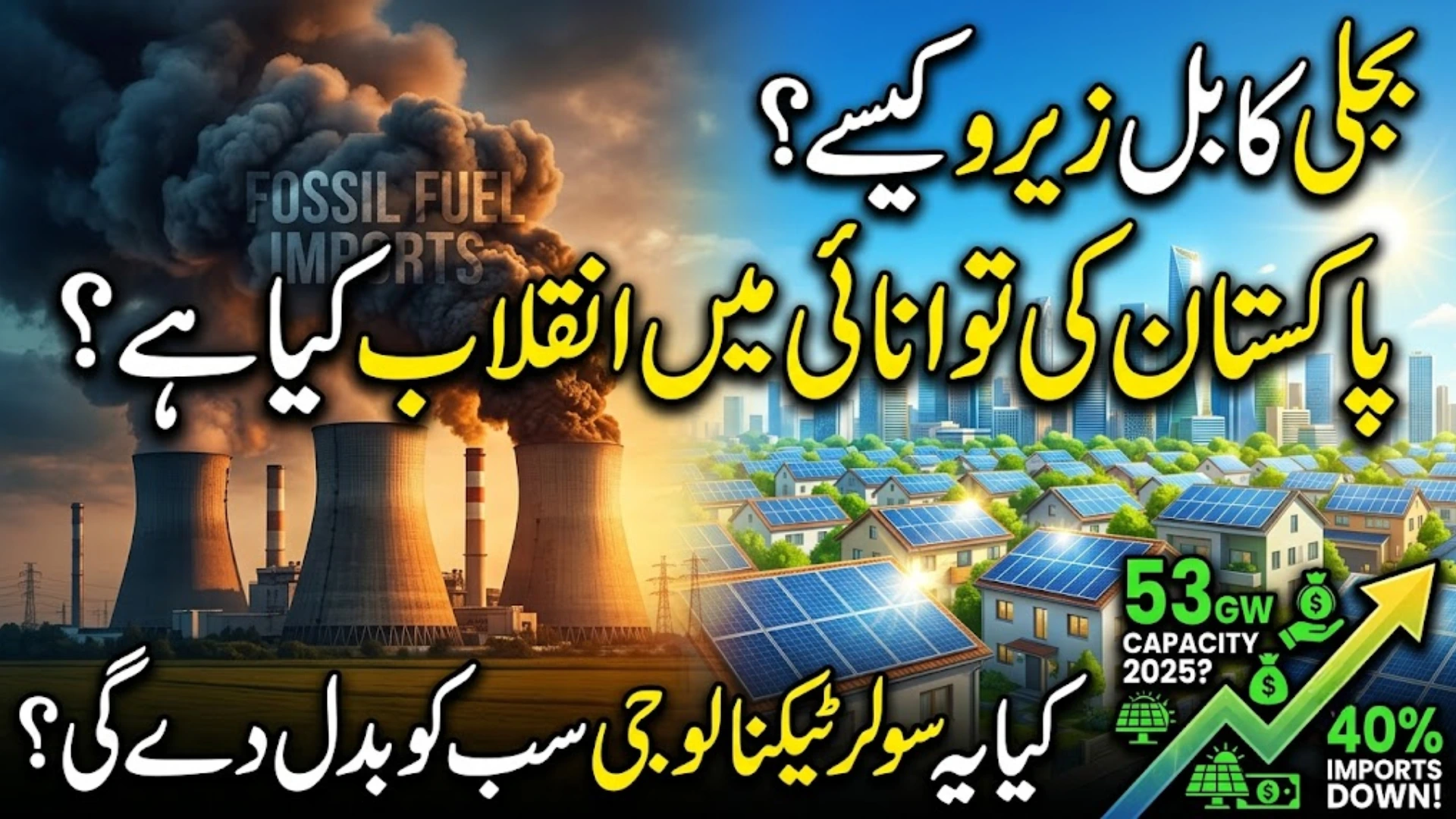
Pakistan Solar Energy Shift: Import Dependence Drops 40% as Rooftop Solar Adoption Reshapes Power Sector
Pakistan Solar Energy Shift
Pakistan is experiencing a major transformation in its energy sector as rooftop solar adoption grows rapidly across households and businesses. This shift is reducing the country’s dependence on imported fossil fuels and changing how electricity demand is being met.
Instead of relying only on centralized power generation, many consumers are now producing their own electricity through distributed solar systems. This change is not only reshaping consumption patterns but also improving access to cheaper and more flexible energy options.
You Can Also Read: احساس راشن پروگرام 8123 اہلیت چیک 2026 – آن لائن رجسٹریشن، CNIC ایس ایم ایس طریقہ اور مکمل رہنمائی
Pakistan Solar Energy Shift and Decline in Fossil Fuel Imports
The most significant outcome of this transition is the sharp decline in fossil fuel imports. According to a pre-budget report shared by Renewables First, oil and LNG imports fell by around 40 percent between 2022 and 2024.
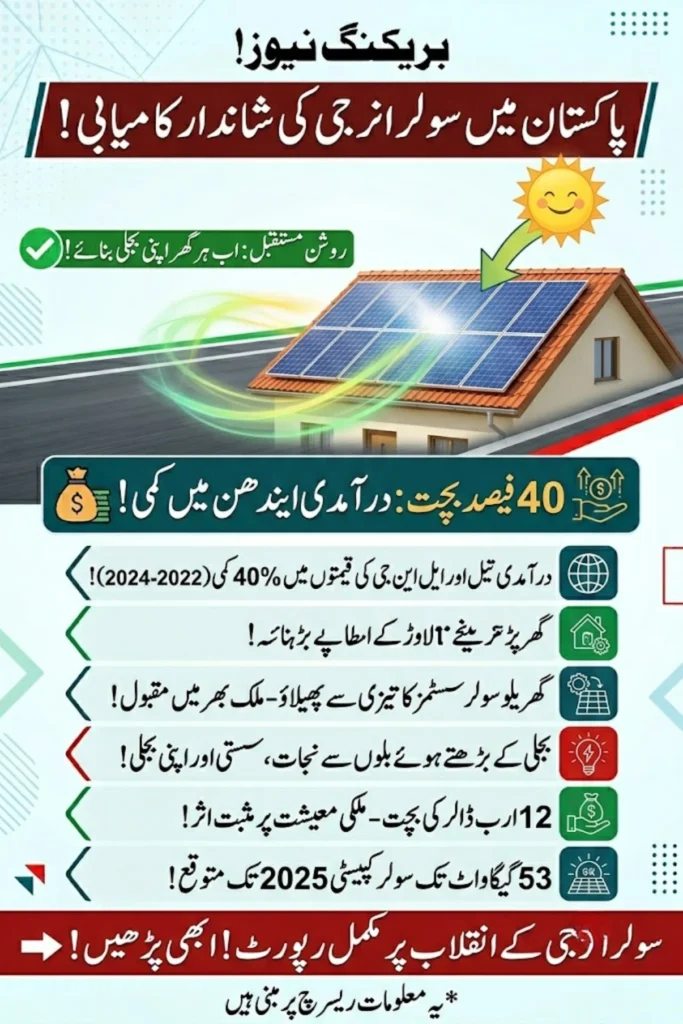
This reduction highlights how solar energy is directly impacting Pakistan’s import bill and easing pressure on foreign reserves. The shift is largely driven by increasing solar installations at the household level rather than large-scale power projects.
Key points:
- Oil and LNG imports dropped by 40% (2022–2024)
- Strong reduction in energy import dependency
- Growth driven mainly by rooftop solar adoption
- Reduced pressure on foreign exchange reserves
Pakistan Solar Energy Shift and Rise of Rooftop Solar Systems
A major factor behind this transformation is the rapid expansion of rooftop solar systems across Pakistan. Instead of depending on the national grid alone, users are increasingly generating their own electricity.
This distributed energy model allows households to manage rising electricity costs and even use more appliances like air conditioners without significantly increasing their bills.
Key developments:
- Rapid growth in rooftop solar installations
- Shift from centralized to distributed energy systems
- Increased electricity usage due to lower cost of solar power
- Improved energy independence for households
You Can Also Read: Maryam Ko Batain Program 2026 – Complete Guide to Rs.10,000 Relief, Helpline 1000
Pakistan Solar Energy Shift and Solar Equipment Imports
| Factor | Impact |
|---|---|
| Solar panel imports | Increased due to demand from China |
| Cost of systems | Reduced due to low-cost imports |
| Policy support | Zero-rated tariff on solar equipment |
| Market trend | Rapid adoption across urban areas |
The affordability of solar systems has played a key role in accelerating adoption. Large-scale imports of low-cost solar panels from China have made installations more accessible to middle-income households.
Government support through zero-rated tariffs on solar equipment has further encouraged this growth. As a result, solar energy has become one of the fastest-growing segments in Pakistan’s energy market.
Pakistan Solar Energy Shift and Government Tax Policy Debate
Despite strong growth, the government is reviewing a proposal to increase sales tax on solar panels from 10 percent to 18 percent. This potential policy change could affect future adoption rates.
Such a move may increase the cost of solar installations and slow down the momentum of renewable energy expansion. Industry experts warn that reversing tax relief could discourage households from investing in solar systems.
Key concerns:
- Proposed increase in solar panel sales tax
- Possible slowdown in solar adoption
- Higher installation costs for consumers
- Policy uncertainty in renewable energy sector
You Can Also Read: مریم کو بتائیں ویب پورٹل – مکمل رجسٹریشن، ہیلپ لائن 1000 اور رمضان ریلیف گائیڈ 2026
Pakistan Solar Energy Shift and Economic Savings
The shift toward solar energy has also resulted in significant financial savings for the country. Reports estimate that Pakistan saved around 12 billion dollars in LNG imports between 2021 and February 2026.
If current trends continue, an additional 6.3 billion dollars in savings could be achieved. These savings help reduce pressure on the national economy and improve energy security.
Key benefits:
- $12 billion saved in LNG imports
- Potential additional savings of $6.3 billion
- Lower reliance on imported energy sources
- Improved balance of payments
Pakistan Solar Energy Shift and Installed Capacity Growth
Pakistan’s installed solar capacity is estimated at around 53 gigawatts by March 2025. This growth is primarily driven by rooftop and distributed solar systems rather than centralized government projects.
The rapid expansion shows how consumer-driven adoption is reshaping the country’s energy landscape. Many households and small businesses are now contributing directly to national electricity generation.
Key highlights:
- 53 GW estimated solar capacity by 2025
- Growth led by rooftop installations
- Limited role of centralized planning
- Strong private sector participation
You Can Also Read: وزیراعظم رمضان نگہبان پیکج چیک کرنے کا طریقہ – 13000 روپے حاصل کرنے کا مکمل طریقہ، 9999 پر اہلیت چیک اور آن لائن تصدیق گائیڈ
Pakistan Solar Energy Shift and Economic Impact
The solar transition has reduced Pakistan’s exposure to currency depreciation and inflationary pressure. Since imported fuel costs are lower, the economy becomes less vulnerable to global price shocks.
This shift also provides cheaper electricity alternatives for households and businesses. As more users adopt solar energy, overall electricity demand on the national grid is expected to stabilize.
Key impacts:
- Reduced currency and inflation risks
- Lower electricity costs for consumers
- Increased energy independence
- Improved economic stability
Pakistan Solar Energy Shift and Energy Security Challenges
Despite strong progress, Pakistan still faces energy security risks due to regional supply vulnerabilities. Routes such as the Strait of Hormuz remain critical for global energy transport.
However, solar expansion has already created a buffer against import shocks. This helps reduce immediate risks even though long-term energy stability still depends on policy and infrastructure planning.
Key points:
- Continued vulnerability to global supply routes
- Solar energy reduces import shock risks
- Partial improvement in national energy security
- Need for long-term policy stability
You Can Also Read: MG HS PHEV Price Drop Pakistan 2026: Massive Discount, Zero Markup Financing & New Ownership Benefits
Conclusion
The Pakistan solar energy shift represents a major structural change in the country’s energy system. With a 40 percent drop in fossil fuel imports and rapid rooftop solar adoption, the energy mix is becoming more decentralized and sustainable.
However, future growth depends on stable policies and continued affordability of solar systems. If supported properly, solar energy can significantly reduce import dependence and strengthen Pakistan’s energy security.
FAQs – Pakistan Solar Energy Shift
What is the Pakistan solar energy shift?
It refers to the rapid increase in rooftop solar adoption reducing dependence on imported fossil fuels.
How much have oil and LNG imports declined?
They have fallen by around 40 percent between 2022 and 2024.
What is Pakistan’s solar capacity estimate?
Installed solar capacity is estimated at around 53 gigawatts by 2025.
Why is solar adoption increasing in Pakistan?
Due to low-cost imports from China and zero-rated tariff policies on solar equipment.
Can solar reduce Pakistan’s energy crisis?
Yes, it reduces import dependency and improves energy availability through distributed generation.
You Can Also Read: Gold Price in Pakistan Today: Gold Stays Near Rs. 4.5 Lac After Sudden Recovery in Local and Global Markets