

Introduction to Pakistan External Debt Repayment
Pakistan External Debt Repayment has become a key focus as the country prepares to meet $4.8 billion in obligations by June. Managing external debt is critical for maintaining economic stability and ensuring confidence among international lenders. Timely repayments also help strengthen the country’s financial credibility in global markets.
The current repayment plan includes payments to multiple creditors, with a significant portion owed to the United Arab Emirates. These developments highlight the importance of careful financial planning and strong international partnerships in managing external liabilities.
- Total repayment target is $4.8 billion
- Deadline set for June 2026
- Focus on maintaining economic stability
You Can Also Read: Gold Prices in Pakistan Today – Latest Increase, International Trends and Silver Rate Update
Pakistan External Debt Repayment to UAE
A major part of Pakistan External Debt Repayment involves returning $3.5 billion to the UAE. Out of this, $2 billion is scheduled to be repaid by the end of April. These funds were previously held as deposits with the State Bank of Pakistan at an interest rate of 6 percent.
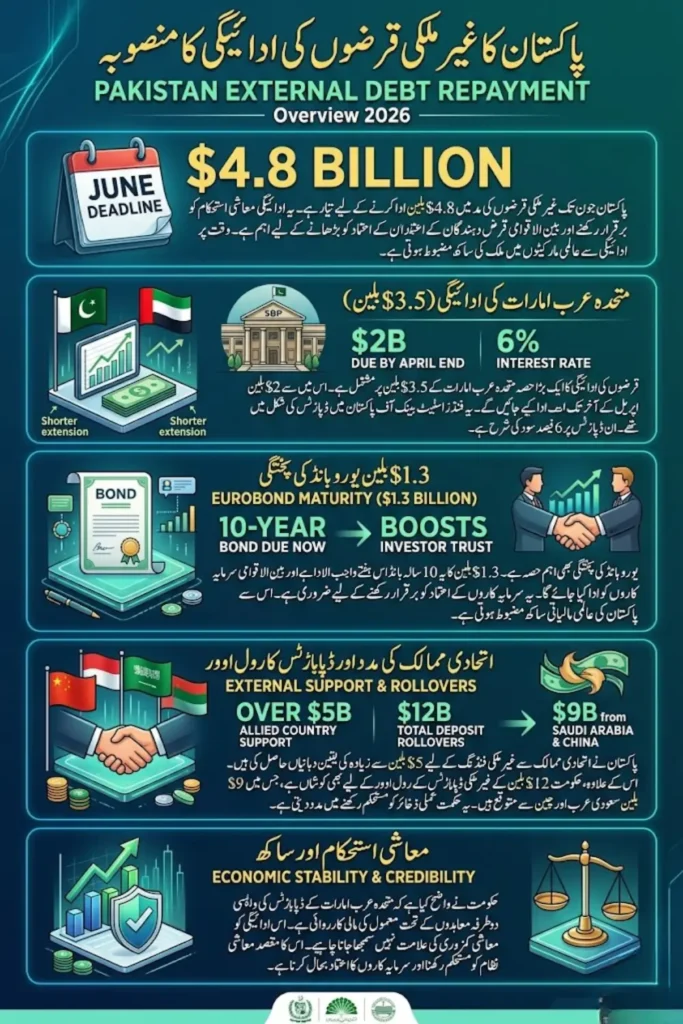
This repayment reflects ongoing financial cooperation between the two countries. While such deposits have historically been rolled over, recent developments indicate a shift toward shorter extensions, requiring Pakistan to arrange timely repayments.
- $3.5 billion owed to UAE
- $2 billion due by April end
- Deposits held at 6% interest
You Can Also Read: MDCAT One Week Policy Criticism – Exam Gap, Student Stress and Fairness Issues in Pakistan
Changing Trends in UAE Deposit Rollovers
In the past, Pakistan benefited from annual rollovers of UAE deposits, which provided flexibility in managing external debt. However, recent changes show that extensions are now being granted for shorter periods, increasing repayment pressure.
This shift is influenced by global financial tightening and regional uncertainties. As a result, Pakistan must now rely more on structured repayment plans rather than extended rollovers.
- Earlier annual rollovers provided ease
- Now shorter extensions are given
- Increased pressure on repayment timelines
Impact of Global Financial Conditions
Global economic conditions have played a major role in shaping Pakistan External Debt Repayment strategy. Rising geopolitical tensions and financial uncertainties have made lenders more cautious, affecting loan terms and extensions.
These external factors require Pakistan to adopt a more disciplined approach to debt management. Careful planning is necessary to avoid disruptions and ensure smooth repayment of obligations.
- Global financial tightening affects loans
- Regional instability impacts decisions
- Need for strong financial planning
You Can Also Read: United Electric Bike Price in Pakistan 2026 – Complete Specs, Features, Range & Buying Guide
Eurobond Repayment in Pakistan External Debt Repayment
Another important component of Pakistan External Debt Repayment is the maturity of a $1.3 billion Eurobond. This 10-year bond is due this week and will be repaid as part of the country’s commitments to international investors.
Meeting such obligations is crucial for maintaining investor trust and avoiding default risks. Successful repayment strengthens Pakistan’s position in global financial markets.
| Debt Type | Amount |
|---|---|
| UAE Deposits | $3.5 Billion |
| Eurobond | $1.3 Billion |
| Total Repayment | $4.8 Billion |
- Eurobond worth $1.3 billion maturing
- Payment to be completed on time
- Important for investor confidence
Financial Support and External Assistance
Pakistan has also secured assurances of more than $5 billion from allied countries to support its external financing needs. This assistance plays a vital role in managing short-term financial pressures.
Such support reflects strong diplomatic and economic ties. It helps the country maintain liquidity and meet repayment deadlines without putting excessive strain on reserves.
- $5 billion الدعم from allies
- Helps manage financing gap
- Strengthens economic stability
You Can Also Read: PM Housing Loan Scheme Apply Online 2026 – Complete Guide, Eligibility, Documents
External Deposit Rollovers Strategy
For the current fiscal year, Pakistan is seeking rollovers of around $12 billion in external deposits. Out of this, approximately $9 billion is expected from Saudi Arabia and China, which are key financial partners.
This strategy allows Pakistan to manage its debt obligations more effectively by extending repayment timelines. It also ensures that foreign exchange reserves remain stable.
| Source Country | Expected Rollover |
|---|---|
| Saudi Arabia | Included in $9B |
| China | Included in $9B |
| Total Rollovers | $12 Billion |
- Total rollover target is $12 billion
- Major share from Saudi Arabia and China
- Helps maintain foreign reserves
Government’s Position on Pakistan External Debt Repayment
The government has clarified that returning UAE deposits is a routine financial transaction under bilateral agreements. Officials have emphasized that such repayments should not be seen as a sign of economic weakness.
This statement aims to reassure the public and investors that Pakistan’s financial system remains stable. Transparency in communication is essential to maintain confidence in economic policies.
- Repayments termed routine process
- Based on bilateral agreements
- Aimed at maintaining investor trust
You Can Also Read: punjab gov pk minority card online check – Complete Guide to Payment Status, Eligibility, and Phase 3 Registration 2026
Conclusion
Pakistan External Debt Repayment plan reflects a structured approach to meeting financial obligations while maintaining economic stability. The repayment of $4.8 billion, including UAE deposits and Eurobond maturity, shows the country’s commitment to fulfilling its responsibilities.
At the same time, support from allied countries and rollover strategies provide necessary financial flexibility. Moving forward, careful planning and strong international partnerships will remain essential for sustainable debt management.
FAQs
What is Pakistan’s total external debt repayment target?
Pakistan plans to repay $4.8 billion in external debt by June 2026.
How much does Pakistan owe to the UAE?
Pakistan owes $3.5 billion to the UAE, with $2 billion due in April.
What is the Eurobond repayment amount?
A $1.3 billion Eurobond is maturing and will be repaid this week.
Which countries are supporting Pakistan financially?
Allied countries have assured over $5 billion, with support also expected from Saudi Arabia and China.
What are external deposit rollovers?
Rollovers are extensions of existing deposits that delay repayment and help manage financial pressure.
You Can Also Read: Sindh Petrol Subsidy Portal Down – Complete Guide to Rs 2000 Subsidy