FBR Ban on Purchase of Additional Vehicles After Buying 1,000 Honda City Cars Under Austerity Plan
Introduction to FBR Ban on Purchase of Additional Vehicles
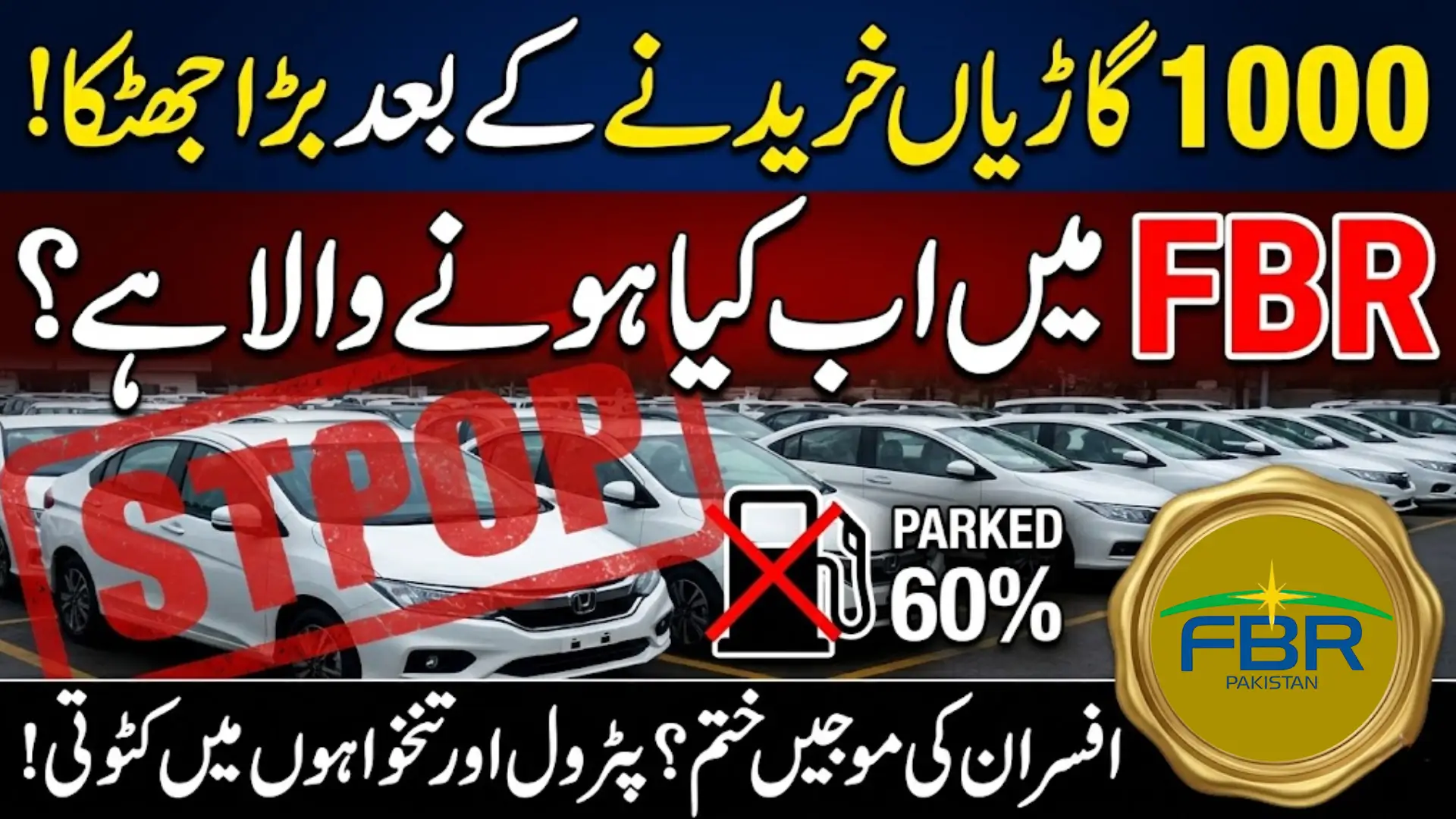
The Federal Board of Revenue has introduced the FBR Ban on Purchase of Additional Vehicles after recently expanding its official fleet with more than 1,000 Honda City cars for revenue officers. The decision comes as the government begins implementing strict austerity measures aimed at reducing public spending. Officials have acknowledged that the major fleet expansion did not lead to the expected increase in revenue collection.
As a result, the government has decided to control unnecessary expenditures within departments. The FBR Ban on Purchase of Additional Vehicles reflects a shift toward responsible financial management, especially during a time when Pakistan is facing economic pressures and regional uncertainties. Authorities believe that limiting vehicle purchases and reducing operational costs will help conserve resources.
- FBR recently acquired more than 1,000 Honda City vehicles
- Ban introduced to stop further expansion of the official fleet
- Decision linked to government austerity measures
- Focus on controlling public sector spending
For More Information: Vivo Y37+ Launches with Dimensity 6300, 6,000mAh Battery and 44W Fast Charging
Government Austerity Plan and Economic Challenges
The FBR Ban on Purchase of Additional Vehicles is part of a broader austerity strategy directed by Prime Minister Shehbaz Sharif. The government has introduced several cost-cutting policies across public institutions to deal with economic challenges and rising expenditures. These steps are intended to improve financial discipline and ensure that resources are used efficiently.
Pakistan is currently dealing with economic pressure, which has forced authorities to review government spending patterns. The austerity plan focuses on reducing operational expenses, conserving energy, and minimizing unnecessary costs in government departments. Through these measures, the government hopes to stabilize financial management while maintaining essential services.
- Austerity measures introduced by Shehbaz Sharif
- Strategy designed to reduce government spending
- Focus on energy conservation and financial discipline
- Departments instructed to limit unnecessary expenses
Restrictions on Official Vehicle Usage
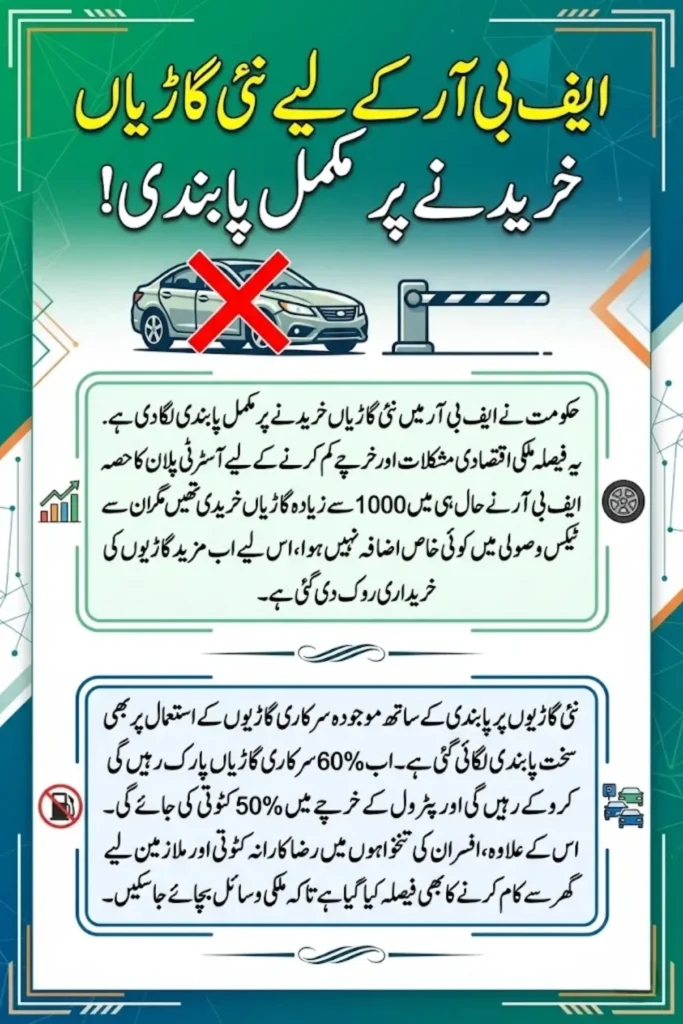
Along with the FBR Ban on Purchase of Additional Vehicles, the government has introduced strict limits on the use of existing official vehicles. Under the new directives, 60 percent of government vehicles will remain parked instead of being used for routine travel. This measure is expected to significantly reduce operational transportation expenses.
Another major step involves cutting fuel expenditures by 50 percent across departments. Fuel costs represent a large portion of government spending on transport, and reducing usage will help lower the overall financial burden. These restrictions are meant to ensure that vehicles are only used for essential duties.
For More Information: Minority Card Online Check Balance 2026 – Eligibility, Online Registration
- 60 percent of official vehicles will remain parked
- Only essential transport activities will continue
- Fuel spending reduced by 50 percent
- Transportation costs expected to decline significantly
Table: Vehicle and Fuel Reduction Measures
| Measure | Implementation |
|---|---|
| Vehicle usage restriction | 60% vehicles parked |
| Fuel expenditure reduction | 50% decrease |
| New vehicle purchases | Completely banned |
| Monitoring system | Weekly reporting |
Work-from-Home Policy and Staff Rotation System
The austerity plan linked with the FBR Ban on Purchase of Additional Vehicles also includes new workforce management strategies. One of the key steps is allowing up to half of the workforce to work from home. This policy will help reduce electricity consumption, office maintenance costs, and overall operational expenses.
For lower and mid-level government employees, departments will introduce a rotation system. Employees ranging from Basic Pay Scale 1 to 16 will work in shifts so that fewer people are present in offices at one time. This approach allows the government to continue operations while also reducing energy and facility costs.
- Up to 50 percent of staff may work remotely
- Staff rotation introduced for BS-1 to BS-16 employees
- Reduced electricity and office maintenance expenses
- Departments maintain essential operations with fewer resources
Salary Contribution by Senior Officials
As part of the austerity plan connected to the FBR Ban on Purchase of Additional Vehicles, senior officials have been asked to voluntarily contribute to cost-saving efforts. Officers in Basic Pay Scale 20 and above have been requested to surrender two days’ salary. This measure aims to show leadership support for the government’s financial discipline campaign.
Although the salary contribution is voluntary, it reflects a symbolic effort to share the responsibility of reducing public expenditures. By encouraging senior officials to participate, the government hopes to promote accountability and strengthen confidence in the austerity measures being implemented across departments.
- Applies to officials in BS-20 and higher positions
- Two days’ salary requested as voluntary contribution
- Intended to support national austerity initiatives
- Encourages leadership participation in cost-cutting
For More Information: 125 Foreign Companies Wound Up in Pakistan 2026 – SECP Releases Official List of Closed Branch
Reduction in Non-Employee Related Expenditure
Another important part of the austerity program is the reduction in non-employee related expenditure. The government has ordered a 20 percent reduction in the Non-ERE budget across departments. These expenses usually include administrative costs, utilities, office supplies, and other operational spending.
Reducing Non-ERE spending will help government departments focus only on essential activities. By controlling administrative expenditures, authorities aim to redirect resources toward more productive sectors while maintaining essential public services.
Non-ERE budget reduced by 20 percent
Administrative spending to be tightly controlled
Departments must prioritize essential expenditures
Cost reduction contributes to financial stability
Table: Key Government Austerity Measures
| Austerity Measure | Description |
|---|---|
| Vehicle purchase ban | No additional vehicles allowed |
| Vehicle usage limit | 60% vehicles parked |
| Fuel spending reduction | 50% fuel cost cut |
| Work-from-home policy | Up to 50% staff remote |
| Non-ERE reduction | 20% decrease in operational spending |
Monitoring and Implementation of Cost-Cutting Measures
To ensure the success of the FBR Ban on Purchase of Additional Vehicles and other austerity policies, the government has established an oversight committee. This committee will monitor how departments follow the cost-cutting directives and ensure that all policies are implemented effectively.
In addition, government offices must submit weekly implementation reports. These reports will provide updates on how the austerity measures are being applied across the country. Strict monitoring is intended to guarantee that the policies produce measurable savings.
- Oversight committee created for monitoring
- Weekly reports required from departments
- Nationwide compliance across all FBR offices
- Strict enforcement of government directives
For More Information: Infinix Note 60 Ultra: Pininfarina Design, Satellite Calling, and 7000mAh Battery
Impact of the FBR Ban on Purchase of Additional Vehicles
The FBR Ban on Purchase of Additional Vehicles is expected to play an important role in reducing government operational expenses. By stopping new vehicle purchases and limiting the use of existing vehicles, the government can save significant financial resources during a challenging economic period.
These austerity policies also highlight the government’s attempt to improve fiscal discipline. If implemented successfully, the measures could help create a more efficient public sector where resources are managed carefully and unnecessary expenditures are minimized.
- Reduced transportation and fuel expenses
- Greater financial discipline in government departments
- Better management of public resources
- Support for national economic stability
FAQs
What is the FBR Ban on Purchase of Additional Vehicles?
It is a government directive that prevents the Federal Board of Revenue from buying more official vehicles after recently expanding its fleet with over 1,000 cars.
Why did the government impose this ban?
The ban is part of a broader austerity plan aimed at reducing government spending and improving financial discipline during economic challenges.
How many official vehicles will be affected by the new policy?
Under the directive, about 60 percent of existing official vehicles will remain parked to reduce operational and fuel costs.
Will government employees still work in offices?
Yes, but up to 50 percent of employees may work from home, while others will follow a staff rotation system to reduce expenses.
How will the government ensure compliance with the austerity measures?
An oversight committee has been formed, and all departments must submit weekly reports to confirm that the new cost-cutting policies are being followed.
For More Information: Xiaomi Mijia Air Conditioner Human-Sensing Wind 1.5HP Launched with AI Cooling