Introduction to Pakistan Oil Price Risk Middle East Tensions
Pakistan Oil Price Risk Middle East Tensions, Rising geopolitical tensions in the Middle East are creating serious concerns for Pakistan’s economic outlook, especially in terms of energy costs and inflation risks. A new study by the Pakistan Institute of Development Economics has highlighted that global oil prices could surge sharply if supply routes are disrupted. Such developments could increase financial pressure on Pakistan, which already faces challenges related to energy imports and external account stability.
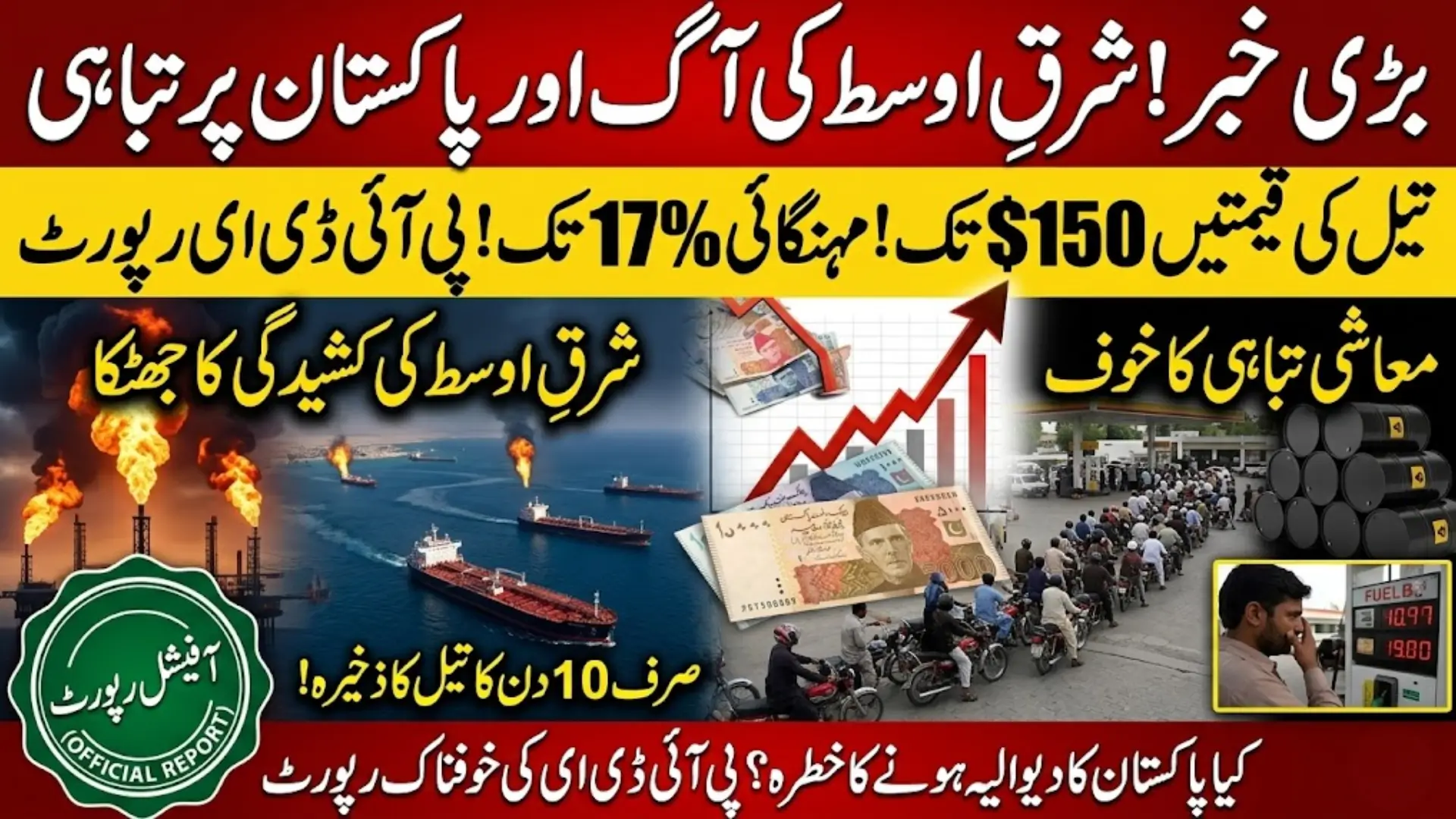
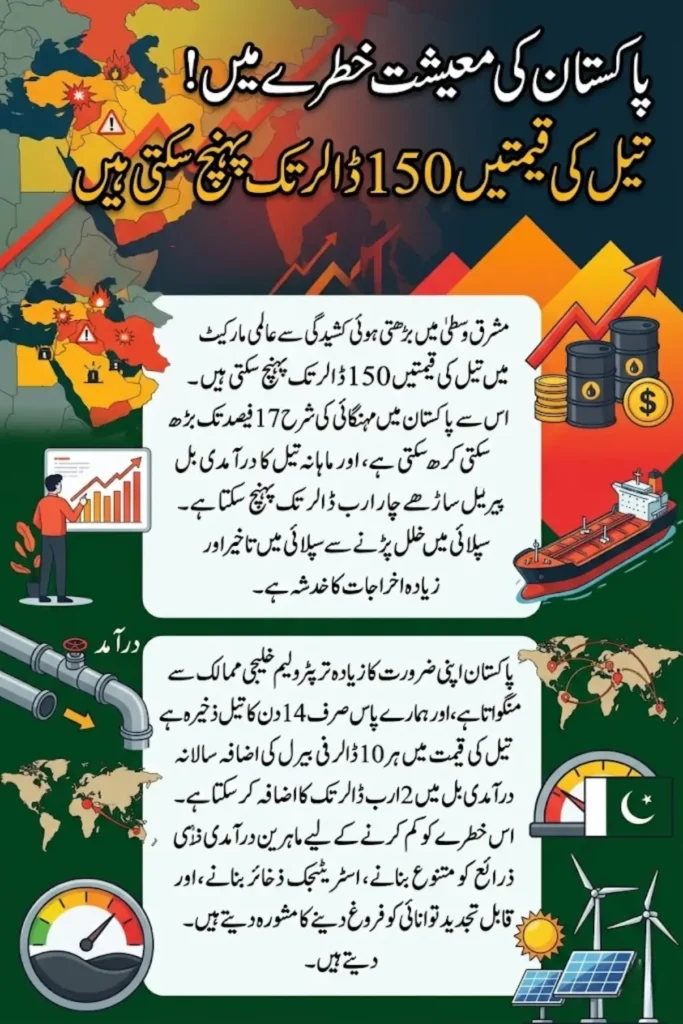
مشرقِ وسطیٰ میں بڑھتی ہوئی کشیدگی کے باعث پاکستان میں تیل کی قیمتوں سے متعلق خدشات میں اضافہ ہو گیا ہے، اور Pakistan Institute of Development Economics کی ایک حالیہ رپورٹ کے مطابق اگر سپلائی میں رکاوٹ پیدا ہوئی تو عالمی منڈی میں خام تیل کی قیمتیں 120 سے 150 ڈالر فی بیرل تک جا سکتی ہیں۔ ایسی صورتحال میں پاکستان، جو اپنی توانائی ضروریات کے لیے بڑی حد تک درآمدات پر انحصار کرتا ہے، کو مہنگائی اور درآمدی بل میں نمایاں اضافے کا سامنا کرنا پڑ سکتا ہے، خاص طور پر اگر Strait of Hormuz کے راستے میں خلل پیدا ہو جائے۔ ماہرین کے مطابق اس صورت میں افراطِ زر 15 سے 17 فیصد تک پہنچ سکتا ہے جبکہ ماہانہ تیل درآمدی بل بھی اربوں ڈالر بڑھنے کا امکان ہے، جس سے زرِ مبادلہ کے ذخائر اور مجموعی معاشی استحکام پر دباؤ بڑھ سکتا ہے۔
The report emphasizes that the Pakistan Oil Price Risk Middle East Tensions scenario could lead to higher domestic fuel prices and broader economic uncertainty. Since oil remains a key driver of production and transport costs, sudden price shocks can affect businesses and households alike.
For More Information: Minority Card Payment Check 2026 – Complete Guide
Worst-Case Oil Price Scenario in Pakistan Oil Price Risk Middle East Tensions
According to economic projections, oil prices could reach between $120 and $150 per barrel in a worst-case disruption scenario. This level would significantly exceed current market ranges and place additional pressure on countries that depend heavily on imported petroleum. Pakistan’s vulnerability stems from its reliance on foreign energy supplies and limited domestic reserves.
Such a surge in global oil prices could affect government fiscal planning and private sector investment decisions. Higher energy import costs may also reduce the country’s ability to maintain stable foreign exchange reserves.
- Oil price projections reaching extreme levels
- Increased burden on national import payments
- Greater uncertainty for economic growth forecasts
Inflation Impact Under Pakistan Oil Price Risk Middle East Tensions
The study warns that inflation could rise sharply if energy supply disruptions occur. In a severe situation involving the Strait of Hormuz, Pakistan’s inflation rate could increase from around 7 percent to between 15 and 17 percent. Rising fuel prices often lead to higher transportation, manufacturing, and food costs, directly affecting consumer purchasing power.
Inflationary pressure may also force policymakers to consider adjustments in interest rates and subsidy policies. These changes can influence overall economic activity and investment sentiment.
- Possible inflation surge into double-digit levels
- Increased cost of essential goods and services
- Monetary policy challenges for economic stability
For More Information: Nigehban Card Check Online by CNIC Pakistan Complete Guide
Oil Import Bill Surge in Pakistan Oil Price Risk Middle East Tensions
The report estimates that Pakistan’s monthly oil import bill could climb to between $3.5 billion and $4.5 billion during a major price shock. Such a rise would put strain on the country’s balance of payments and potentially widen the trade deficit. Petroleum imports already account for a large share of total external spending.
Higher import payments could limit fiscal space for development programs and social spending initiatives. Sustained increases in oil prices may also weaken the national currency due to higher demand for foreign exchange.
- Monthly oil import costs projected to increase sharply
- Pressure on foreign exchange reserves and trade balance
- Reduced fiscal flexibility for economic planning
Impact of Oil Price Increase on Annual Import Costs
Economists estimate that every $10 per barrel rise in oil prices can add around $1.8 billion to $2 billion to Pakistan’s annual import bill. This sensitivity to global price changes highlights the structural challenges faced by energy-importing economies. Even moderate price increases can have cumulative financial consequences over time.
Under current price ranges of $92 to $110 per barrel, inflation could already increase by 10 to 15 percent while the import bill may rise by $8 billion to $10 billion. These projections underline the urgency of energy policy reforms.
- Annual import costs linked directly to global price shifts
- Economic planning affected by external market conditions
- Need for long-term energy diversification strategies
For More Information: 8558 Ramzan Relief Package 2026 – Complete Guide
Economic Scenario Analysis for Pakistan Oil Price Risk Middle East Tensions
| Scenario | Oil Price Range | Inflation Impact | Import Bill Increase |
|---|---|---|---|
| Moderate Increase | $92–$110 per barrel | 10–15 percent | $8–$10 billion annually |
| Severe Disruption | $120–$150 per barrel | 15–18 percent | $18–$36 billion over three months |
Strait of Hormuz Disruption and Supply Chain Risks
Pakistan imports approximately 80 to 85 percent of its petroleum needs, with most shipments passing through the Strait of Hormuz. Any disruption in this strategic maritime corridor could delay deliveries and significantly increase freight and insurance costs. Such delays may result in fuel shortages and further price escalation in domestic markets.
Supply chain uncertainties can also impact industrial output and transportation networks. As energy availability becomes unpredictable, businesses may face operational disruptions and increased production expenses.
- Heavy dependence on Gulf oil shipment routes
- Higher logistics and insurance costs during disruptions
- Potential delays affecting fuel supply continuity
For More Information: HEC National Skill Competency Test Registration (NSCTR )2026
Energy Security Challenges and Strategic Reserve Limitations
Pakistan’s energy security is constrained by limited petroleum reserves that currently cover only about 10 to 14 days of consumption. This short buffer period leaves the country exposed to sudden global market shocks and supply interruptions. In comparison, regional economies such as India maintain strategic reserves sufficient for around 65 to 70 days.
Limited reserve capacity reduces the government’s ability to stabilize domestic markets during crises. Strengthening storage infrastructure and maintaining diversified supply sources are considered critical policy priorities.
- Strategic petroleum reserves covering short consumption period
- Greater vulnerability compared with regional peers
- Urgent need for storage expansion and supply diversification
Policy Measures to Reduce Pakistan Oil Price Risk Middle East Tensions
The study recommends several policy steps to reduce the country’s exposure to global oil price volatility. Diversifying import sources and exploring alternative supply routes could help lower dependence on a single maritime corridor. Increased investment in renewable energy projects is also viewed as an essential long-term solution.
Building larger strategic petroleum reserves and improving energy efficiency across industries can further enhance resilience. These measures aim to ensure sustainable economic growth while minimizing risks associated with global energy market fluctuations.
- Diversification of oil import partners and routes
- Expansion of renewable energy investments
- Development of larger strategic fuel reserves
For More Information: Air Link Subsidiary IPO PSX – Select Technologies Plans
Frequently Asked Questions
Why are Middle East tensions affecting Pakistan’s economy?
Pakistan depends heavily on imported oil, so regional conflicts can disrupt supply and raise global prices. This directly impacts inflation and trade balance.
How much could oil prices increase in a worst-case scenario?
The report suggests prices could reach between $120 and $150 per barrel. Such levels would significantly raise import costs and inflation.
What impact could higher oil prices have on inflation?
Inflation could rise from around 7 percent to as high as 15–18 percent. Increased fuel costs usually lead to higher prices for goods and services.
What steps are recommended to reduce economic risks?
Experts suggest diversifying energy imports, investing in renewables, and building larger fuel reserves. These measures can strengthen long-term energy security.
For More Information: Agritech Urea Plant Gas Supply Restored