
Electricity Bill Taxes in Pakistan Reach Rs. 700 Billion in FY 2024-25
Electricity Bill Taxes in Pakistan
Electricity bill taxes in Pakistan crossed Rs. 700 billion during fiscal year 2024-25, showing a major increase in the financial burden on consumers across the country. The latest figures revealed that power distribution companies collected huge amounts in taxes through monthly electricity bills from domestic, commercial, and industrial users.
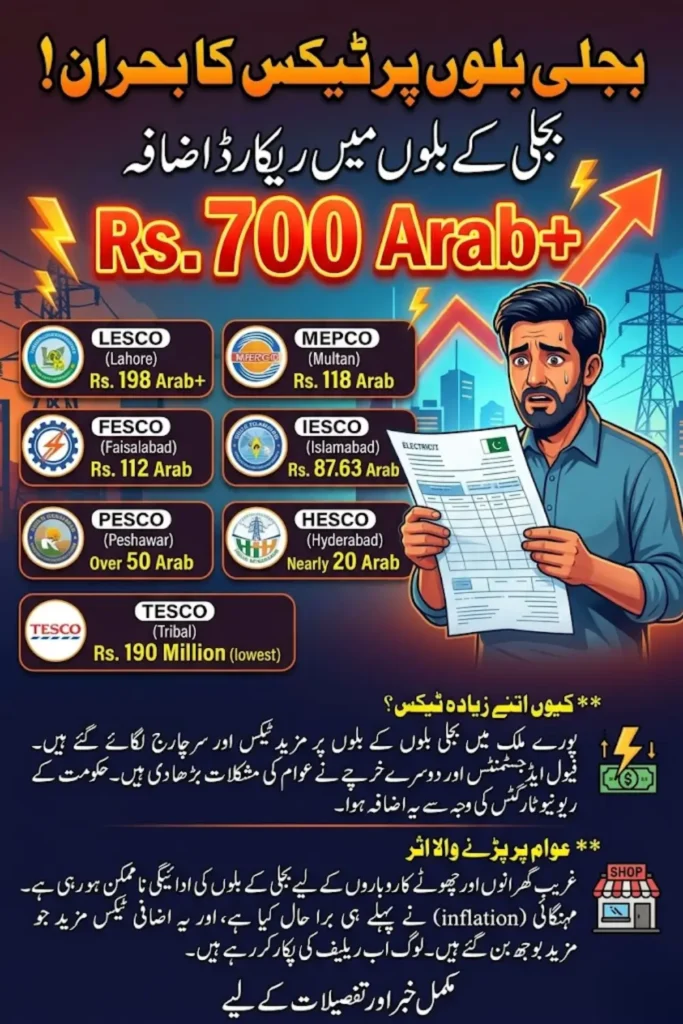
Electricity Bill Taxes in Pakistan 2026 Latest Update: Electricity bill taxes in Pakistan exceeded Rs. 700 billion during FY 2024-25, increasing the financial burden on households and businesses. Among all power distribution companies, LESCO recorded the highest tax collection with over Rs. 198 billion, followed by MEPCO and FESCO. Rising electricity tariffs, fuel adjustment charges, and multiple taxes continue to increase monthly bills, while consumers demand relief amid ongoing inflation and high living costs.
- Electricity bill taxes crossed Rs. 700 billion
- Power companies collected taxes through utility bills
- Consumers faced higher financial pressure
- Domestic and industrial users affected
| Key Detail | Information |
|---|---|
| Total Tax Collection | More than Rs. 700 Billion |
| Fiscal Year | 2024-25 |
| Highest Collecting Company | LESCO |
| Lowest Collecting Company | TESCO |
| Main Source | Electricity Bills |
You Can Also Read: Lahore Waste Management Company Launches Rs23 Crore Eid ul Azha Cleanup Drive with 2,000 Machines Across Lahore
LESCO Emerged as the Largest Tax Collector
Lahore Electric Supply Company recorded the highest tax collection among all distribution companies during FY 2024-25. The company collected more than Rs. 198 billion from electricity consumers in Lahore and nearby areas. This made LESCO the top contributor in electricity-based tax recovery across Pakistan.
The large urban population, heavy commercial activity, and industrial electricity usage in Lahore played an important role in increasing tax collections. Consumers in urban regions continue to pay various taxes and duties along with fuel adjustment charges in their monthly bills.
- LESCO collected over Rs. 198 billion
- Lahore remained the highest revenue region
- Commercial users contributed heavily
- Urban electricity demand remained high
MEPCO and FESCO Reported Strong Collections
Multan Electric Power Company secured the second position after collecting more than Rs. 118 billion in taxes during the fiscal year. The company serves a large number of consumers in South Punjab, including residential and agricultural sectors.
At the same time, Faisalabad Electric Supply Company collected around Rs. 112 billion through electricity bills. Faisalabad’s strong textile and industrial sector remained one of the main reasons behind the high tax collection figures.
- MEPCO collected Rs. 118 billion
- FESCO generated around Rs. 112 billion
- Industrial areas increased electricity consumption
- South Punjab remained a major contributor
| Distribution Company | Tax Collection FY 2024-25 |
|---|---|
| LESCO | Rs. 198 Billion |
| MEPCO | Rs. 118 Billion |
| FESCO | Rs. 112 Billion |
| IESCO | Rs. 87.63 Billion |
| PESCO | Rs. 50+ Billion |
| HESCO | Rs. 20 Billion |
| TESCO | Rs. 190 Million |
You Can Also Read: Multan District Administration Approves Five Official Cattle Markets for Eid ul Adha
IESCO Collected Billions From Federal Areas
Islamabad Electric Supply Company collected around Rs. 87.63 billion from electricity consumers in Islamabad and surrounding regions. The company benefited from strong recovery rates and higher electricity usage in commercial and residential sectors.
The federal capital region continues to show stable electricity demand because of government offices, businesses, and expanding housing sectors. Higher electricity tariffs and taxes also contributed to the increase in overall collections.
- IESCO collected Rs. 87.63 billion
- Islamabad consumers paid multiple taxes
- Commercial electricity demand remained stable
- Recovery rates stayed strong
PESCO and HESCO Also Added Significant Revenue
Peshawar Electric Supply Company generated more than Rs. 50 billion in taxes during the fiscal year. Despite operational challenges in some areas, the company still maintained a strong contribution to overall national tax collection.
Meanwhile, Hyderabad Electric Supply Company collected nearly Rs. 20 billion from consumers in Sindh. Rising electricity usage and increased tariff adjustments played a role in improving revenue generation.
- PESCO collected over Rs. 50 billion
- HESCO generated around Rs. 20 billion
- Tax recovery improved in several regions
- Electricity demand continued to rise
You Can Also Read: Punjab Announces Summer Vacations in Punjab 2026 Amid Rising Heatwave Concerns
TESCO Recorded the Lowest Tax Collection
Tribal Electric Supply Company remained at the lower end of the list after collecting only Rs. 190 million during FY 2024-25. The company also witnessed a sharp decline in collections compared to previous periods.
Several factors affected TESCO’s recovery performance, including lower consumer coverage, operational difficulties, and challenges in bill recovery. The weak collection numbers highlighted the differences between urban and tribal electricity distribution regions.
- TESCO collected only Rs. 190 million
- Collection performance remained weak
- Tribal regions faced operational issues
- Recovery challenges continued
Why Electricity Bill Taxes in Pakistan Are Increasing?
Electricity bills in Pakistan now include multiple taxes, duties, and adjustment charges that significantly increase the total amount consumers pay every month. The government has relied heavily on utility bills as a source of indirect tax collection due to ongoing financial pressure and revenue targets.
Fuel price adjustments, circular debt, and rising energy production costs also pushed electricity prices upward. As a result, consumers are paying more even when electricity usage remains unchanged in some cases.
- Multiple taxes included in electricity bills
- Fuel adjustments increased monthly costs
- Circular debt affected tariff structure
- Government revenue targets remained high
You Can Also Read: Pakistan Accelerates Digital Tax Reforms Through AI and Technology
Impact of Rising Electricity Taxes on Consumers
Higher electricity taxes are affecting both households and businesses across Pakistan. Families with limited incomes are struggling to manage monthly utility expenses while also dealing with inflation in food, fuel, and transport costs.
Industrial sectors are also facing higher operational costs due to expensive electricity bills. Many businesses believe rising utility charges may reduce production capacity and increase prices of locally manufactured goods.
- Household expenses increased sharply
- Businesses faced higher production costs
- Inflation added pressure on consumers
- Utility bills became difficult to manage
Future Outlook for Electricity Bill Taxes in Pakistan
Experts believe electricity-related taxes may continue increasing if energy sector losses and circular debt issues remain unresolved. The government may introduce further adjustments to maintain revenue collection targets in coming fiscal years.

Consumers across Pakistan are now demanding better relief measures and transparent billing systems. Public attention is also growing on how taxes and surcharges are added to electricity bills every month.
- More tariff adjustments possible
- Public concern over electricity pricing rising
- Government focusing on revenue generation
- Consumers seeking relief measures
You Can Also Read: Punjab Bewa Sahara Card 2026 Rs. 10,000 Monthly Stipend Online Apply Process and Last Date
FAQs
Why are electricity bill taxes in Pakistan increasing?
Electricity bill taxes are increasing because of fuel adjustments, government revenue targets, and rising energy sector costs. Multiple taxes and surcharges are now added to monthly bills.
Which company collected the highest electricity bill taxes in FY 2024-25?
LESCO collected the highest amount in taxes during FY 2024-25. The company recovered more than Rs. 198 billion from consumers.
How much tax did MEPCO collect during the fiscal year?
MEPCO collected over Rs. 118 billion in taxes through electricity bills. South Punjab remained one of the major contributing regions.
Which electricity company recorded the lowest collection?
TESCO recorded the lowest collection among all distribution companies. It recovered only Rs. 190 million during the fiscal year.
How do electricity taxes affect Pakistani consumers?
Higher electricity taxes increase monthly household expenses and business operating costs. Consumers are paying more due to additional duties and adjustment charges included in bills.
You Can Also Read: Khyber Pakhtunkhwa Health Department Announces 830 Vaccinator Jobs Across KP