Pakistan Electricity Grid Demand
Pakistan’s electricity sector is facing major structural challenges as the number of electricity users continues to rise while grid electricity demand shows limited growth. According to the Pakistan Electricity Review 2026, more consumers are joining the power system, but their dependence on the national grid is decreasing due to the rapid adoption of solar energy solutions across the country.
The report highlights that Pakistan Electricity Grid Demand is changing because households, farmers, and businesses are increasingly producing electricity through private solar systems. This shift is reducing pressure on electricity consumption from the national grid while creating new challenges for the centralized power sector.
You Can Also Read: 8558 Verification and 5000 Rashan Program Guide
Pakistan Electricity Grid Demand Faces Structural Challenges
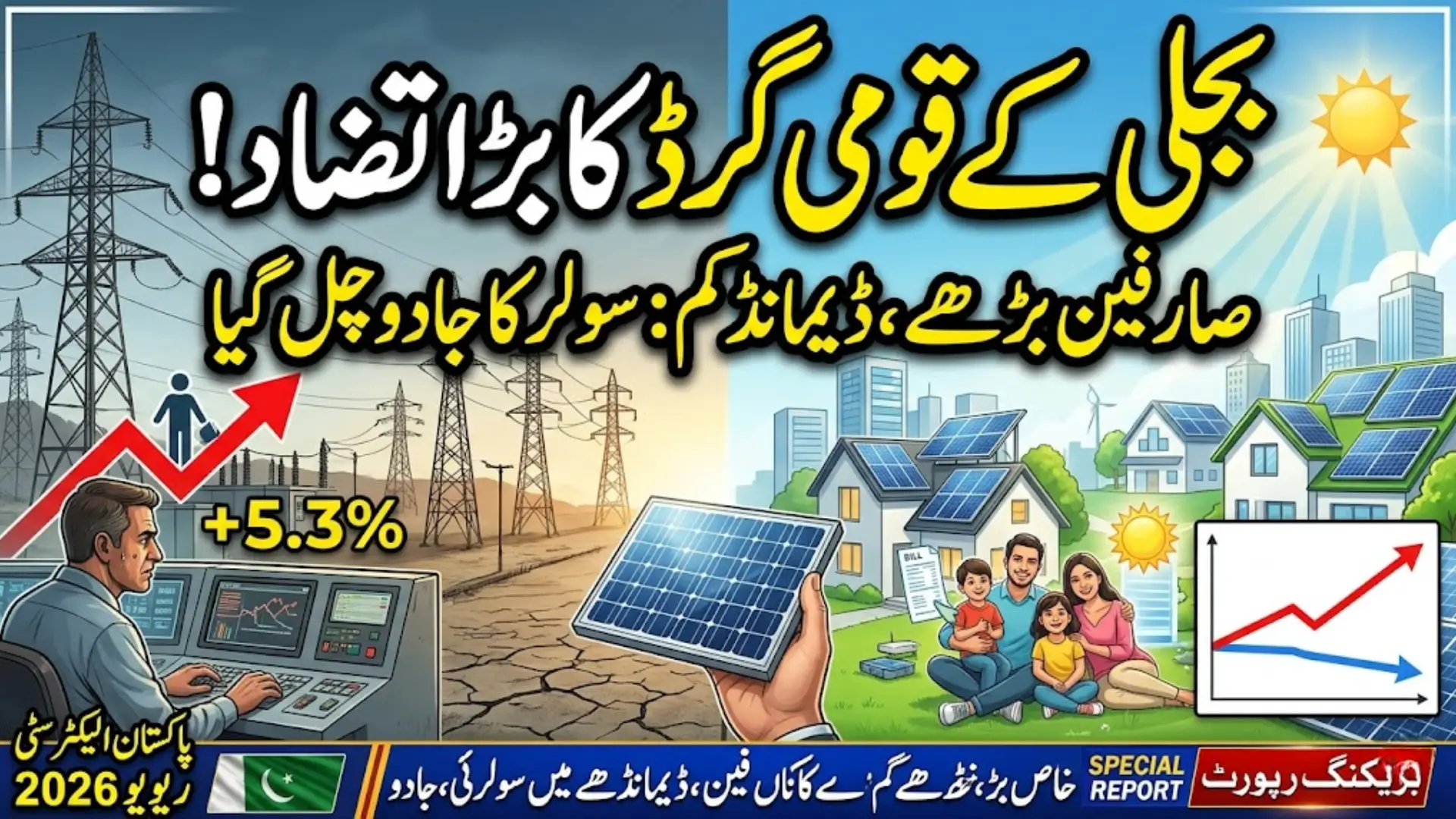
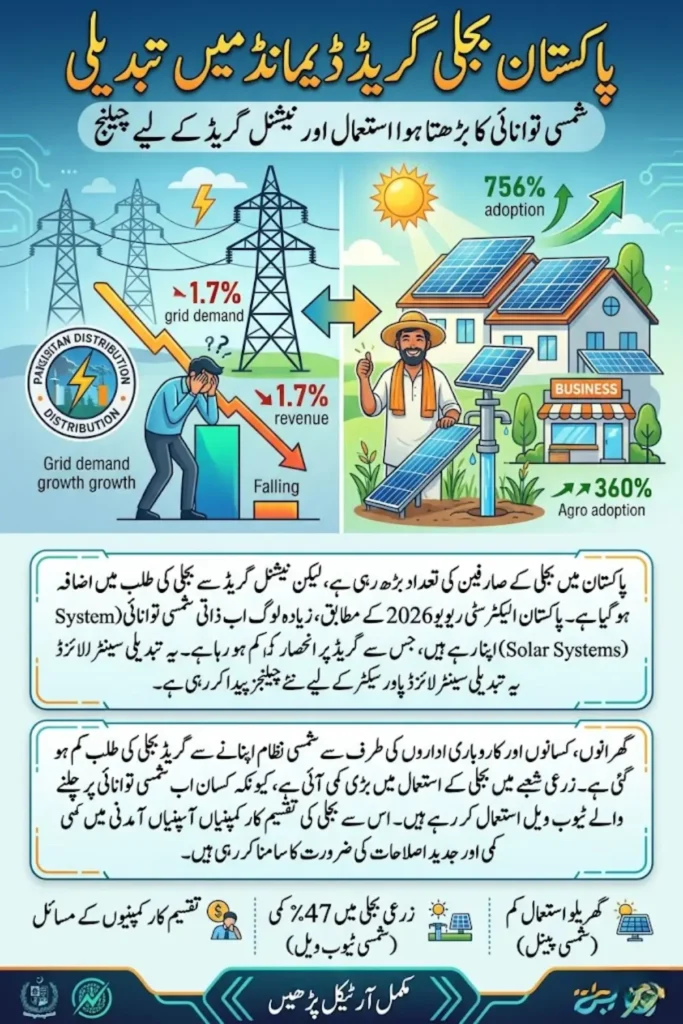
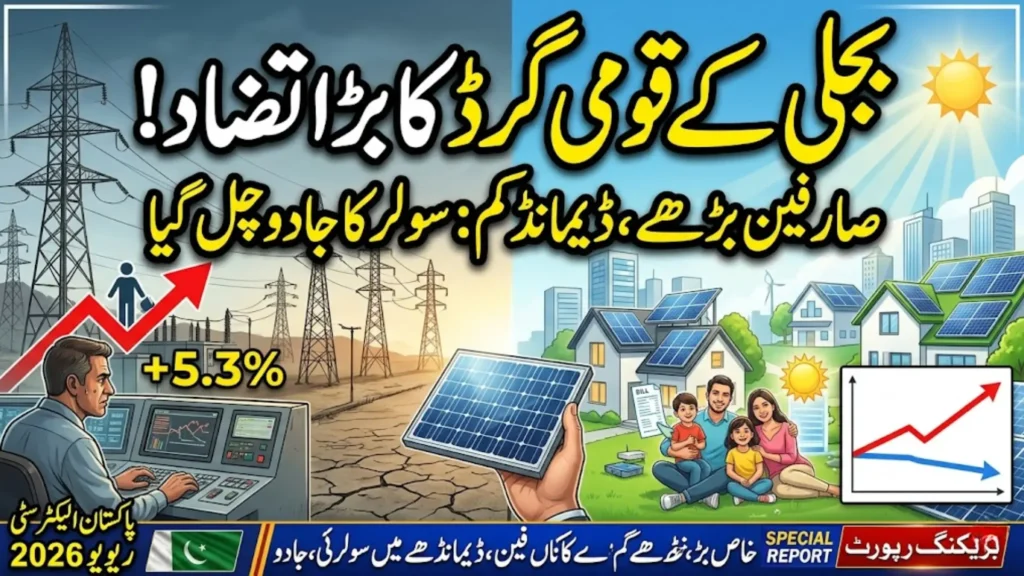
Pakistan Electricity Grid Demand is no longer growing at the same pace as the number of electricity consumers. The report explains that electricity sales through the national grid increased by only 1.7 percent during FY25, reaching 111 TWh, while the number of electricity users increased by 5.3 percent during the same period. This difference shows that consumers are reducing their reliance on grid electricity.
The country’s electricity infrastructure was originally designed for continuous growth in electricity sales through centralized distribution systems. However, the growing use of alternative energy sources, especially solar systems, is changing electricity consumption patterns in both urban and rural areas.
Important findings from the report include:
- Grid electricity sales increased only 1.7 percent in FY25
- Electricity consumers increased by 5.3 percent
- Solar energy adoption is reducing grid dependence
- Demand is shifting toward decentralized energy systems
- Electricity consumption per user is declining
This situation has created a structural mismatch where the power sector expects higher electricity sales, but actual demand from the national grid is slowing down.
You Can Also Read: 13000 Eid ul Adha Relief Package 2026 – Nigehban Card Check Online by CNIC Pakistan
Grid Electricity Sales Show Limited Growth
The Pakistan Electricity Review 2026 revealed that grid electricity sales reached 111 TWh during FY25. Although this reflects some growth compared to previous years, the increase remains very small when compared with the rapid expansion in electricity connections across the country. Experts believe that rising electricity prices and alternative energy solutions are influencing consumer behavior.
Over the past five years, Pakistan Electricity Grid Demand has declined by approximately 1 percent annually despite population growth and economic expansion. Normally, higher population and GDP growth increase electricity demand, but Pakistan is experiencing a different trend due to the increasing popularity of solar systems.
| Electricity Sector Data | FY25 Performance |
|---|---|
| Grid electricity sales growth | 1.7% |
| Total grid sales | 111 TWh |
| Consumer growth | 5.3% |
| Estimated annual grid demand decline over five years | 1% |
The report suggests that consumers are managing their energy needs outside the formal grid system, reducing the growth of electricity demand from distribution companies.
Solar Energy Adoption Reducing Grid Dependence
Solar energy adoption is playing a major role in reducing Pakistan Electricity Grid Demand. Many households and businesses are shifting toward solar systems to avoid rising electricity bills and reduce dependence on unreliable grid supply. Solar technology has become more accessible, encouraging consumers to generate their own electricity.
This transition toward renewable energy is changing the structure of Pakistan’s electricity market. Consumers are now using solar panels for daytime electricity needs while relying less on the national grid. As more people adopt solar solutions, centralized electricity demand continues to weaken.
Key reasons behind solar growth include:
- High electricity prices
- Increasing load-shedding concerns
- Affordable solar panel technology
- Long-term savings on electricity bills
- Better energy independence for consumers
Experts believe solar energy will continue expanding rapidly in Pakistan as consumers search for cheaper and more reliable energy alternatives.
You Can Also Read: Pakistan Gemstone Policy 2026–2030 Approved – ECC Launches National Gemstone Development Policy to Boost Exports and Mining Sector
Domestic Electricity Consumption Trends in Pakistan
Domestic electricity sales increased by 4 percent during FY25, but household electricity connections increased by 6 percent during the same period. This shows that while more households are being connected to the electricity network, the average electricity usage per household is gradually declining.
The decline in average consumption per connection indicates that households are reducing dependence on grid electricity through energy-saving practices and solar power systems. Many families now use solar panels during daylight hours, which reduces their overall electricity consumption from the national grid.
| Domestic Electricity Indicators | Growth Rate |
|---|---|
| Domestic electricity sales | 4% |
| Household connections | 6% |
| Average grid consumption per connection | Declining |
The report explains that these changes reflect a long-term shift in consumer behavior where households are increasingly combining grid electricity with private renewable energy systems.
Agricultural Sector Rapidly Shifting to Solar Power
The agricultural sector has shown one of the strongest shifts away from grid electricity in Pakistan. According to the report, agricultural electricity consumption declined by 47 percent between FY22 and FY25. Farmers are increasingly using solar-powered irrigation systems instead of relying on expensive grid electricity.
Solar-powered tube wells and irrigation systems are becoming popular because they reduce operational costs for farmers. This shift is especially important in rural areas where electricity supply may remain unstable or expensive for agricultural activities.
Major factors behind agricultural solar adoption include:
- High electricity costs for tube wells
- Rising fuel prices
- Availability of solar irrigation systems
- Lower long-term farming expenses
- Improved energy reliability in rural areas
This rapid transition is reducing electricity demand from the agricultural sector while increasing the importance of renewable energy in Pakistan’s farming economy.
You Can Also Read: 5G Trials in Gilgit-Baltistan Approved as Pakistan Expands Digital Connectivity
Distribution Companies Facing New Challenges
Several electricity distribution companies are now facing difficulties because consumer growth is no longer translating into higher electricity sales. In the past, more electricity connections usually meant higher electricity demand and revenue growth. However, this relationship is weakening due to off-grid energy generation.
Distribution companies are now operating in an environment where consumers still require grid connections but purchase less electricity from the system. This situation creates financial pressure because electricity infrastructure costs remain high while electricity sales growth stays limited.
The report identifies several emerging challenges for distribution companies:
- Lower electricity consumption per consumer
- Reduced revenue growth
- Rising operational costs
- Increased pressure on centralized infrastructure
- Growing competition from solar energy systems
Experts believe that electricity companies will need major reforms and modernization strategies to adapt to Pakistan’s changing energy landscape.
Pakistan’s Centralized Power System Under Pressure
The report concludes that Pakistan’s power sector is now operating under a structural mismatch. The centralized electricity system was designed to sell increasing amounts of electricity through the national grid, but demand is now rapidly decentralizing as consumers shift toward independent energy solutions.
This changing pattern creates long-term planning challenges for policymakers and electricity companies. Future electricity policies may need to focus more on integrating renewable energy systems instead of relying completely on centralized electricity production and distribution models.
Important structural issues include:
- Decentralized electricity generation growth
- Reduced dependence on the national grid
- Slow growth in electricity sales
- Increased off-grid solar adoption
- Pressure on traditional electricity planning models
Energy experts believe Pakistan’s electricity sector will require policy reforms, smart grid systems, and better renewable energy integration to manage future energy demand effectively.
You Can Also Read: Islamabad Traffic Police Eid ul Azha Traffic Plan Announced for Cattle Markets
Conclusion
Pakistan Electricity Grid Demand is undergoing a major transformation as consumers increasingly shift toward solar energy and off-grid electricity solutions. While the number of electricity users continues to grow, electricity sales from the national grid are increasing very slowly due to declining dependence on centralized power systems.
The Pakistan Electricity Review 2026 highlights the urgent need for reforms in the country’s power sector. Policymakers and electricity companies may need to redesign future energy strategies to support renewable energy integration and manage the growing decentralization of electricity demand across Pakistan.
FAQs
Why is Pakistan Electricity Grid Demand growing slowly?
Grid electricity demand is growing slowly because many consumers are shifting to solar power and using less electricity from the national grid.
What did the Pakistan Electricity Review 2026 reveal?
The report revealed that electricity consumers are increasing faster than grid electricity sales, showing a growing shift toward off-grid energy solutions.
How much did agricultural electricity use decline in Pakistan?
Agricultural electricity consumption dropped by 47 percent between FY22 and FY25 as farmers adopted solar-powered irrigation systems.
Why are households consuming less grid electricity?
Many households are using solar panels and energy-saving methods, which reduces their dependence on electricity from the national grid.
What challenges are electricity distribution companies facing?
Distribution companies are facing slower revenue growth because more consumers are generating their own electricity through solar energy systems.
You Can Also Read: How to Check Electricity Bill Relief & Subsidy in Pakistan 2026 – Complete Guide to Bill Relief Program