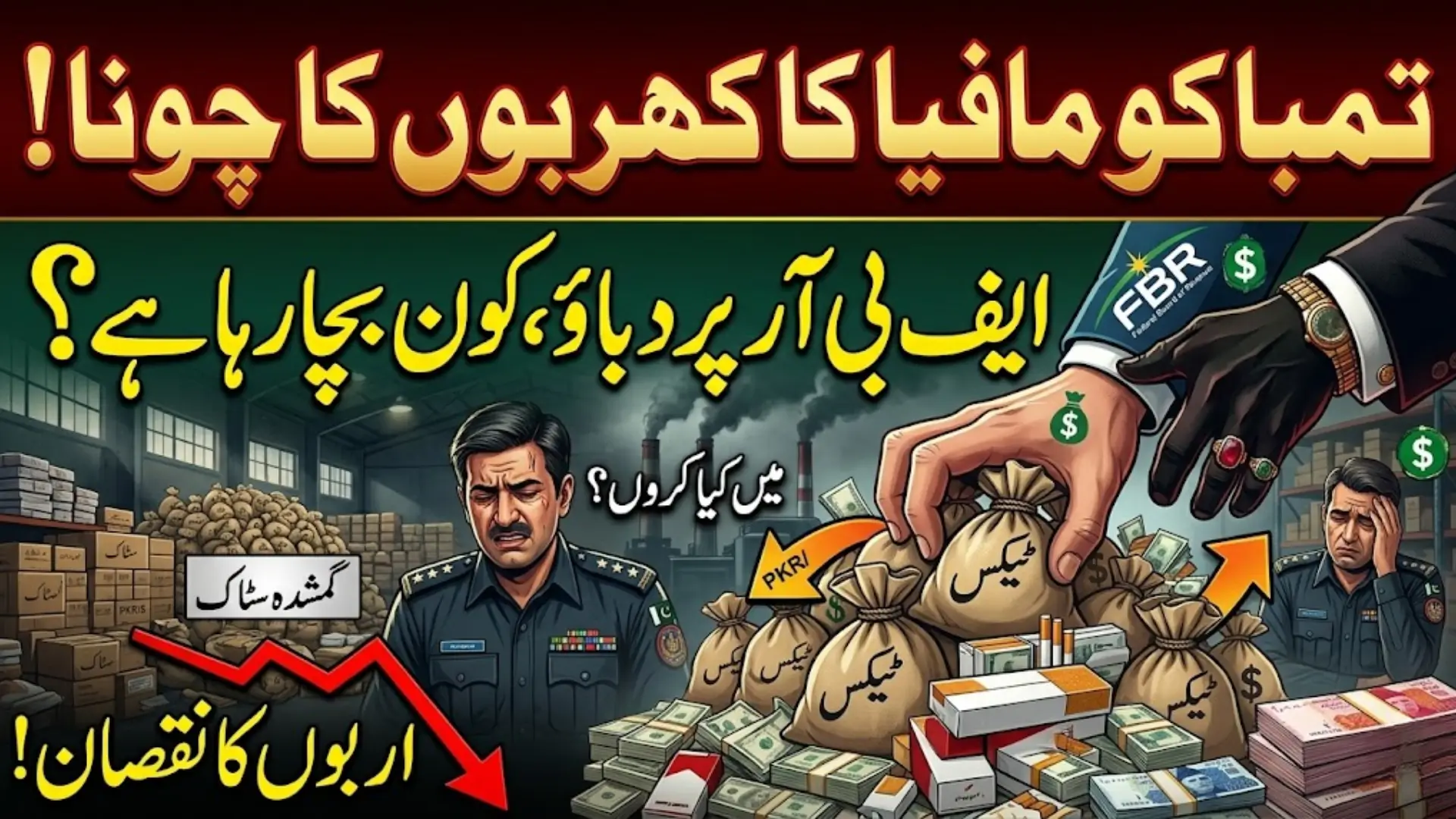
Tax Evasion Tobacco Industry in Pakistan
The issue of tax evasion in the tobacco sector has become a serious concern in Pakistan. Reports suggest that enforcement actions against certain cigarette manufacturers are being slowed down due to alleged political connections. This situation has raised questions about transparency and the effectiveness of regulatory institutions responsible for tax collection.
Authorities, especially Inland Revenue officers, are facing increasing pressure when dealing with sensitive cases. The tobacco industry is already a high-revenue sector, and any gap in enforcement can result in major financial losses for the country. Understanding the current situation is important for evaluating both economic impact and governance challenges.
- Tobacco sector contributes significant tax revenue
- Allegations of political backing affecting enforcement
- Concerns over transparency and accountability
- Growing pressure on tax officials
You Can ALso Read: YouTube TV Multiview Feature Update – Customizable Viewing and New Live Ad Format
Political Influence in Tax Evasion Tobacco Industry in Pakistan
Political influence is being highlighted as a major factor affecting enforcement in the tobacco industry. Reports indicate that individuals with strong connections are allegedly shielding certain manufacturers from strict action. This has created hesitation among field officers who are responsible for investigating tax evasion cases.
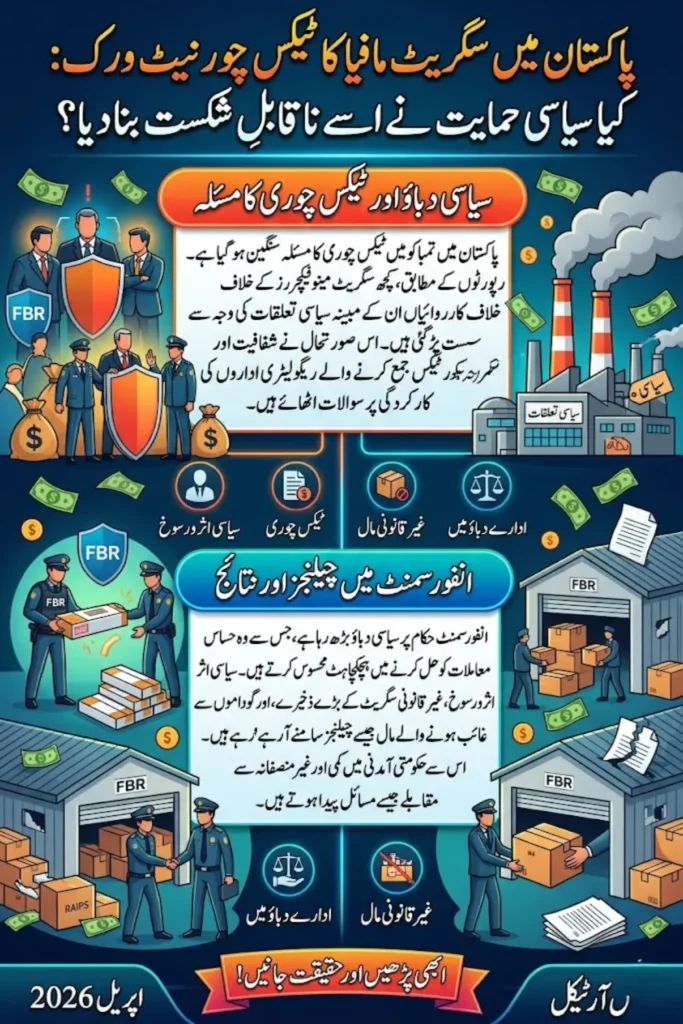
The involvement of politically exposed individuals in legislative and oversight bodies has also raised concerns. When policymakers have direct or indirect links to the tobacco business, it may lead to conflicts of interest. This overlap can weaken enforcement and create an environment where violations are not fully addressed.
- Alleged protection of certain manufacturers
- Pressure on officers to avoid sensitive cases
- Conflict of interest in oversight bodies
- Reduced confidence in enforcement systems
Role of FBR in Tax Evasion Tobacco Industry in Pakistan
The Federal Board of Revenue plays a central role in monitoring and controlling tax compliance in the tobacco sector. Its enforcement teams conduct inspections, raids, and seizures to identify illegal activities. However, recent developments suggest that the institution is facing internal and external challenges.
Within the organization, there are concerns about lack of support for officers handling politically sensitive cases. When enforcement actions carry the risk of criticism or pressure, it becomes difficult for officials to perform their duties effectively. This situation can reduce the overall impact of regulatory measures.
- FBR responsible for tax enforcement
- Inland Revenue teams conduct inspections
- Internal concerns about institutional support
- Increased risk in pursuing sensitive cases
You Can ALso Read: Indus Motor Profit 2026: Rs. 6.7 Billion Earnings, Strong Sales Growth and Dividend Update
FBR Enforcement Challenges and Reduced Action
Field officers in different regions are reportedly becoming cautious in pursuing cases linked to influential individuals. This hesitation has slowed down enforcement actions, allowing some cases to remain unresolved for longer periods. Such delays can weaken the overall tax system.
The fear of political backlash and public criticism has also contributed to reduced action. When enforcement becomes selective or inconsistent, it creates an imbalance in the industry and encourages non-compliance among businesses.
- Slower investigation of sensitive cases
- Fear of backlash affecting decisions
- Inconsistent enforcement practices
- Increased risk of tax losses
Seizure Operations and Findings
| Location | Items Seized | Key Issues Identified |
|---|---|---|
| Peshawar | Cigarette cartons | No tax stamps |
| Mardan | Stored confiscated goods | Security concerns |
| Swabi | Raw tobacco stocks | Lack of documentation |
Enforcement teams have carried out multiple operations to seize non-duty-paid cigarettes and raw materials. In one case, over a thousand cartons of cigarettes were confiscated due to missing tax verification. These operations also revealed the presence of undocumented raw tobacco.
Such findings indicate large-scale irregularities within the industry. When raw materials are not properly documented, it becomes easier for manufacturers to avoid taxes. These seizures highlight the importance of strict monitoring and proper documentation.
- Large quantities of illegal cigarettes seized
- Missing tax stamps and verification issues
- Discovery of undocumented raw materials
- Evidence of non-compliance in the sector
You Can ALso Read: MG HS Hybrid+ and Super Hybrid 2026 Pakistan Launch: Price, Features, and NEV Impact
Warehouse Security Issues and Missing Stock
After seizures, confiscated goods were stored in temporary warehouses due to limited storage capacity. However, these facilities were not fully secure, leading to incidents where part of the stock went missing. This raised serious concerns about the handling of evidence.
Officials had already warned about security risks and requested better storage arrangements. Despite these warnings, incidents still occurred, affecting the credibility of enforcement actions. Proper storage is essential to ensure that seized goods remain intact for legal proceedings.
- Temporary storage used for confiscated goods
- Security breaches reported in warehouses
- Missing stock created investigation challenges
- Need for improved storage systems
You Can ALso Read: Balochistan Health Card CNIC Program 2026: Free Healthcare Services and Major Benefits for Citizens
Investigation Challenges in Tax Evasion Tobacco Industry in Pakistan
The investigation into these incidents has faced several difficulties. Cases were initially handled by local authorities and later transferred to federal agencies. However, disagreements and alleged interference have slowed down progress.
There have also been reports of missing documentation and incomplete questioning during investigations. Such gaps can weaken legal cases and make it harder to hold responsible parties accountable.
- Shift of investigation between agencies
- Allegations of interference in inquiries
- Missing records affecting cases
- Delays in reaching conclusions
Senate Committee Oversight and Criticism
Parliamentary oversight is an important part of accountability, but recent developments suggest challenges in this area as well. Some officials have reported being questioned aggressively during committee sessions, which may discourage open communication.
There are also concerns that certain aspects of the investigation are not being fully addressed. When oversight focuses on limited issues, it may overlook broader problems related to tax evasion and enforcement.
- Strong questioning of officials in committees
- Alleged pressure during proceedings
- Limited focus on key issues
- Impact on transparency and accountability
You Can ALso Read: Multiple Jobs in Saudi Arabia Apply Now – Latest Overseas Opportunities 2026
Impact on Tax Collection and Smuggling Control
| Impact Area | Outcome |
|---|---|
| Tax Revenue | Increased after enforcement actions |
| Smuggling Detection | Large networks identified |
| Industry Compliance | Temporary improvement |
Enforcement actions have shown that strict measures can improve tax collection. When authorities carried out raids and seizures, tax payments from some manufacturers increased significantly. This shows the effectiveness of strong enforcement.
Additionally, investigations uncovered networks involved in smuggling raw materials. Controlling such activities is essential for maintaining fair competition and ensuring that all businesses follow the same rules.
- Enforcement leads to higher tax collection
- Smuggling networks exposed
- Improved compliance after actions
- Importance of consistent monitoring
You Can ALso Read: Earthquake in Pakistan Today – Tremors Felt in Islamabad, Peshawar and Swat
Risks to Institutional Independence
The current situation highlights risks to the independence of regulatory institutions. When enforcement is influenced by external factors, it can reduce trust in the system. Ensuring independence is key to maintaining fairness and accountability.
Policy experts have raised concerns about conflicts of interest and the need for stronger safeguards. Without clear boundaries and protections, enforcement effectiveness may continue to decline.
- Threats to institutional independence
- Need for stronger legal safeguards
- Concerns over conflict of interest
- Importance of transparent governance
Conclusion: Addressing Tax Evasion Tobacco Industry in Pakistan
Tax evasion in the tobacco industry remains a complex issue that requires coordinated efforts from authorities and policymakers. While enforcement actions have shown positive results, challenges such as political influence and security issues continue to affect outcomes.
Improving transparency, strengthening institutional support, and ensuring independent investigations are essential steps forward. By addressing these challenges, Pakistan can enhance tax collection and create a fair environment for all businesses.
- Need for consistent enforcement
- Importance of independent institutions
- Strengthening monitoring systems
- Focus on long-term policy improvements
You Can ALso Read: YouTube TV Multiview Feature Update – Customizable Viewing and New Live Ad Format
FAQs
What is the main issue in the tobacco industry in Pakistan?
The main issue is tax evasion by some manufacturers. Alleged political influence is also affecting enforcement actions.
Who is responsible for controlling tax evasion?
The Federal Board of Revenue is responsible for tax enforcement. It conducts inspections and investigations in the sector.
What challenges do enforcement teams face?
They face pressure, lack of support, and security issues. These factors can slow down investigations.
How does tax evasion affect the economy?
It reduces government revenue and creates unfair competition. This impacts economic stability.
What can improve the situation?
Better enforcement, transparency, and institutional independence can help. Strong policies are also needed.
You Can ALso Read: Islamabad Paperless Driving License System 2026: CNIC-Based Digital Process by ITP