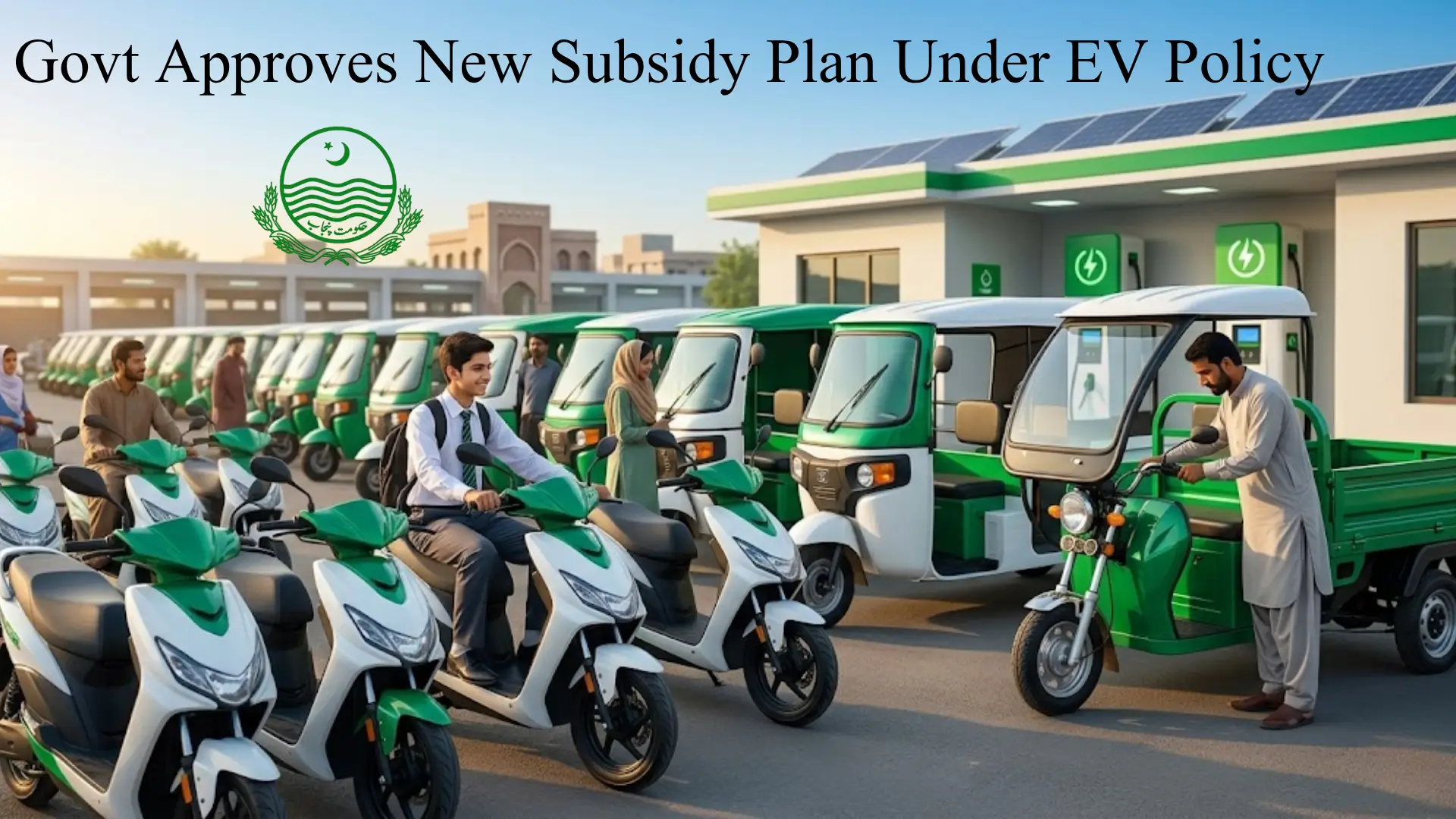
PAVE Program Phase 2 Approved: Electric Bikes and Rickshaws Distribution Across Pakistan
PAVE Program Phase 2
The PAVE Program Phase 2 has been approved by the federal government under the New Energy Vehicles Policy 2025–30. This initiative aims to accelerate the adoption of electric mobility in Pakistan by distributing electric bikes, loaders, and rickshaws on a structured basis. The program reflects the government’s commitment to reducing fuel dependency and promoting environmentally friendly transportation.
This second phase builds upon the progress of the initial rollout and introduces improvements to increase efficiency and accessibility. By shifting toward a first-come, first-served system, the government aims to ensure transparency and faster delivery for applicants across the country.
- Approved under NEV Policy 2025–30
- Focus on electric mobility adoption
- Distribution on first-come, first-served basis
- Continuation of earlier pilot phase
You Can Also Read: Pakistan Auto Sector Relief Package 2026: Duty Cuts, Hybrid Incentives and EV Support Explained
Budget Allocation for PAVE Program Phase 2
The government has approved a budget of Rs. 9.0 billion for the fiscal year 2025–26 to support the implementation of PAVE Program Phase 2. This funding will be used to provide subsidies, manage operations, and ensure smooth execution of the distribution process.
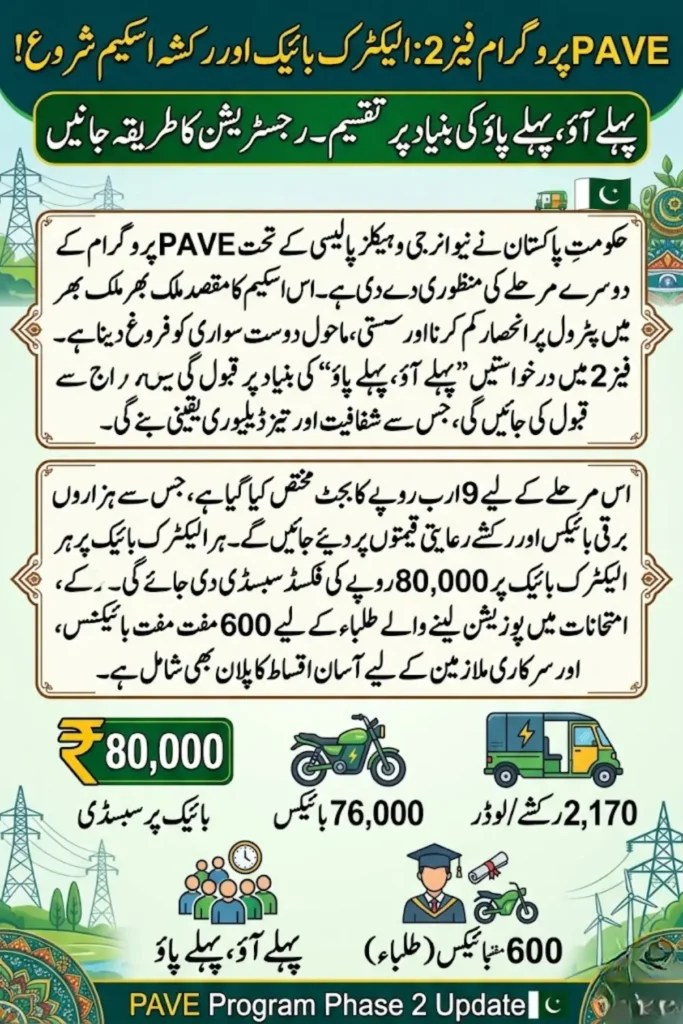
The program operates under a revenue-neutral model, which means it is funded through the NEV Adoption Levy Act 2025. This approach ensures that the initiative does not create additional financial pressure on the national budget while still supporting sustainable transport solutions.
- Rs. 9.0 billion allocated for FY2025–26
- Funded through NEV Adoption Levy
- Revenue-neutral financing model
- Covers subsidies and operational costs
Distribution Targets Under PAVE Program Phase 2
The total target for the current fiscal year is 119,170 vehicles, including a large number of electric bikes and a smaller portion of rickshaws and loaders. This reflects the government’s focus on two-wheelers as an affordable and practical solution for the public.
After completing the first pilot phase, which included 41,000 vehicles, the revised second phase now targets 76,000 electric bikes and 2,170 rickshaws and loaders. This expansion highlights strong demand and growing interest in electric vehicles.
- Total target of 119,170 vehicles
- 116,000 electric bikes planned overall
- 3,170 rickshaws and loaders
- Phase 2 includes 76,000 bikes
You Can Also Read: Pakistan Gas Tariff Increase 2026: OGRA Review, Price Hike Proposals and UFG Reduction Plan
Fast-Track Rollout Plan
The government is also considering a fast-track rollout of an additional 100,000 electric bikes within a short period of three months. This plan aims to accelerate adoption and meet the rising demand for electric transportation.
To support this rapid deployment, around 130,000 CKD kits will be utilized, including those already available domestically and in transit. This ensures that supply constraints do not delay the implementation process.
- 100,000 additional bikes planned
- Three-month rollout timeline
- Use of 130,000 CKD kits
- Focus on quick deployment
Subsidy Structure and Payment Mechanism
A fixed subsidy of Rs. 80,000 per electric bike will be provided under the PAVE Program Phase 2. Instead of giving subsidies directly to buyers, the government will transfer funds to pre-qualified manufacturers after verifying delivery and registration.
The distribution will take place in structured batches, with 200 batches of 500 units each. This organized approach ensures better tracking and accountability throughout the process.
- Rs. 80,000 subsidy per bike
- Paid directly to manufacturers
- 200 batches of 500 units
- Verification-based payment system
Fuel Savings and Economic Impact
The rollout of electric vehicles under PAVE Program Phase 2 is expected to generate significant fuel savings. In the short term, it could save around 8.6 million litres of petrol, reducing the country’s fuel import burden.
Over a period of five years, these savings could reach approximately USD 222 million. This not only benefits the economy but also supports environmental goals by reducing emissions and promoting clean energy.
- 8.6 million litres petrol savings
- USD 8 million short-term value
- USD 222 million long-term savings
- Reduced fuel imports
You Can Also Read: Honor Play 70C Debuts with 5,300mAh Battery, 6.75-Inch Display and Budget Pricing
Free Electric Bikes for Students
As part of the initiative, the government will distribute 600 free electric bikes to top-performing students in the 2025 HSSC examinations. This step aims to reward academic excellence and encourage youth participation in sustainable practices.
The scheme will cover students who secure first, second, and third positions across all 26 educational boards. The estimated cost of this initiative is around Rs. 150 million.
- 600 bikes for top students
- Based on HSSC 2025 results
- Covers 26 education boards
- Estimated cost Rs. 150 million
First-Come, First-Served Distribution System
To improve transparency, the government has replaced the previous balloting system with a first-come, first-served mechanism. This change ensures that applications are processed in order of submission time.
Priority will also be given to applicants who were waitlisted in Phase 1. This approach reduces uncertainty and ensures fair allocation of resources.
- Balloting system removed
- First-come, first-served approach
- Priority for waitlisted applicants
- Improved transparency
Revised Subsidy and Payment Process
Under the new system, buyers will pay the price after deducting the subsidy amount, reducing their upfront cost. The remaining subsidy will be transferred to manufacturers after verification.
The State Bank of Pakistan and the Engineering Development Board will oversee the process to ensure timely and accurate payments. This reduces delays and increases efficiency.
- Buyers pay net price after subsidy
- Subsidy sent to manufacturers
- Managed by SBP and EDB
- Faster payment processing
You Can Also Read: 20th-Anniversary iPhone May Introduce Solid-State Buttons, All-Glass Design and Under-Display Technology
Self-Finance Scheme for Government Employees
A revised self-finance scheme has been introduced for federal employees in BS-16 and below. This scheme allows them to purchase electric bikes and rickshaws with minimal initial payments.
The remaining cost will be recovered through interest-free installments deducted from salaries over a period of 6 to 18 months. This makes the program more accessible to a wider group of users.
- Available for BS-16 and below employees
- Rs. 10,000 down payment for bikes
- Rs. 100,000 for rickshaws
- Interest-free installments
Expanded Access to the Program
The PAVE Program Phase 2 has expanded its reach to include more participants. Overseas Pakistanis, financial institutions, and fleet operators can now benefit from the scheme.
This broader access increases the program’s impact and allows more people to participate in the transition toward electric mobility. It also encourages partnerships with private sector entities.
- Inclusion of overseas Pakistanis
- Participation of NBFCs
- Access for fleet operators
- Public-private partnerships
You Can Also Read: How Subscription Economy Is Reshaping Modern Consumption and Spending Behavior
New Verification System
To reduce costs and delays, the verification process has been updated to a risk-based model. This system uses biometric checks, photographic evidence, and digital validation.
The previous system, which required 100 percent third-party verification, was expensive and time-consuming. The new approach improves efficiency while maintaining transparency.
- Risk-based verification model
- Use of biometric and digital tools
- Reduced verification costs
- Faster processing
Implementation and Operational Setup
To manage the program effectively, a dedicated unit will be established within the Engineering Development Board. This team will oversee operations and ensure smooth execution of all phases.
An annual cost of Rs. 32.76 million has been allocated for the unit, along with Rs. 37 million for operational expenses in the fiscal year 2025–26. This ensures proper management and accountability.
- Dedicated 14-member unit
- Rs. 32.76 million annual cost
- Rs. 37 million operational budget
- Focus on efficient execution
You Can Also Read: Apple iPhone 18 Pro Max Price in Pakistan, Specifications, Features and Expected Launch
Phase 1 Performance and Learnings
The first phase of the program received a strong response, with over 269,000 applications submitted. Despite challenges in banking approvals, the self-finance segment achieved a high delivery success rate.
These learnings have been used to improve the second phase, particularly in areas such as verification, subsidy distribution, and application processing.
- 269,149 applications received
- High demand for electric vehicles
- 99.6% delivery success rate
- Improvements implemented in Phase 2
Distribution Summary Table
| Category | Quantity |
|---|---|
| Total Vehicles | 119,170 |
| Electric Bikes | 116,000 |
| Rickshaws/Loaders | 3,170 |
| Phase 2 Bikes | 76,000 |
Subsidy and Financial Details Table
| Feature | Details |
|---|---|
| Subsidy per Bike | Rs. 80,000 |
| Total Budget | Rs. 9.0 billion |
| Student Bikes | 600 units |
| Operational Cost | Rs. 37 million |
FAQs
What is PAVE Program Phase 2?
It is a government initiative to distribute electric bikes and rickshaws under the NEV Policy 2025–30.
How many vehicles will be distributed?
A total of 119,170 vehicles are planned, including electric bikes and rickshaws.
What subsidy is offered for electric bikes?
A subsidy of Rs. 80,000 per electric bike will be provided to manufacturers.
Who can apply for this program?
General public, government employees, overseas Pakistanis, and fleet operators can participate.
How will vehicles be distributed?
Distribution will follow a first-come, first-served system based on application timing.
You Can Also Read: Pakistan Auto Sector Relief Package 2026: Duty Cuts, Hybrid Incentives and EV Support Explained