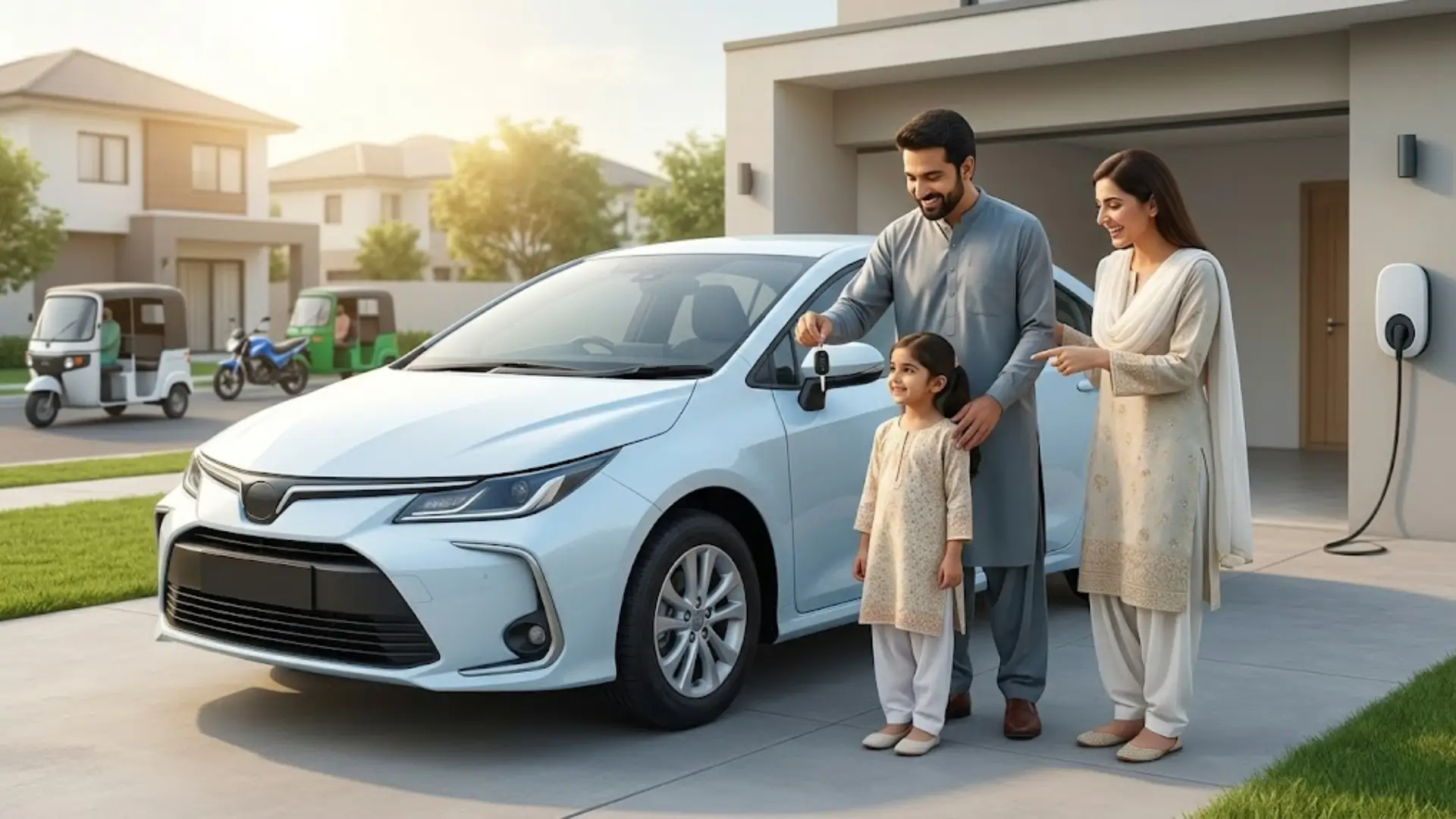
Pakistan Auto Sector Relief Package 2026: Duty Cuts, Hybrid Incentives and EV Support Explained
Pakistan Auto Sector Relief Package
The Pakistan Auto Sector Relief Package is being prepared as part of the upcoming federal budget and new auto policy. The government aims to support the automotive industry by introducing measures that reduce costs and improve accessibility for consumers. These steps are expected to create a more stable and competitive environment for both manufacturers and buyers.
This initiative reflects a broader effort to strengthen the economy by boosting industrial growth and encouraging modern transportation solutions. By focusing on tariff adjustments and incentives, the policy seeks to address long-standing challenges in the auto sector while aligning with global trends in energy-efficient mobility.
- Part of the upcoming federal budget
- Focus on supporting the auto industry
- Aims to reduce costs for consumers
- Encourages modern transport solutions
You Can Also Read: Pakistan Gas Tariff Increase 2026: OGRA Review, Price Hike Proposals and UFG Reduction Plan
Key Objectives of the Pakistan Auto Sector Relief Package
The primary objective of the Pakistan Auto Sector Relief Package is to make vehicles more affordable while promoting growth within the industry. By reducing import duties and simplifying tariff structures, the government intends to lower production costs, which can eventually benefit consumers through reduced prices.
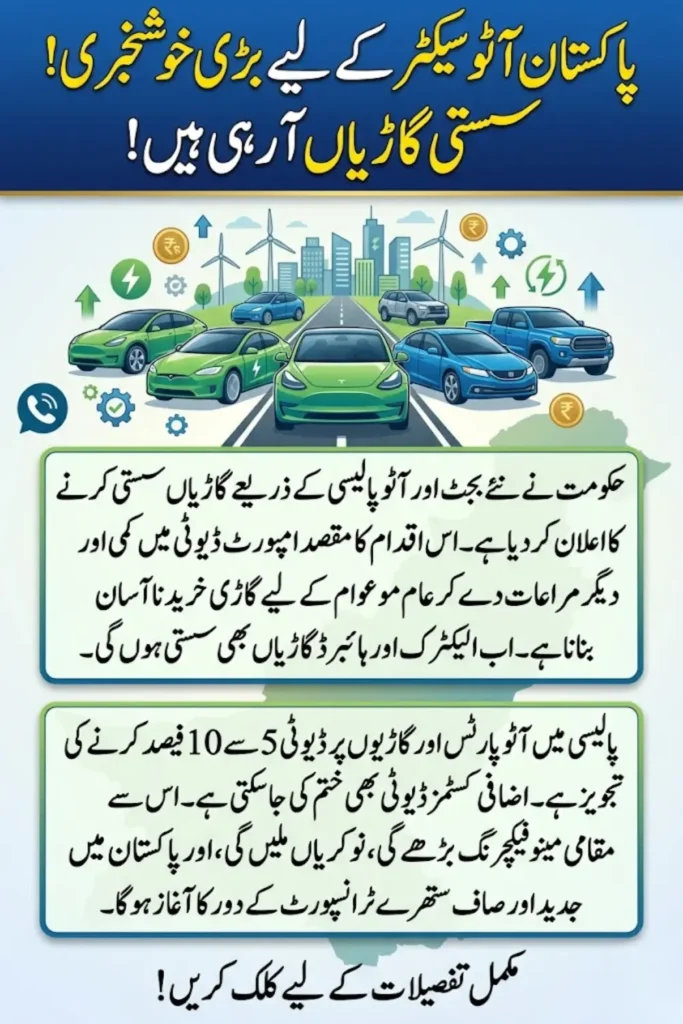
Another important goal is to attract investment and encourage innovation in the automotive sector. By creating a favorable business environment, the policy aims to support both local manufacturers and international players looking to enter or expand in the Pakistani market.
- Reduce import duties on vehicles and parts
- Improve affordability for buyers
- Encourage local and foreign investment
- Promote industry-wide growth
Expansion to New Energy Vehicles
A key highlight of the policy is its expansion to include new energy vehicles beyond just battery-powered electric cars. Hybrid vehicles are now part of the proposed framework, which broadens the scope of clean transportation options available in the country.
This shift indicates a more flexible and inclusive approach toward sustainable mobility. By recognizing multiple technologies, the government aims to accelerate the adoption of environmentally friendly vehicles while addressing infrastructure and affordability challenges.
- Inclusion of hybrid vehicles in policy
- Expansion beyond electric vehicles
- Focus on cleaner transportation
- Supports diverse energy solutions
You Can Also Read: Honor Play 70C Debuts with 5,300mAh Battery, 6.75-Inch Display and Budget Pricing
Proposed Changes in Import Duties
The Pakistan Auto Sector Relief Package proposes several changes to import duties, particularly for auto parts and assembled vehicles. A customs duty of around 5 percent may be applied to auto parts, which could reduce manufacturing costs for local assemblers.
For assembled vehicles, a duty of approximately 10 percent is being considered. Additionally, hybrid vehicle parts may also face a 5 percent duty, which aims to streamline the tariff structure and make it more consistent across categories.
- 5 percent duty on auto parts
- Around 10 percent duty on assembled vehicles
- 5 percent duty proposed for hybrid parts
- Simplified and uniform tariff structure
CKD Kits Duty Structure
Completely Knocked Down kits play a vital role in Pakistan’s auto assembly industry. The proposed policy suggests setting customs duties for CKD kits between 5 percent and 10 percent, depending on the category.
This move is expected to support local manufacturing by making it easier for companies to import components and assemble vehicles domestically. It can also help create jobs and strengthen the overall supply chain within the country.
- CKD duty range between 5% and 10%
- Supports local vehicle assembly
- Encourages domestic production
- Strengthens industrial supply chain
You Can Also Read: 20th-Anniversary iPhone May Introduce Solid-State Buttons, All-Glass Design and Under-Display Technology
Removal of Additional Customs Duties
Another major proposal under the Pakistan Auto Sector Relief Package is the removal of additional customs duties. This step aims to simplify the existing tariff system and reduce the financial burden on importers and manufacturers.
The policy also includes plans to gradually reduce regulatory duties in line with the National Tariff Policy. This approach is expected to make the overall taxation system more transparent and predictable for businesses operating in the sector.
- Abolition of additional customs duties
- Gradual reduction of regulatory duties
- Alignment with National Tariff Policy
- Simplifies tariff structure
Incentives for Electric Vehicles
To promote environmentally friendly transportation, the government is considering duty exemptions for electric vehicles, electric bikes, and rickshaws. These incentives are designed to encourage the adoption of cleaner mobility solutions across the country.
Such measures can help reduce carbon emissions and support the transition toward sustainable energy use. By making electric options more affordable, the policy aims to accelerate their adoption among consumers.
- Duty exemptions for electric vehicles
- Support for electric bikes and rickshaws
- Encourages clean energy adoption
- Reduces environmental impact
You Can Also Read: How Subscription Economy Is Reshaping Modern Consumption and Spending Behavior
Impact on Consumers and Industry
The Pakistan Auto Sector Relief Package is expected to have a positive impact on both consumers and the automotive industry. Lower duties and simplified tariffs could lead to reduced vehicle prices, making cars more accessible to a larger population.
For the industry, these changes may result in increased production, higher sales, and greater investment opportunities. Manufacturers could benefit from lower costs, while consumers enjoy better value and more choices.
- Potential reduction in vehicle prices
- Increased affordability for buyers
- Growth opportunities for manufacturers
- More options for consumers
Policy Review and Approval Process
The proposed measures are currently under review and have not yet been finalized. Authorities are expected to hold discussions with lending entities and other stakeholders before making a final decision.
This process ensures that all aspects of the policy are carefully evaluated, including its economic impact and feasibility. Changes may still be made before the official announcement in the upcoming budget.
- Proposals under consideration
- Discussions with stakeholders ongoing
- Final approval pending
- Possible revisions before implementation
You Can Also Read: Apple iPhone 18 Pro Max Price in Pakistan, Specifications, Features and Expected Launch
Future Outlook of Pakistan Auto Sector
The future of the auto sector in Pakistan looks promising if the proposed relief package is implemented effectively. The combination of lower duties, expanded incentives, and support for new technologies could drive significant growth in the industry.
In the long term, the policy may help Pakistan align with global trends in sustainable transportation. It can also contribute to economic development by creating jobs, attracting investment, and improving overall industrial performance.
- Expected growth in auto industry
- Increased adoption of clean vehicles
- Alignment with global trends
- Long-term economic benefits
You Can Also Read: Facebook Phishing Scam Alert 2026: Free Verification Badge Trap Targeting Users
Proposed Duty Structure Table
| Category | Proposed Duty |
|---|---|
| Auto Parts | 5% |
| Hybrid Vehicle Parts | 5% |
| Assembled Vehicles | 10% |
| CKD Kits | 5% – 10% |
Incentives Overview Table
| Category | Proposed Incentive |
|---|---|
| Electric Vehicles | Duty exemptions |
| Electric Bikes | Reduced or no duties |
| Rickshaws | Incentive support |
| Hybrid Vehicles | Lower parts duty |
FAQs
What is the Pakistan Auto Sector Relief Package?
It is a proposed government plan to reduce duties and support the automotive industry through incentives and policy changes.
How will this package benefit consumers?
It may lower vehicle prices and increase access to affordable and energy-efficient options.
Are hybrid vehicles included in the policy?
Yes, the policy expands coverage to include hybrid vehicles along with electric vehicles.
What is the proposed duty on auto parts?
Auto parts may have a reduced customs duty of around 5 percent.
When will the policy be implemented?
It is currently under review and expected to be finalized in the upcoming federal budget.
You Can Also Read: Apna Ghar Scheme Online Registration Form 2026: Apply Process, Eligibility, Loan Details and Benefits