Pakistan Auto Policy 2026-31 to Offer Toll Exemptions for Electric Vehicles
Pakistan Auto Policy 2026-31
The federal government is preparing to introduce major reforms under the Pakistan Auto Policy 2026-31 to encourage electric mobility and modernize the country’s automobile sector. One of the most important proposals under discussion is toll tax exemptions for New Energy Vehicles (NEVs) on motorways and national highways across Pakistan. The initiative is aimed at promoting clean transportation and reducing dependence on traditional fuel-powered vehicles.
The new policy also includes major tariff reforms, lower import duties, and incentives for local electric vehicle manufacturing. Officials believe these steps will help Pakistan move toward sustainable transportation while improving competition in the automobile industry. The policy is expected to reshape the local auto market over the next five years.
You Can Also Read: Dongfeng 007 Prestige Variant Price Increased in Pakistan by Rs. 540,000
Pakistan Auto Policy 2026-31 and Electric Vehicle Incentives
The Pakistan Auto Policy 2026-31 focuses heavily on promoting electric and hybrid vehicles in the country. The government plans to support environmentally friendly transportation by offering financial and operational incentives to consumers and manufacturers. Toll exemptions on motorways and highways are part of this broader strategy to encourage the use of NEVs.
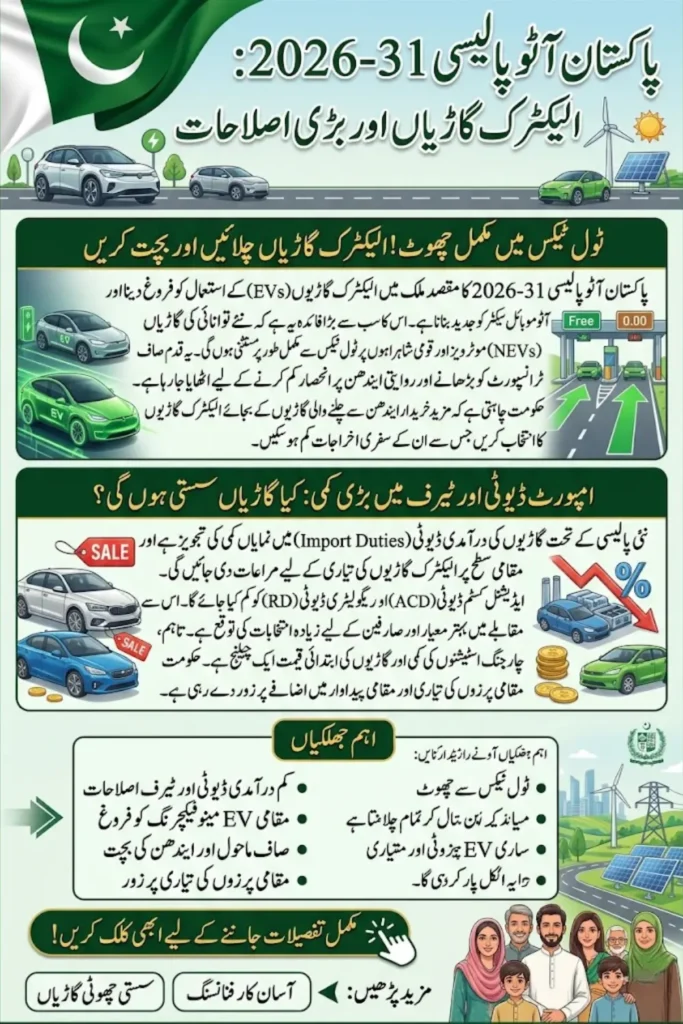
New Energy Vehicles include Battery Electric Vehicles (BEVs), Plug-in Hybrid Electric Vehicles (PHEVs), and Fuel Cell Electric Vehicles (FCEVs). These vehicles rely on alternative energy sources instead of conventional petrol or diesel engines. The government wants to increase adoption of these vehicles to lower fuel imports and reduce environmental pollution.
Key Features of the Policy
- Toll tax exemptions for NEVs
- Support for clean energy transportation
- Promotion of electric mobility in Pakistan
- Encouragement for local EV production
You Can Also Read: Pakistan Auto Policy 2026-31 Proposes Easier Car Financing and Affordable Vehicle Ownership
Toll Exemptions for New Energy Vehicles in Pakistan
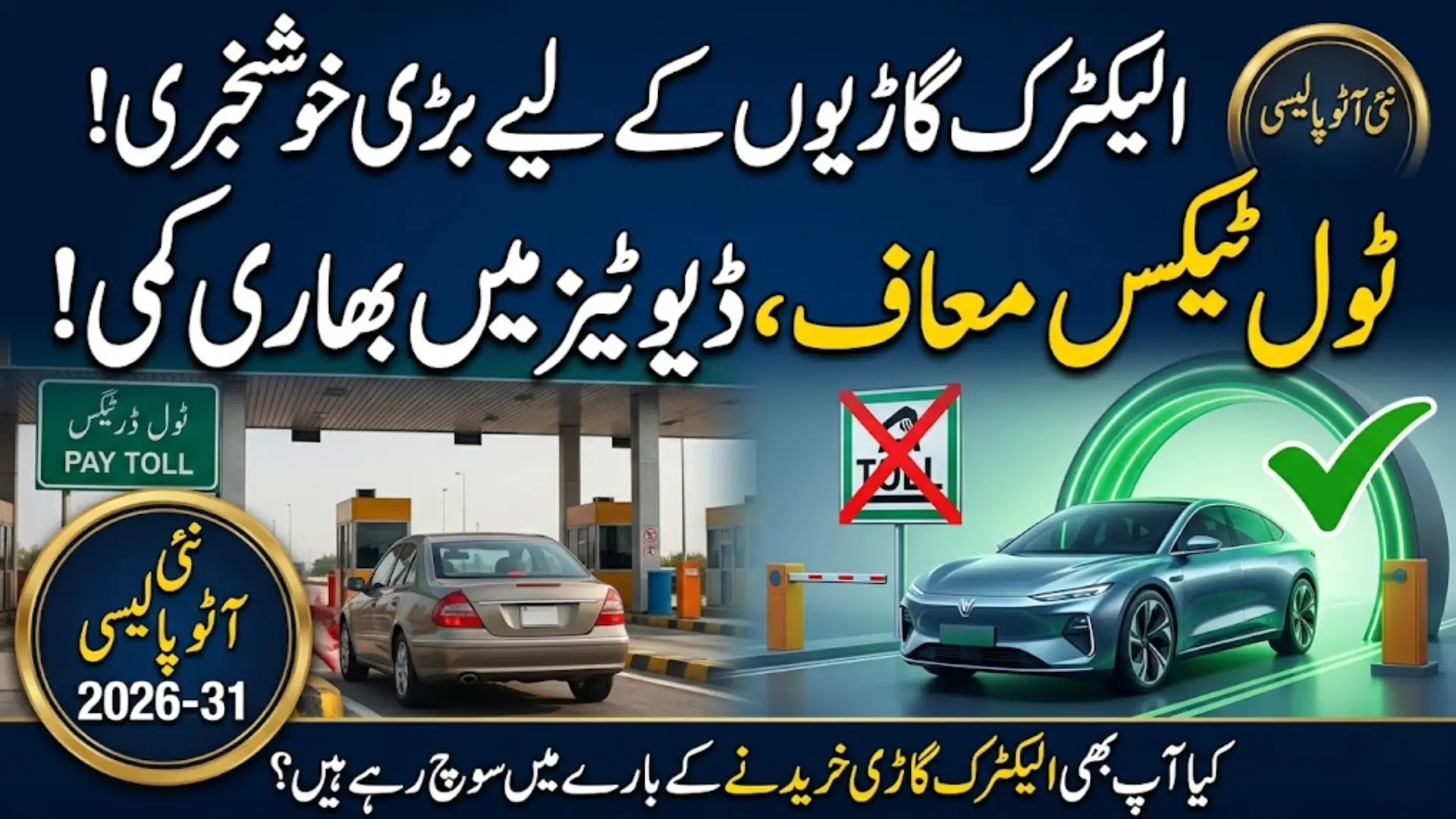
The government plans to allow NEVs to travel on motorways and national highways without paying toll taxes. This move is expected to reduce travel expenses for electric vehicle owners and make EV ownership more attractive for consumers in Pakistan. The proposal is being considered as part of a wider effort to shift the country toward sustainable mobility solutions.
Officials believe that toll-free travel can motivate more buyers to switch from fuel-powered cars to electric vehicles. Lower operational costs are one of the biggest advantages of EV ownership, and toll exemptions could further improve affordability for daily commuters and long-distance travelers.
Expected Benefits for EV Owners
- Lower travel costs on highways
- Reduced overall transportation expenses
- More value for electric vehicle buyers
- Better incentives for clean transportation
Major Tariff Reforms Under Pakistan Auto Policy 2026-31
The upcoming policy also introduces significant changes to Pakistan’s long-standing protectionist auto regime. The government plans to completely phase out Additional Customs Duties (ACD) by FY2029. At the same time, Regulatory Duties (RD) will be reduced by 80 percent by FY2030 to create a more competitive automobile market.
Another major change involves removing all SRO-based concessions by FY2030. These concessions have historically provided tariff protection to local assemblers. By reducing special protections, the government aims to encourage fair competition, improve vehicle quality, and provide better options for consumers.
| Tariff Reform | Current Status | Future Plan |
|---|---|---|
| Additional Customs Duties (ACD) | Applied on imports | Fully removed by FY2029 |
| Regulatory Duties (RD) | Existing high rates | Reduced by 80% by FY2030 |
| SRO-Based Concessions | Active protections | Abolished by FY2030 |
Goals of Tariff Reforms
- Improve competition in the auto industry
- Reduce vehicle prices gradually
- Encourage technology upgrades
- Support modern automobile manufacturing
You Can Also Read: Pakistan Plans New L6/L7 Affordable Small Vehicle Category Under Auto Policy 2026-31
Reduction in Import Duties for Vehicles
The Pakistan Auto Policy 2026-31 also outlines reductions in import duties for Completely Built Units (CBUs) and Completely Knocked Down (CKD) units. Import duties on CBUs, which currently range between 50 percent and 100 percent, will gradually decline to 35 percent and 75 percent over five years.
Similarly, tariffs on CKD units used in local vehicle assembly will decrease from 30 percent to 20 percent. These reductions are expected to help automakers reduce production costs while improving access to modern automotive technologies in Pakistan.
| Vehicle Category | Current Duty | Planned Duty |
|---|---|---|
| Completely Built Units (CBU) | 50%–100% | 35%–75% |
| Completely Knocked Down Units (CKD) | 30% | 20% |
Impact of Lower Duties
- More affordable imported vehicles
- Lower production costs for assemblers
- Increased competition among automakers
- Better technology transfer opportunities
You Can Also Read: Pakistan Government Approves Early Salary and Pension Payments Before Eid ul-Azha 2026
Focus on Local Manufacturing and Localization
The government wants to ensure that electric vehicle incentives benefit local manufacturing instead of only supporting imports. Under the new framework, NEV incentives will be linked with localization requirements. This means companies receiving benefits will need to increase local production and parts manufacturing in Pakistan.
Officials believe this approach can strengthen Pakistan’s automotive supply chain while creating new employment opportunities. The government also aims to increase annual vehicle production and improve exports over the coming years through policy reforms and investment support.
Localization Targets
- Higher local parts manufacturing
- Increased investment in EV assembly
- Development of local automotive industry
- Growth in vehicle exports
How the Policy Can Transform Pakistan’s Auto Sector?
The Pakistan Auto Policy 2026-31 has the potential to significantly change the country’s automobile industry. Lower duties, toll exemptions, and support for electric vehicles may encourage new international brands to enter the Pakistani market. Increased competition could improve vehicle quality and provide consumers with more choices.
The policy may also help Pakistan reduce fuel import costs and move toward environmentally friendly transportation systems. With rising fuel prices and growing environmental concerns, the shift toward NEVs could become an important step for the country’s economic and energy future.
Possible Long-Term Advantages
- Cleaner transportation system
- Reduced oil import burden
- Growth of EV infrastructure
- Expansion of local manufacturing
You Can Also Read: Pakistan to End Gas Cross-Subsidy System Under IMF Energy Reform Plan
Challenges in Implementing the New Auto Policy
Despite the promising reforms, Pakistan still faces several challenges in adopting electric mobility on a large scale. One major issue is the limited availability of EV charging stations across cities and highways. Without proper charging infrastructure, consumer confidence in electric vehicles may remain low.
Another challenge is the high purchase cost of electric vehicles compared to traditional cars. Although incentives may reduce operational expenses, affordability remains a concern for many Pakistani consumers. The government may need additional financing programs and subsidies to accelerate EV adoption.
Major Challenges
- Limited charging infrastructure
- High initial EV prices
- Need for technical expertise
- Slow development of EV ecosystem
Future of Electric Vehicles in Pakistan
Electric vehicles are expected to play a much bigger role in Pakistan’s automobile market during the next decade. Government incentives, lower duties, and toll exemptions may encourage consumers to consider NEVs as practical alternatives to fuel-powered vehicles.
As the country moves toward clean energy goals, automakers may also increase investments in electric mobility and local manufacturing. The Pakistan Auto Policy 2026-31 could become a turning point for the development of a modern and sustainable automobile sector.
Expected Future Trends
- Growth in EV demand
- Expansion of charging networks
- More local EV assembly plants
- Increased investment in clean mobility
You Can Also Read: Android and iPhone End-to-End Encrypted Messaging Starts Rolling Out With RCS Support
Conclusion
The Pakistan Auto Policy 2026-31 introduces major reforms designed to modernize the country’s automobile industry and promote electric mobility. Toll exemptions for New Energy Vehicles, lower import duties, and tariff reforms are expected to improve the overall automotive market while supporting clean transportation.
The policy also highlights the government’s focus on local manufacturing and sustainable development. If implemented successfully, these reforms could help Pakistan build a stronger auto industry while encouraging wider adoption of electric vehicles in the coming years.
FAQs
What is Pakistan Auto Policy 2026-31?
It is the government’s upcoming automobile policy focused on electric mobility, tariff reforms, and local vehicle manufacturing development.
Which vehicles will receive toll tax exemptions in Pakistan?
New Energy Vehicles including Battery Electric Vehicles, Plug-in Hybrids, and Fuel Cell Vehicles are expected to receive toll exemptions.
Why is the government promoting electric vehicles in Pakistan?
The government wants to reduce fuel imports, lower pollution, and encourage clean transportation technologies.
Will vehicle import duties decrease under the new policy?
Yes, import duties on CBU and CKD vehicles will gradually decrease over the next five years.
How can the new auto policy help local manufacturers?
The policy links incentives with localization requirements to support local assembly, parts manufacturing, and investment in Pakistan’s auto industry.
You Can Also Read: Dongfeng 007 Prestige Variant Price Increased in Pakistan by Rs. 540,000