
PSER Punjab Gov PK Registration 2026
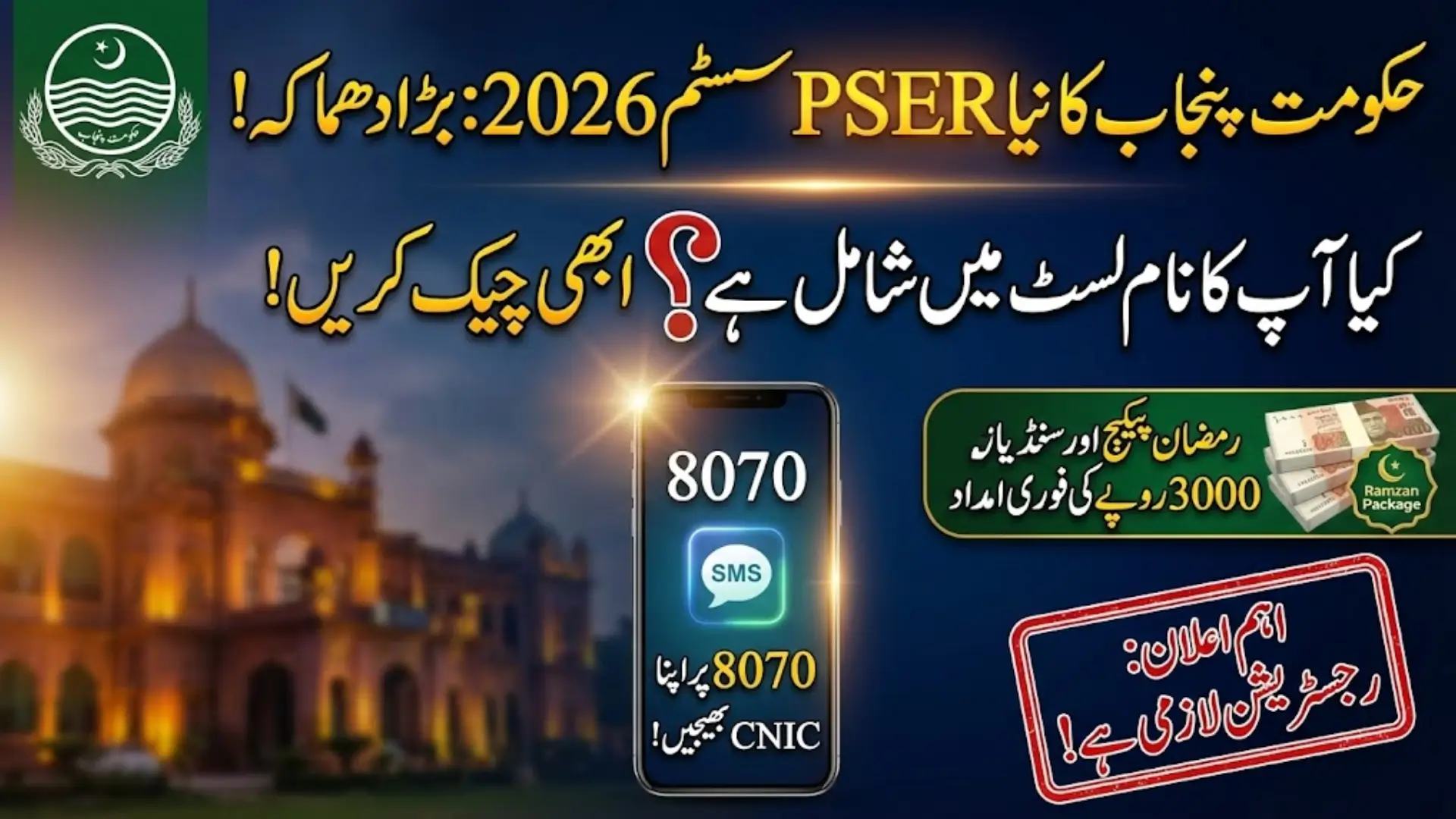
PSER Punjab Gov PK Registration 2026 is a digital welfare system introduced by the Punjab Government to identify and support low-income families. It works as a centralized database that collects verified household information and connects deserving citizens with government relief schemes. The main goal is to ensure fair distribution of financial aid, food subsidies, and other benefits without political influence or manual favoritism.
PSER Punjab Gov PK Registration 2026 حکومتِ پنجاب کا ایک جدید ڈیجیٹل فلاحی نظام ہے جو صوبے بھر کے کم آمدنی والے خاندانوں کا مستند ڈیٹا جمع کر کے انہیں مختلف سرکاری اسکیموں سے منسلک کرتا ہے۔ Government of Punjab کے تحت چلنے والا یہ پنجاب سوشیو اکنامک رجسٹری (PSER) پروگرام گھریلو آمدن، اثاثوں، تعلیم، صحت اور رہائشی حالات کی بنیاد پر غربت کا اسکور تیار کرتا ہے، جسے PMT اسکور کہا جاتا ہے، اور اسی بنیاد پر مستحقین کا انتخاب کیا جاتا ہے۔ رمضان پیکج 2026 سمیت دیگر فلاحی پروگراموں کے لیے PSER میں رجسٹریشن لازمی قرار دی گئی ہے، جبکہ شہری 8070 پر اپنا شناختی کارڈ نمبر بھیج کر اہلیت چیک کر سکتے ہیں یا آن لائن پورٹل کے ذریعے درخواست جمع کرا سکتے ہیں۔ یہ نظام شفافیت کو فروغ دیتا ہے، سیاسی سفارش اور دوہرے اندراج کو روکتا ہے، اور اس بات کو یقینی بناتا ہے کہ مالی امداد، راشن سبسڈی اور دیگر سہولیات حقیقی حقداروں تک پہنچیں۔
Through PSER, the government uses data instead of recommendations to select beneficiaries. This system reduces fraud, duplication, and errors while improving transparency across Punjab. Key features include:
- Centralized digital registry covering all districts of Punjab
- Focus on deserving and underprivileged families
- Data-driven eligibility verification system
You Can Also Read: Matric and Intermediate Exams Reforms 2026 Introduce Biometric Attendance and Digital Marking
What Is Punjab Socio-Economic Registry (PSER)?
The Punjab Socio-Economic Registry is a province-wide household database that records income, assets, education, employment, health conditions, and living standards. It helps the government build a poverty profile of Punjab and design welfare programs based on real data. Once registered, families can become eligible for multiple schemes without repeating the process every time.
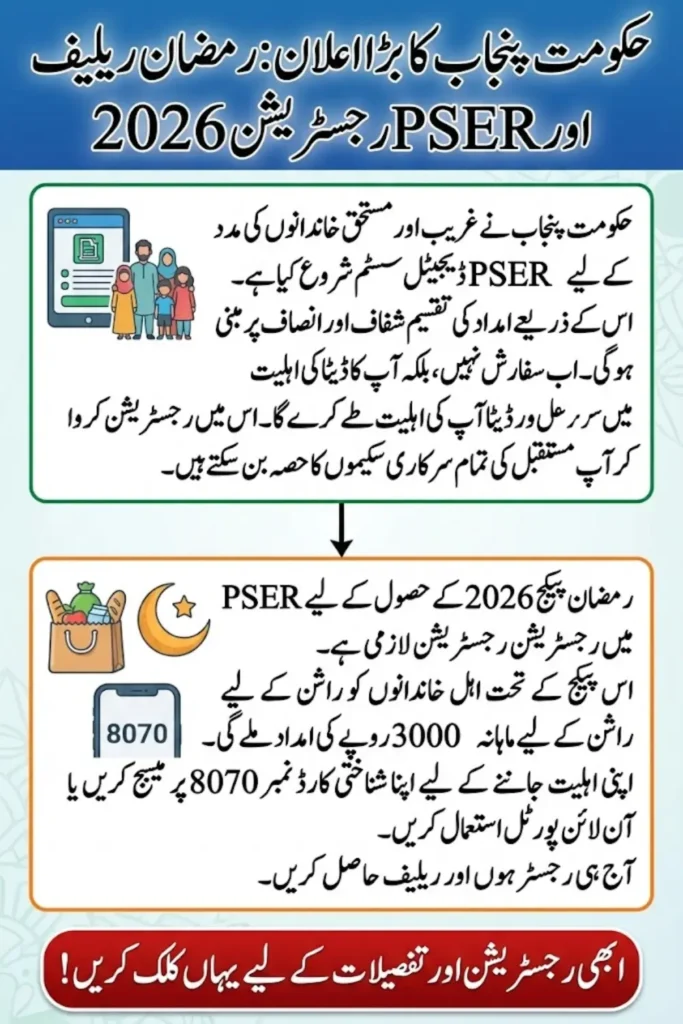
PSER operates under the supervision of the Punjab Government and supports evidence-based policy decisions. Registration is mandatory for most provincial welfare programs. The system ensures:
- Transparent and fair targeting
- Long-term social planning
- Reduction in misuse of government funds
You Can Also Read: Matric and Intermediate Exams Reforms 2026 Introduce Biometric Attendance
Objectives of PSER Online Registration 2026
The main objective of PSER Punjab Gov PK Registration 2026 is to identify households that genuinely need financial and food assistance. By collecting verified information, the government ensures that relief reaches low-income families instead of ineligible applicants. This improves public trust and strengthens welfare delivery.
Another important goal is to improve policy planning by using accurate data. Digital records reduce duplication and help authorities respond quickly during emergencies like inflation or Ramzan relief. The objectives include:
- Poverty reduction across Punjab
- Fair and transparent beneficiary selection
- Better planning for future welfare schemes
You Can Also Read: Matric and Intermediate Exams Reforms 2026
Why PSER Registration Is Mandatory for Ramzan Package 2026?
The Ramzan Package 2026 is linked directly with PSER Punjab Gov PK Registration 2026. The government no longer relies on manual lists or local recommendations. Instead, verified PSER data is used to select eligible families for Ramzan financial assistance and subsidized grocery support.
If your household data is not registered or updated in PSER, you may miss the Ramzan package even if you qualify financially. The digital system ensures:
- No political or personal influence
- Faster verification process
- Fair distribution based on household data
You Can Also Read: MBBS BDS Admission Criteria 2025–26 Under Review After SMBBMU Request to PMDC
Ramzan Package 2026 – Key Details Under PSER
The Ramzan Package 2026 is designed to support low-income families during the holy month. Eligible households receive monthly assistance through a digital smart card system. The program aims to reduce the burden of rising grocery prices and ensure food security.
Below are the main details of the Ramzan Package 2026:
| Program Detail | Information |
|---|---|
| Program Name | Rashan / Ration Card Program |
| Budget Allocated | Rs. 40 Billion |
| Monthly Assistance | Rs. 3,000 |
| Total Beneficiaries | 1.25 Million Families (Phase 1) |
| Card Type | Digital Smart Card |
| Area Served | Punjab |
The package focuses on essential grocery support and is announced under the leadership of the Punjab Government.
You Can Also Read: MBBS BDS Admission Criteria 2025–26
PSER 8070 Ramzan Package Registration Process
The PSER 8070 Ramzan Package Registration allows applicants to check eligibility through SMS and online portal. The system uses CNIC-based verification and OTP confirmation to reduce fraud and ensure genuine applicants receive assistance.
Applicants can send their 13-digit CNIC number to 8070 to receive an eligibility response. Registration methods include:
- Online application through pser.punjab.gov.pk
- SMS CNIC check via 8070
- Helpline support at 1312
You Can Also Read: PSER Punjab Gov PK Registration 2026: 8070 Online Registration, Eligibility Check & Ramzan Relief Guide
Eligibility Criteria for PSER Punjab Gov PK Registration 2026
To qualify for PSER Punjab Gov PK Registration 2026, applicants must meet clear eligibility rules set by the Punjab Government. These criteria ensure that only deserving families receive financial and grocery support under the Ramzan Package and other schemes.
Basic eligibility requirements include:
- Permanent resident of Punjab
- Monthly household income below Rs. 50,000
- Valid CNIC or B-Form
- PMT score below 34 or 35
- Not a government employee
Priority is often given to widows, disabled persons, and female-headed households. Incorrect information may lead to rejection.
You Can Also Read: PSER Punjab Gov PK Registration 2026: 8070 Online Registration, Eligibility Check
Required Information and Documents for PSER Registration
Applicants must provide complete and accurate household information while filling out the PSER registration form. This includes income details, employment status, health conditions, and asset ownership. Accurate data improves approval chances and avoids delays.
Commonly required information includes:
- CNIC of family head and B-Forms of children
- Household income and employment details
- Address and utility information
- Asset and land ownership details
Optional documents such as disability or widow certificates may support eligibility under priority categories.
You Can Also Read: PSER Punjab Gov PK Registration 2026
How to Apply for PSER Punjab Gov PK Registration 2026 Online and Offline?
The online registration process is simple and user-friendly. Applicants need to create an account on the official PSER portal using their CNIC and registered mobile number. After logging in, they must fill in household details, review the form, and submit it for verification.
For families without internet access, offline registration centers are available across Punjab. These include government schools and Union Council offices where trained staff assist applicants. Registration features include:
- Free application process
- Province-wide registration centers
- Online status tracking facility
You Can Also Read: Imam Masjid Wazifa Program 2026 Launched in Punjab: Official Selected List, Eligibility & How to Check Status
Government Schemes Linked with PSER Registration
PSER Punjab Gov PK Registration 2026 connects families to multiple welfare schemes beyond the Ramzan Package. The centralized database allows authorities to select beneficiaries for various provincial programs using the same verified data.
Below is a list of major schemes linked with PSER:
| Scheme Name | Type of Support |
|---|---|
| Himmat Card | Disability assistance |
| Kisan Card | Farmer support |
| Health Card | Medical coverage |
| Solar Scheme | Energy assistance |
| Laptop Scheme | Education support |
Registration in PSER increases access to future government initiatives.
Asset, Household, and Agricultural Evaluation in PSER
During registration, PSER collects detailed information about housing conditions, utilities, livestock, and land ownership. These details help determine the Poverty Means Test (PMT) score, which plays a major role in eligibility decisions.
Applicants must declare:
- Type and condition of house
- Electricity, gas, and water availability
- Livestock ownership
- Agricultural land type (own, shared, contract farming)
Providing accurate information ensures fair assessment and prevents disqualification.
You Can Also Read: Imam Masjid Wazifa Program 2026 Launched in Punjab: Official Selected List
How to Check PSER Registration Status and Update Information?
After submitting the application, applicants can check their status through the official portal dashboard. Status messages usually show Verified or Under Review. Processing may take time, especially during Ramzan registration periods.
If family income, address, or household size changes, updating PSER information is necessary.
Updates can be made:
- Through the online portal
- During survey team visits
- At registration centers
Keeping records updated ensures eligibility for future programs.
You Can Also Read: Imam Masjid Wazifa Program 2026 Launched in Punjab
Benefits of PSER Punjab Gov PK Registration 2026
PSER registration opens the door to multiple welfare benefits for deserving families. It ensures financial aid, subsidized food, health coverage, and other social support programs are distributed transparently.
Key benefits include:
- Financial assistance during Ramzan
- Access to subsidized grocery items
- Health and education support schemes
- Long-term inclusion in provincial welfare plans
The system strengthens accountability and protects public funds.
You Can Also Read: Pakistan Net Metering Policy 2026: NEPRA Introduces Net Billing Under Prosumer Regulations 2026
FAQs
What is PSER Punjab Gov PK Registration 2026?
It is a Punjab Government digital registry that records household data to connect low-income families with welfare schemes.
Is PSER registration mandatory for Ramzan Package 2026?
Yes, verified PSER registration is required to receive Ramzan financial or grocery assistance.
How can I check eligibility through SMS 8070?
Send your 13-digit CNIC number to 8070 and wait for the eligibility confirmation message.
Can I register without internet access?
Yes, you can visit government schools or Union Council centers for offline registration.
Does asset information affect eligibility?
Yes, assets and household conditions affect the PMT score used for beneficiary selection.
You Can Also Read: Pakistan Net Metering Policy 2026