FBR Digital Tax System Issues 2026: PTBA Demands Urgent Reforms and System Fixes
FBR Digital Tax System Issues 2026
The FBR Digital Tax System Issues 2026 have come into focus after concerns raised by the Pakistan Tax Bar Association. Tax professionals have warned that flaws in the current digital infrastructure may slow down progress in tax reforms and create unnecessary complications for taxpayers. These issues highlight the importance of having a reliable and efficient digital system for managing tax processes.
A strong digital framework is essential for transparency and smooth operations, but current gaps are affecting performance and user experience. Without timely improvements, these issues can weaken public trust in the system.
- Rising complaints from taxpayers and professionals
- Need for better system reliability and performance
- Importance of aligning digital tools with legal requirements
You Can Also Read: New Govt Female Jobs 2026 Online Apply – Latest Government Jobs for Women in Pakistan
What are FBR Digital Tax System Issues 2026?
The FBR Digital Tax System Issues 2026 refer to multiple technical and operational problems within the digital tax platform managed by the Federal Board of Revenue. These include incomplete features, system design gaps, and lack of synchronization with tax regulations.
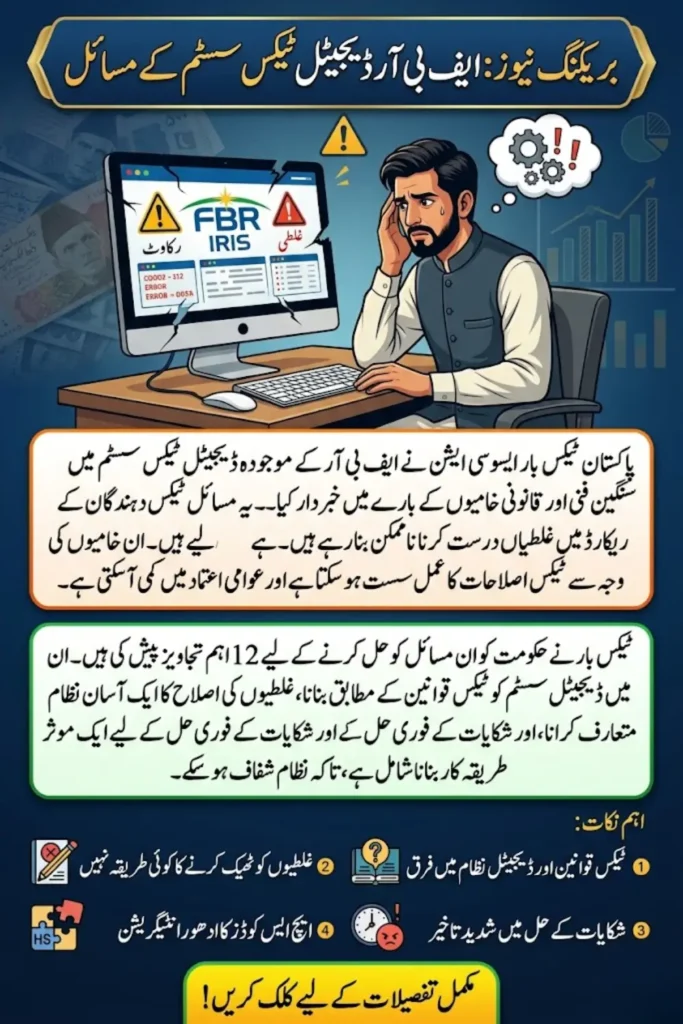
Such challenges directly affect users who rely on the system for filing returns and maintaining records. These issues can lead to delays, errors, and reduced efficiency in tax management.
- System design limitations
- Incomplete digital features
- Mismatch with existing tax laws
PTBA’s Concerns Regarding FBR Digital System
The Pakistan Tax Bar Association has raised serious concerns about weak governance and system design flaws. It emphasized that the digital system does not fully reflect legal provisions, creating inconsistencies in tax processes.
These concerns were formally submitted to FBR leadership, warning that such gaps could undermine the effectiveness of ongoing reforms. The association has urged authorities to take immediate action.
- Weak governance structure
- Lack of legal alignment
- Risk to tax reform progress
You Can Also Read: Nusuk Card Hajj 2026 – Mandatory Requirement for Pilgrims in Saudi Arabia
Problems Faced by Taxpayers in Digital Tax System
Taxpayers are experiencing significant difficulties due to the current system limitations. One major issue is the inability to correct mistakes in digital records, which can lead to long-term complications.
The absence of a proper rectification mechanism increases the burden on users and slows down the resolution process. This creates frustration and reduces confidence in the system.
- Difficulty in correcting errors
- Delays in record updates
- Increased compliance challenges
Missing Features in FBR Digital Tax System
Several important features are still missing from the system, making it less effective for users. For example, the integration of HS codes is incomplete, which affects accurate reporting and documentation.
Additionally, inconsistencies in measurement units and system processes create confusion for taxpayers and businesses. These gaps must be addressed to improve functionality.
- Incomplete HS code integration
- Lack of standardized measurement units
- Inconsistent system processes
You Can Also Read: Maryam Nawaz Electric Bike Scheme 2026: Eligibility, Apply Online, Installment Plan & Latest Updates
PTBA Recommendations for FBR Digital Tax System Issues 2026
To resolve these challenges, the Pakistan Tax Bar Association has proposed 12 recommendations. These suggestions focus on improving system efficiency, transparency, and legal compliance.
The recommendations aim to create a user-friendly environment where taxpayers can easily manage their obligations without facing technical barriers.
- Alignment with legal framework
- Improved transparency mechanisms
- Better system usability
You Can Also Read: How to Check PTA Approved Mobile in Pakistan 2026 Using IMEI (SMS, DIRBS & App Methods)
Need for Alignment with Tax Laws and Regulations
One of the key concerns is the mismatch between digital processes and tax laws. The PTBA has emphasized that all laws, rules, and SROs must be fully integrated into the IRIS system.
Proper alignment will ensure that taxpayers can comply with regulations without confusion. It will also reduce errors caused by inconsistencies between law and system design.
- Integration of laws into digital system
- Removal of inconsistencies
- Improved legal compliance
Demand for System Audit and Review
The PTBA has called for a complete audit of the digital tax system to identify weaknesses. This audit should begin with SRO 297(I)/2023 and cover all system components.
A thorough review will help authorities detect gaps and implement corrective measures. This step is essential for building a reliable and efficient system.
- Comprehensive system audit
- Identification of gaps
- Implementation of improvements
You Can Also Read: Mera Ghar Mera Ashiana Scheme 2026: Eligibility, Apply Through Banks, Installment Plan & Benefits
Importance of HS Code Integration in Tax System
HS codes are essential for classifying goods in tax reporting and invoicing. However, their incomplete integration in the current system is causing inconsistencies in data.
The PTBA has recommended full integration of HS codes to ensure accurate reporting and better compliance. This will also help businesses manage their records more effectively.
- Accurate product classification
- Improved invoicing system
- Better compliance with regulations
Proposed Rectification System for Digital Records
A major recommendation is the introduction of a formal system for correcting digital records. This will allow taxpayers to fix errors without facing unnecessary complications.
The proposed system should include audit trails to track changes and ensure transparency. This will improve accountability and trust in the system.
- Error correction mechanism
- Audit trails for transparency
- Structured update process
Complaint Handling and Resolution System
The PTBA has stressed the need for a structured complaint handling system. Currently, taxpayers face delays in resolving system-related issues, which affects their compliance process.
A clear escalation mechanism and direct access to officials can improve response time. The association recommends resolving complaints within 48 to 72 hours.
- Dedicated complaint system
- Fast resolution timeline
- Direct communication channels
Governance and Accountability Improvements
Improving governance is essential for the success of the digital tax system. The PTBA has suggested restoring an independent Member IT position within the FBR.
Clear accountability between FBR and PRAL is also necessary to avoid confusion and delays. Strong governance will ensure better system management.
- Independent IT leadership
- Defined roles and responsibilities
- Improved oversight
You Can Also Read: e learn she earn registration online login 2026 – Complete Guide for Eligibility
Transparency and Public Reporting in Tax System
Transparency plays a key role in building trust among taxpayers. The PTBA has recommended regular public reporting of system performance metrics.
This includes sharing information about uptime, system errors, and complaint resolution timelines. Such measures will improve accountability and confidence.
- Public performance reports
- Transparency in operations
- Increased user trust
Impact of FBR Digital Tax System Issues 2026 on Economy
The FBR Digital Tax System Issues 2026 have a broader impact beyond individual taxpayers. Inefficiencies in the system can reduce compliance and affect revenue collection.
A well-functioning digital system is essential for economic stability and growth. Addressing these issues will strengthen Pakistan’s tax framework.
- Reduced compliance rates
- Lower revenue collection
- Negative impact on reforms
Summary of Key Issues and Solutions
| Issue | Recommended Solution |
|---|---|
| Legal mismatch | Full alignment with tax laws |
| No correction system | Introduce rectification mechanism |
| Weak complaint handling | 48–72 hour resolution system |
| Incomplete HS integration | Full integration across system |
| Governance gaps | Independent IT oversight |
FAQs
What are FBR Digital Tax System Issues 2026?
These are technical and legal problems in Pakistan’s tax system affecting efficiency and compliance.
Why is PTBA raising concerns?
The association believes system flaws can disrupt tax reforms and create difficulties for taxpayers.
What is the main issue in the system?
The biggest problem is the mismatch between digital processes and tax laws.
How can these issues be fixed?
By implementing PTBA recommendations, improving governance, and upgrading system features.
Conclusion
The FBR Digital Tax System Issues 2026 highlight serious gaps in Pakistan’s digital tax infrastructure. The concerns raised by the Pakistan Tax Bar Association clearly show the need for urgent reforms.
By addressing these issues through better governance, legal alignment, and technical upgrades, the Federal Board of Revenue can create a more efficient and transparent system that benefits both taxpayers and the economy.
You Can Also Read: Free Digital Skills Training & Online Earning for Women in Punjab