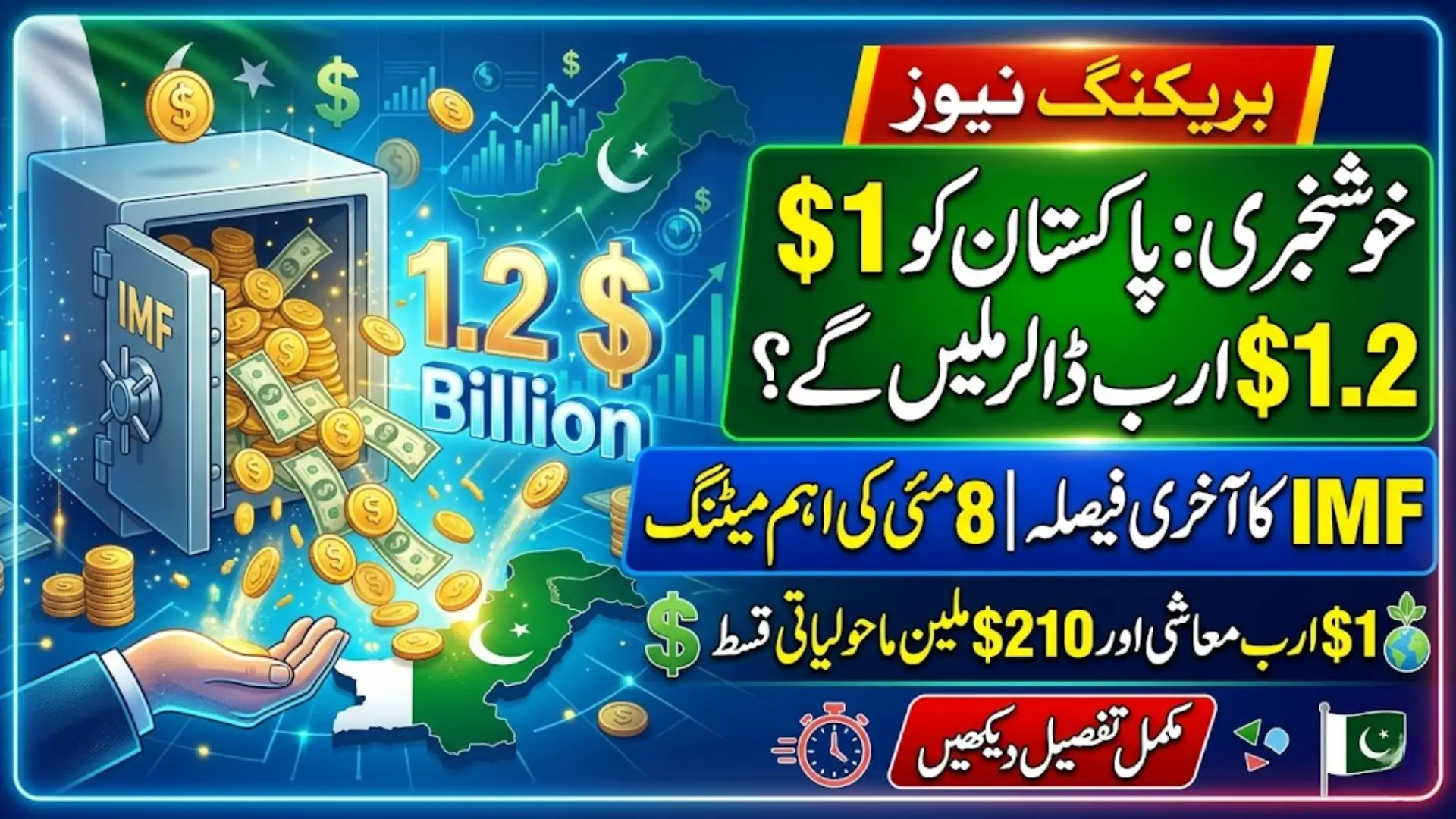
IMF $1.2 Billion Tranche for Pakistan
Pakistan is moving closer to securing the IMF $1.2 billion tranche for Pakistan as the Executive Board is scheduled to meet on May 8. This decision is part of the ongoing financial support under the $7 billion program, which includes both economic stabilization and climate-related reforms. The upcoming approval is seen as a crucial step in maintaining financial stability and ensuring continued external funding.
This tranche is not just a routine release but a signal of confidence in Pakistan’s reform efforts. The funding is divided between the Extended Fund Facility and the Resilience and Sustainability Facility, reflecting both fiscal and environmental priorities. The decision will directly influence Pakistan’s economic outlook in the coming months.
- IMF Executive Board meeting scheduled for May 8
- Total tranche under consideration is $1.2 billion
- Part of a broader $7 billion IMF program
- Covers both economic and climate reform support
You Can Also Read: CM Internship Program 2026: Earn Rs 50,000 Monthly with Paid Opportunities
Breakdown of IMF $1.2 Billion Tranche for Pakistan
The IMF $1.2 billion tranche for Pakistan consists of two major components, each targeting different areas of reform. Around $1 billion is expected under the Extended Fund Facility after the successful completion of its third review. This portion focuses on macroeconomic stability, fiscal reforms, and structural improvements.
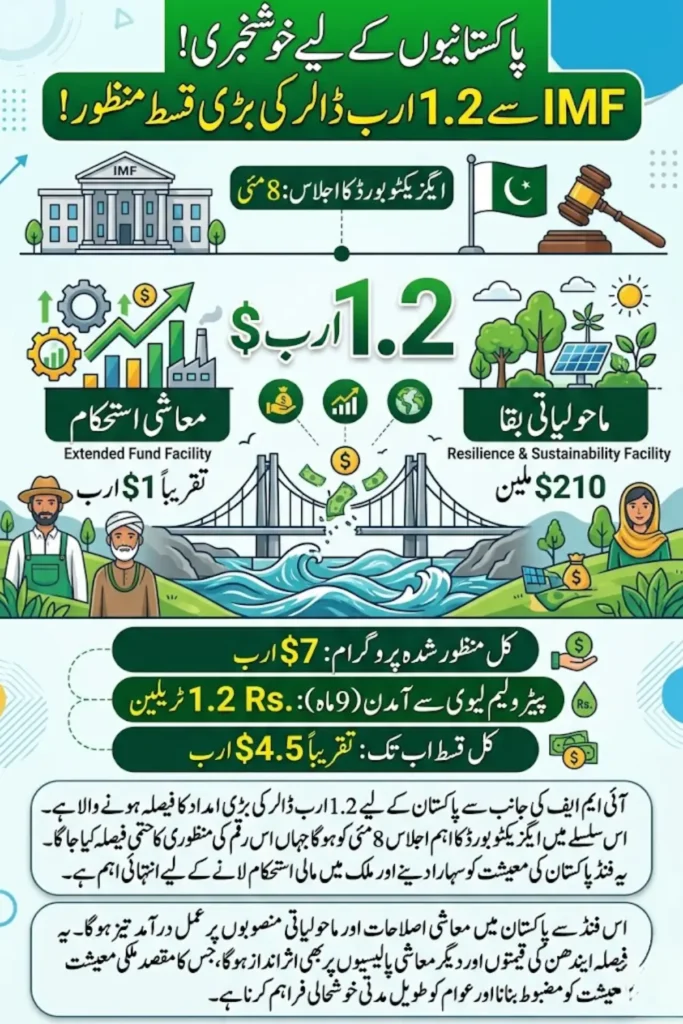
In addition, approximately $210 million is tied to the Resilience and Sustainability Facility. This funding is specifically aimed at supporting climate-related initiatives and strengthening Pakistan’s capacity to handle environmental challenges. Together, these components reflect a balanced approach toward economic recovery and sustainability.
- $1 billion allocated under Extended Fund Facility
- $210 million linked to climate-focused RSF
- Focus on fiscal discipline and reforms
- Support for environmental resilience initiatives
| Component | Amount (USD) | Purpose |
|---|---|---|
| Extended Fund Facility (EFF) | $1 Billion | Economic reforms and stability |
| Resilience & Sustainability Facility (RSF) | $210 Million | Climate and sustainability projects |
IMF Executive Board Decision and Staff-Level Agreement
The process leading to the IMF $1.2 billion tranche for Pakistan began with a staff-level agreement reached in late March. This agreement confirmed that Pakistan had made sufficient progress on required reforms to move forward to the Executive Board stage. It also outlined key areas where further improvements were expected.
Since then, discussions have continued between Pakistan and the IMF, mainly focusing on fiscal adjustments and revenue measures. The Executive Board’s approval is the final step, and it will determine whether the agreed conditions have been adequately fulfilled.
- Staff-level agreement reached in late March
- Executive Board to make final approval decision
- Ongoing discussions on fiscal reforms
- Focus on revenue and expenditure control
You Can Also Read: Punjab Govt Raises Domicile Certificate Fee by 175%: Full Details of New Digital System
Fiscal Adjustments Linked to IMF $1.2 Billion Tranche for Pakistan
One of the central conditions tied to the IMF $1.2 billion tranche for Pakistan is the implementation of fiscal adjustments. These adjustments are necessary to reduce the budget deficit and ensure long-term economic stability. The government has been working on aligning its policies with IMF requirements.
Fuel pricing and petroleum levy targets have remained key discussion points. The IMF has emphasized the need for consistent revenue generation and reduced reliance on subsidies. These measures are intended to strengthen Pakistan’s fiscal position and improve overall financial discipline.
- Focus on reducing fiscal deficit
- Adjustments in fuel pricing policies
- Meeting petroleum levy targets
- Strengthening economic discipline
You Can Also Read: PTA Tax Rates for iPhone in Pakistan 2026: Complete Update on New PTA Taxes
Petroleum Levy Collection and Revenue Performance
Pakistan has shown significant progress in revenue collection through petroleum levies. In the first nine months of the fiscal year, the government collected over Rs. 1.2 trillion from this source. This performance has been an important factor in meeting IMF benchmarks.
The petroleum levy has become a critical tool for generating revenue without directly increasing other taxes. Its consistent collection demonstrates the government’s commitment to fiscal reforms and plays a major role in securing IMF support.
- Rs. 1.2 trillion collected in nine months
- Petroleum levy as a key revenue source
- Helps meet IMF fiscal targets
- Reduces reliance on other taxation measures
| Fiscal Indicator | Value |
|---|---|
| Petroleum Levy Collection | Rs. 1.2 Trillion |
| Time Period | First 9 Months of Fiscal Year |
| Role | Supports IMF conditions |
Fuel Pricing Policy and Possible Changes
Fuel pricing remains a sensitive yet crucial area in discussions around the IMF $1.2 billion tranche for Pakistan. The government had previously provided subsidies to ease public burden, but these measures are now under review. Adjustments may be necessary to align with IMF expectations.
There is a possibility of increasing petrol and diesel levies to meet revenue targets. While such steps may impact consumers, they are considered essential for maintaining financial stability and securing continued IMF support.
- Review of previous fuel subsidies
- Possible increase in petrol and diesel levies
- Alignment with IMF conditions
- Impact on public and inflation
You Can Also Read: Punjab Board Exam Attempts Increased to 6: Complete Policy Update for Students
IMF Conditions: Focus on Subsidy Reduction
The IMF has consistently pushed for reducing subsidies, particularly in the energy sector. These subsidies place a heavy burden on the national budget and limit the government’s ability to invest in development projects. Reducing them is seen as a necessary reform.
Stronger fiscal discipline is another key requirement. The IMF expects Pakistan to manage its expenditures more effectively while increasing revenue through sustainable measures. These steps are critical for ensuring long-term economic stability.
- Reduction of fuel subsidies
- Emphasis on fiscal discipline
- Efficient budget management
- Long-term economic stability goals
You Can Also Read: MG HS 2026 Price in Pakistan: Complete Details of New Hybrid SUV
Total IMF Disbursement After Approval
If the IMF $1.2 billion tranche for Pakistan is approved, the total disbursement under the current programs will reach approximately $4.5 billion. This includes funds released under both the Extended Fund Facility and the Resilience and Sustainability Facility.
This increase in total funding will provide much-needed support to Pakistan’s economy. It will help stabilize foreign reserves, support reforms, and improve investor confidence in the country’s financial system.
- Total disbursement expected to reach $4.5 billion
- Combined support from EFF and RSF
- Boost to foreign reserves
- Improved economic confidence
Economic Impact of IMF $1.2 Billion Tranche for Pakistan
The approval of the IMF $1.2 billion tranche for Pakistan will have both short-term and long-term impacts. In the short term, it will provide financial relief and support the country’s balance of payments. It will also help maintain currency stability.
In the long term, the required reforms will shape Pakistan’s economic structure. While some measures may increase costs for the public, they are aimed at building a more sustainable and resilient economy.
- Short-term financial relief
- Support for balance of payments
- Long-term structural reforms
- Impact on inflation and fuel prices
You Can Also Read: NADRA Self Service Kiosk System Pakistan: New Automated CNIC Facility Launched
Conclusion
The IMF $1.2 billion tranche for Pakistan represents a critical milestone in the country’s ongoing economic reform journey. With the Executive Board decision approaching, the government is focused on meeting all necessary conditions to secure approval. This funding will not only provide immediate financial support but also reinforce Pakistan’s commitment to fiscal discipline.
Looking ahead, the success of this program will depend on consistent policy implementation and continued cooperation with the IMF. The expected increase in total disbursement to $4.5 billion highlights the importance of this partnership in stabilizing Pakistan’s economy.
You Can Also Read: CM Internship Program 2026: Earn Rs 50,000 Monthly with Paid Opportunities
FAQs
What is the IMF $1.2 billion tranche for Pakistan?
It is a financial installment under IMF programs to support Pakistan’s economic and climate reforms.
When will the IMF approve the tranche?
The Executive Board is scheduled to meet on May 8 to make the final decision.
What programs are included in this tranche?
It includes funding under the Extended Fund Facility and the Resilience and Sustainability Facility.
Why is petroleum levy important for IMF approval?
It helps the government meet revenue targets and maintain fiscal discipline.
What will be total IMF funding after approval?
The total disbursement is expected to reach around $4.5 billion.
You Can Also Read: Punjab Govt Raises Domicile Certificate Fee by 175%: Full Details of New Digital System